











Every July, the global disability community observes Disability Pride Month, a period dedicated to reclaiming the narrative surrounding the disabled experience. More than just a calendar event, it serves as a powerful counter-movement against the historical weight of shame, stigma, and marginalization. Tied to the anniversary of the signing of the Americans with Disabilities Act (ADA) on July 26, 1990, this month functions as a yearly checkpoint for civil rights, a celebration of community, and an urgent call for systemic equity.
With 1 in 4 adults in the United States identifying as having a disability—and the CDC estimating that most individuals will experience some form of disability during their lifetime—the subject is not a niche concern. It is a fundamental human experience. Yet, for too long, society has treated disability as a tragedy to be hidden or a problem to be "fixed." Disability Pride posits a different reality: disability is a natural facet of human variation that deserves to be centered, accommodated, and celebrated.
The Evolution of a Movement: A Chronology of Activism
The history of the disability rights movement is often omitted from mainstream education, yet it is a cornerstone of modern civil rights. Understanding the current climate requires looking back at the decades of sacrifice that built today’s protections.
The 1970s: The Rise of Independent Living
The Independent Living Movement, spearheaded by icons like Ed Roberts, shifted the paradigm from institutionalization to autonomy. Roberts, a quadriplegic who navigated significant systemic resistance to become one of the first disabled students at UC Berkeley, co-founded the Center for Independent Living in 1972. This movement radicalized the idea that disabled people—not medical professionals or institutional administrators—should be the architects of their own lives.
1977: The 504 Sit-In
While Section 504 of the Rehabilitation Act of 1973 technically prohibited discrimination against disabled people in federally funded programs, it lacked enforcement. In a historic act of defiance, activists occupied the Department of Health, Education, and Welfare offices in San Francisco for 28 days. This remains the longest sit-in at a federal building in U.S. history, proving that when disabled voices unite, they can force the hand of the government.
1990: The Capitol Crawl and the ADA
The passage of the Americans with Disabilities Act (ADA) was not a gift from legislators; it was a hard-won victory. In March 1990, the "Capitol Crawl" saw over 1,000 activists descend on Washington, D.C. In a poignant display of the barriers they faced daily, dozens of protesters abandoned their mobility aids to crawl up the 83 marble steps of the U.S. Capitol. This visceral imagery, including eight-year-old Jennifer Keelan pulling herself up the steps, galvanized the nation and pressured Congress to sign the ADA into law four months later.
2005 to Present: The Disability Justice Framework
In the early 2000s, the movement evolved further. Sins Invalid, a performance project founded by Patricia Berne and Leroy Moore, introduced the "10 Principles of Disability Justice." This framework corrected the oversights of the earlier, predominantly white, mainstream movement by centering intersectionality—acknowledging that ableism is inextricably linked to racism, poverty, and other systems of oppression.
The "Curb Cut Effect": Why Accessibility Benefits Everyone
The theme for this year’s Disability Pride Month, The World Works Better With Us, serves as a reminder that accessibility is not a "special interest" favor—it is essential infrastructure for society.
This concept is best illustrated by the "Curb Cut Effect." Originally designed to allow wheelchair users to navigate street crossings, curb cuts are now utilized by parents with strollers, delivery workers, travelers with luggage, and cyclists. Similarly, closed captioning, initially developed for the Deaf and hard-of-hearing community, is now a global standard used by commuters in noisy environments, language learners, and those in public spaces who prefer to watch videos without sound.
When we design for the most marginalized, we raise the floor for everyone. Infrastructure that supports disabled people is inherently more robust, intuitive, and inclusive. By prioritizing accessibility, we do not just support a minority; we build a more functional world for the entire human population.
The Symbolism of the Disability Pride Flag
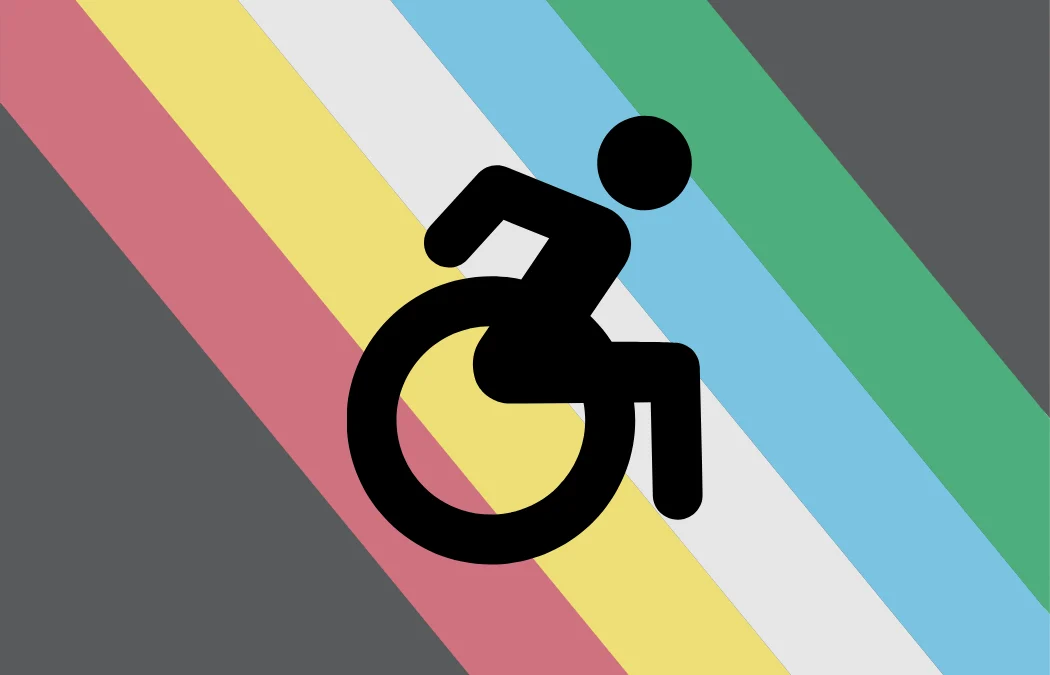
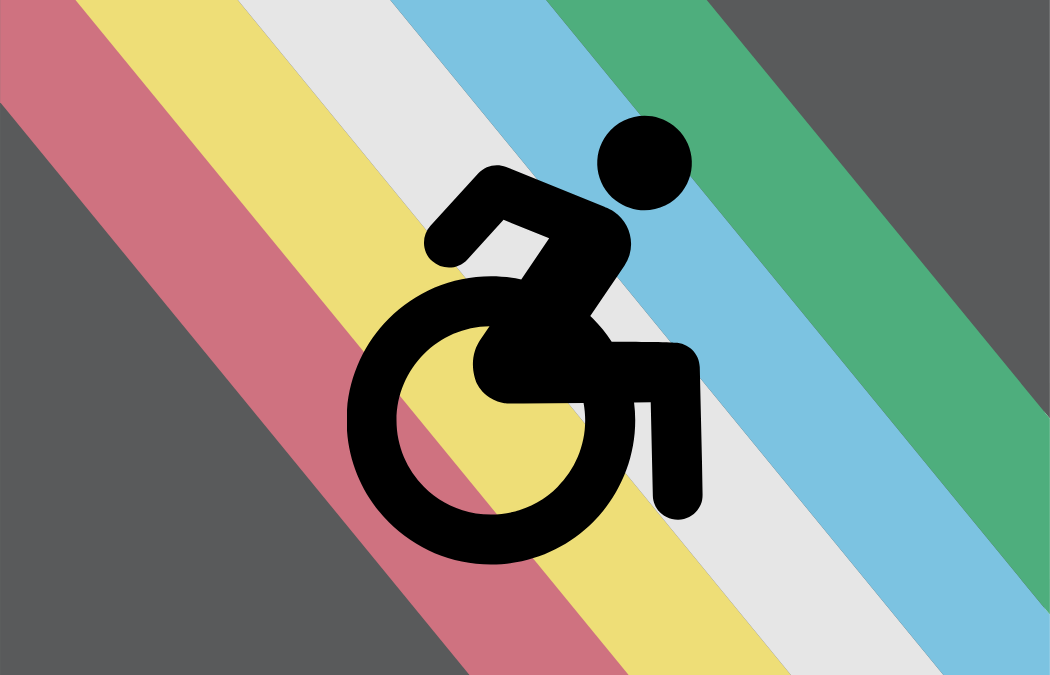
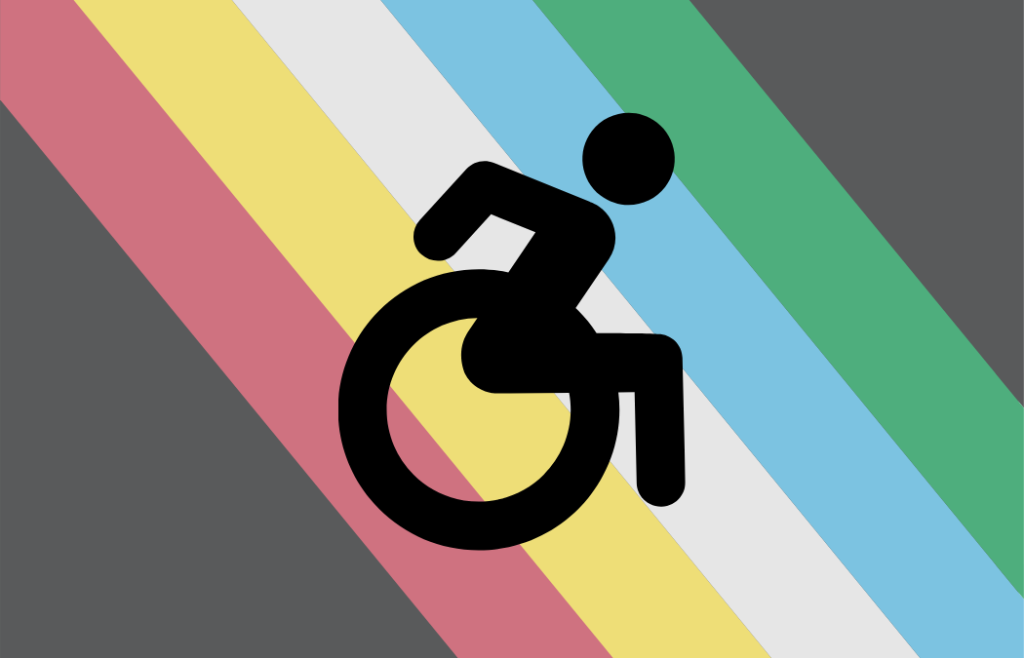
The visual identity of the movement, the Disability Pride flag, underwent a significant transformation to ensure it was truly accessible. Designed by Ann Magill in 2019 and refined in 2021, the flag features five diagonal stripes—red, gold, white, blue, and green—on a charcoal-gray background.
- The Colors: Each stripe represents a specific facet of the community: physical disabilities (red), neurodiversity (gold), invisible disabilities (white), emotional/psychiatric disabilities (blue), and sensory disabilities (green).
- The Background: The charcoal-gray background serves as a solemn tribute to the disabled lives lost to violence, neglect, and systemic ableism.
- The Design: The diagonal placement of the stripes is intentional. It represents the community "cutting across" the rigid, exclusionary lines of society, refusing to be pushed to the margins. The shift from zigzag to straight, muted-tone stripes was a direct response to feedback from the community, ensuring the design remained accessible to those with light and visual sensitivities.
Current Implications: A Movement Under Threat
While the ADA provided a foundation, the fight for civil rights is far from over. Today, the disability community faces a landscape of renewed threats. Legal challenges to the Olmstead decision—which protects the right of disabled people to live in their communities rather than in institutions—are mounting.
Furthermore, access to critical medical supplies, home-based care, and inclusive educational resources is frequently underfunded or rolled back. The current political discourse often treats these life-sustaining resources as "discretionary spending" rather than fundamental human rights. Disability Pride, therefore, is not just a celebration; it is a defensive line. It is a public assertion that the community exists, that its members have value, and that any society that denies these rights is fundamentally failing its citizens.
Reclaiming "Pride"
For many, the word "pride" is complicated. When someone has spent years navigating a world built on the assumption of able-bodiedness, the initial reaction to systemic barriers is often grief, exhaustion, or frustration. However, these emotions are exactly what keep the community fragmented.
Shame thrives in isolation. When disabled individuals feel ashamed of their needs or their bodies, they are less likely to advocate for themselves and others. By adopting the framework of Disability Pride, individuals replace shame with solidarity. Pride is the acknowledgment that the barriers faced are not personal failures, but structural ones.
Conclusion: How to Engage
Celebrating Disability Pride means more than posting a graphic in July. It requires active engagement:
- Educate: Read the works of disability justice advocates like Patricia Berne, Leroy Moore, and Alice Wong.
- Support: Advocate for policies that ensure home-based care and community-based living.
- Listen: Center the voices of those with lived experience when discussing accessibility or policy.
- Reflect: Consider how your workplace, school, or home environment can be made more inclusive, not just for the disabled, but for the human experience as a whole.
The disability community is a vibrant, creative, and essential segment of humanity. The World Works Better With Us is not just a slogan; it is an economic, social, and moral truth. As we mark this July, we look forward to a future where accessibility is the default, not the exception, and where the pride of the disability community is recognized as a vital component of the global human fabric.