






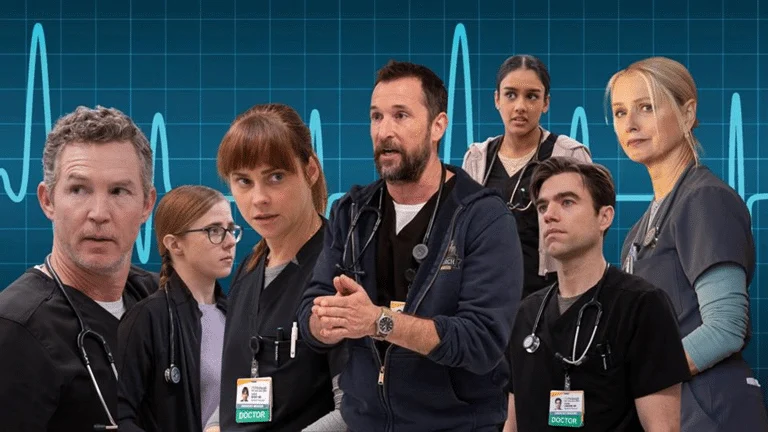
If you have yet to tune into the gritty, pulse-pounding corridors of HBO Max’s The Pitt, you are missing more than just high-stakes television. You are missing a mirror held up to the fracturing foundation of the American healthcare system. While medical dramas have historically leaned into the soap-opera allure of hospital romances and miraculous recoveries, The Pitt—now wrapping up a visceral second season—takes a different approach: it forces the audience to confront the harsh, often unglamorous realities of emergency medicine and the escalating crisis of care for our aging population.
For those of us working in the field of aging research and health policy, The Pitt is not just entertainment. It is a documentary-level critique of a system struggling to support older adults. By grounding its narrative in the chaotic reality of a Pittsburgh emergency department, the show provides a rare, unflinching look at the structural failures facing millions of Americans today.
The Main Facts: A Window into Systemic Strain
At its core, The Pitt follows the staff of a busy urban emergency department, but the true protagonist of the show is the systemic pressure exerted on both the patients and the providers. Unlike its predecessors, which often prioritize medical mystery over administrative reality, The Pitt focuses on the "brutal shift"—a metaphor for the constant state of crisis in modern medicine.
The show excels by refusing to treat older patients as mere background noise. Whether it is the accurate depiction of a "clamshell" thoracic surgery or the agonizing, quiet conversations regarding end-of-life care, the series treats these moments with a gravity often missing from prime-time television. It highlights the invisible friction between the urgency of the ER and the slow, complex needs of geriatric patients, creating a narrative that feels less like a script and more like a dispatch from the front lines of the American health crisis.
Chronology of a Crisis: The Narrative Arc of Aging
To understand the impact of The Pitt, one must look at how it weaves specific, recurring themes of aging throughout its two-season arc.
Season 1: The Caregiver’s Breaking Point
The show’s initial foray into the complexities of aging began with the harrowing, and all-too-common, depiction of caregiver burden. One particularly poignant episode features a mother-daughter dynamic that serves as a microcosm for the millions of Americans acting as unpaid, untrained, and unsupported caregivers.
The daughter, stretched to her absolute limit, physically collapses—not from a medical condition, but from the exhaustion of her duties. She is found sleeping in her car, having gone missing for hours, a moment that perfectly captures the "caregiver’s fog." These are not filler characters designed to give the lead, Dr. Robby, a moral lesson; they are reflections of the reality facing 63 million Americans.
Season 2: The Economic and Structural Collapse
As the series moves into its second season, the focus shifts toward the financial and systemic barriers to care. We see the introduction of the "financial dread" narrative—a phenomenon where patients weigh the cost of their survival against the lifelong debt they will leave to their families. The show highlights the gut-wrenching decision of a patient choosing to leave the hospital prematurely, not because they are healed, but to avoid the crushing weight of medical bills, only to return in a state of terminal decline.
Supporting Data: When Fiction Meets Reality
The power of The Pitt lies in its adherence to the data that governs our healthcare landscape. The following figures underscore the urgent need for the changes the show so effectively dramatizes.
The Caregiver Burden
According to data from the Caregiver Action Network, the sheer volume of Americans providing care is staggering. More than 63 million U.S. adults are currently caring for a spouse, parent, or relative. Critically, one in five of these caregivers is also maintaining a full-time job. The result is a "hidden patient" crisis: caregivers are reporting higher rates of depression, anxiety, and their own chronic physical illnesses, largely because their own health is neglected in favor of the person they are tending to.
The Geriatrician Shortage
One of the most biting moments in the show occurs when a physician, Dr. Mohan, is teased for being recommended for a geriatrics fellowship. The implication—that geriatrics is a "slower" or "easier" path—is a common trope in medical culture that ignores the dire reality of the workforce.
- The Math: By 2030, every baby boomer will be 65 or older, representing roughly one in five Americans.
- The Gap: The U.S. currently hosts only about 7,000 board-certified geriatricians. To put this in perspective, there are over 60,000 pediatricians in the country.
- The Projection: The U.S. Department of Health and Human Services has projected a shortfall of nearly 27,000 geriatric providers—a deadline that, by most metrics, has already passed.
Transportation as a Social Determinant
The Pitt features a scene where an older patient, Vera, is medically cleared but physically stranded. She lacks the funds for a taxi and the support network to arrange a ride. This is not just a dramatic plot device; it is a fundamental barrier to health equity. An estimated 3.6 million Americans report missing or delaying medical care due to transportation issues. When a patient is discharged into a vacuum of support, the hospital’s medical work is immediately undone.
Official Responses and Industry Perspectives
While The Pitt is a work of fiction, the issues it addresses have been the subject of intense debate among medical professionals and policymakers.
The American Medical Association (AMA) has repeatedly identified emergency medicine as the specialty most prone to physician burnout. When hospitals are perpetually overwhelmed, the quality of care for older adults suffers disproportionately. Older patients in these environments are more likely to face "boomeranging"—being readmitted shortly after discharge—and are statistically more susceptible to adverse health outcomes because the system lacks the bandwidth to coordinate post-acute care.
Many in the medical education sector argue that the root of the problem lies in the curriculum. Currently, only one in ten U.S. medical schools requires a dedicated geriatrics clinical rotation. This, despite the fact that every single physician, regardless of their specialty, will spend the majority of their career treating the needs of older adults. The show’s writers clearly understand that the shortage of geriatricians is not just a hiring problem; it is a training and cultural problem within the medical establishment.
Implications: The Future of Aging in America
The implications of the scenarios depicted in The Pitt are profound. We are witnessing the largest demographic shift in American history, yet our infrastructure—hospitals, community support, and financial safety nets—remains calibrated for a younger population.
- Policy Reform: The financial strain depicted in the show, specifically regarding Medicaid cuts and the reliance on crowdsourced funding like "GoFundMe" for life-saving care, points to a massive failure in the social contract. Congress must prioritize long-term care funding and the expansion of Medicare benefits to include support systems that prevent the need for emergency intervention in the first place.
- Medical Education: The stigma surrounding geriatrics, as portrayed by the casual insults leveled at Dr. Mohan, must be dismantled. Incentivizing geriatric fellowships through student loan forgiveness and higher reimbursement rates is no longer a suggestion—it is a necessity for national security.
- Community-Integrated Healthcare: The story of the medical student paying for a ride-share for his patient highlights that the "medical" part of healthcare is only half the battle. True health outcomes for older adults are determined by social determinants: transport, housing, and caregiver support.
A Call to Action
The Pitt is more than a binge-worthy drama; it is a wake-up call. The exhaustion of the doctors in the show mirrors the exhaustion of our current healthcare infrastructure. As we look toward a future where one in five Americans is a senior citizen, we must ask ourselves: are we building a system that treats them with dignity, or are we relying on the kindness of individual medical students and the breaking backs of family caregivers to hold the system together?
The decisions we make today—in our hospitals, in our medical schools, and in our legislatures—will define the quality of life for the largest generation of older adults this country has ever seen. It is time we start making the right ones.
Katrin Werner-Perez is the Director of Health Programs at the Alliance for Aging Research, dedicated to advancing science and policy to improve the human experience of aging.