











For most of us, the alphabet serves as the foundational architecture of our lives. We learn our ABCs in early childhood, transforming squiggles on a page into the language of communication, education, and social connection. Yet, there is a glaring deficiency in our collective education: while we are taught to articulate our thoughts, we are rarely taught how to navigate the complex, often overwhelming internal biology of our own emotions.
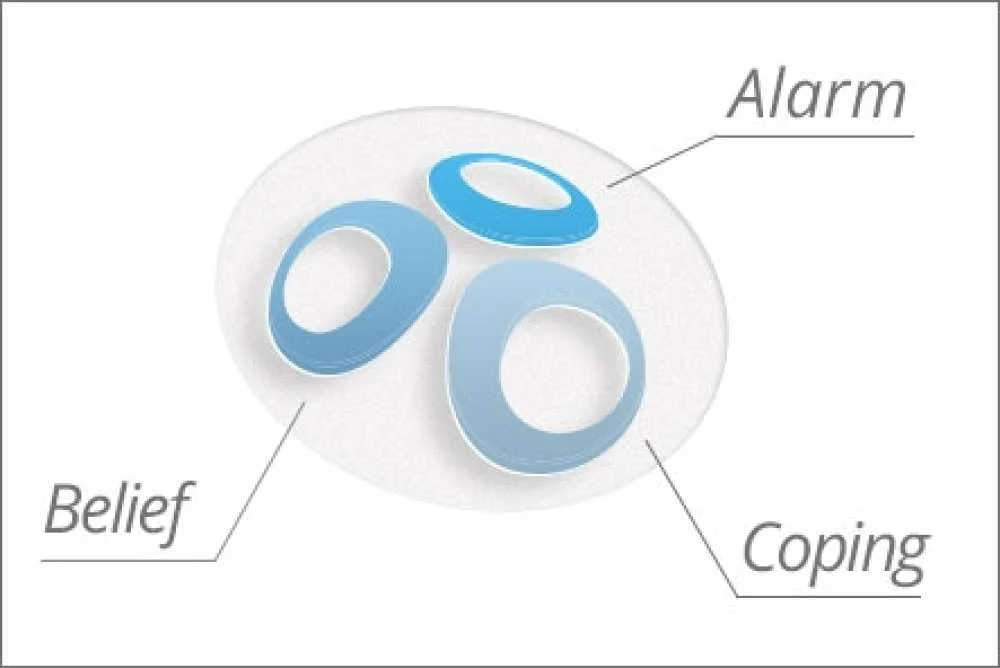
Anxiety, a normal and evolutionary human response designed to protect us from genuine danger, is frequently misunderstood. When the "alarm" bells of our nervous system ring, we often lack the emotional vocabulary to respond effectively. We suffer not necessarily because we are anxious, but because we are illiterate in the language of our own distress. Enter the ABCtracker™, a diagnostic and pedagogical tool designed to demystify the internal mechanics of anxiety. By breaking down the cycle of fear into three manageable components—Alarm, Belief, and Coping—mental health professionals are offering a lifeline to those trapped in the loops of chronic distress.
The Science of the Alarm: Understanding the Evolutionary Trigger
To understand the "A" in the ABCtracker™, one must first understand the biological imperative of the human alarm system. Evolutionarily, anxiety was a survival mechanism. When a prehistoric ancestor heard a rustle in the tall grass, their body released a cocktail of adrenaline and cortisol to prepare them for "fight or flight."
In the modern era, the threat has shifted from saber-toothed tigers to missed deadlines, social scrutiny, and economic uncertainty. The problem, according to clinical psychologists, is not the alarm itself, but its calibration. Many individuals suffering from anxiety disorders possess a "hyper-sensitive" alarm system. Much like a car alarm that triggers at the slightest breeze or a passing shadow, the anxious mind interprets benign situations as catastrophic threats.
When the body signals an alarm, it does so through physical manifestations: a racing heart, shallow breathing, sweaty palms, or the sudden onset of nausea. Recognizing these physical "tells" is the first step toward reclaiming agency. By identifying the A, the individual moves from being a victim of their biology to an observer of it.
The Cognitive Filter: Unpacking the Belief System
If the Alarm is the biological siren, "B" stands for the Beliefs that follow. The human brain is a meaning-making machine. When the internal alarm sounds, the brain does not remain passive; it immediately attempts to contextualize the threat. It asks: "Why am I feeling this way? Is the situation truly dangerous?"
For those with pervasive anxiety, this cognitive processing often defaults to a distorted reality. If a person experiences a sudden spike in heart rate during a meeting, a "healthy" cognitive appraisal might be: "I’ve had too much coffee, and I’m nervous about this presentation." However, an anxious mind might bypass logic entirely, spiraling into: "My heart is racing; I am having a heart attack," or "I am shaking, and everyone here can see it, which means I am incompetent."
These beliefs are the fuel that keeps the anxiety fire burning. They are often unconscious, instantaneous, and inaccurate. By bringing these beliefs into the light of conscious awareness, the ABCtracker™ helps users challenge their own narrative. Are these thoughts based on objective reality, or are they cognitive distortions—automatic scripts that have no basis in the present moment?
Adaptive vs. Maladaptive: The Spectrum of Coping
The final pillar of the framework is "C"—Coping. Coping is the behavioral response to the Alarm and the Belief. Because the human desire for safety is instinctive, every person employs a coping mechanism the moment they feel threatened. However, not all mechanisms are created equal.
Coping strategies generally fall into two categories:
- Adaptive: These are functional responses that lead to long-term resolution. Examples include deep breathing, grounding techniques, cognitive restructuring, or seeking social support.
- Maladaptive: These are defensive maneuvers that provide temporary relief but exacerbate the anxiety in the long run. Common examples include avoidance of specific triggers, substance use, over-preparation (a form of perfectionism), or constant seeking of reassurance.
The tragedy of chronic anxiety is that many people rely on maladaptive strategies—like avoiding a social event to prevent a panic attack—which reinforces the brain’s belief that the event was indeed dangerous. This creates a feedback loop. Using the ABCtracker™, individuals can log their responses, identifying which strategies are serving their long-term health and which are merely acting as "emotional crutches" that prevent true recovery.
Chronology of a Crisis: How the Cycle Perpetuates
To visualize how these elements interact, one must look at the timeline of an anxiety spike. It rarely happens in a vacuum; it follows a predictable, albeit rapid, progression.
- The Trigger (T=0): A sensory input—a loud noise, an email notification, or a crowded room.
- The Alarm (T+1s): The autonomic nervous system initiates a sympathetic response. Physical symptoms manifest.
- The Belief (T+3s): The cognitive appraisal occurs. The brain labels the physical symptoms as a threat or a catastrophe.
- The Coping (T+10s): The individual executes a behavior (e.g., fleeing the room, checking their phone, or shutting down).
- The Outcome (T+1m): The relief of the immediate pressure is felt, but the underlying belief remains unchallenged, setting the stage for the next cycle.
The ABCtracker™ intervenes by slowing down this timeline. By forcing the user to document these stages in real-time, the framework creates a "pause" between the Alarm and the Coping, allowing for a more rational Belief to intervene.
Supporting Data: The Efficacy of Self-Monitoring
Clinical data suggests that self-monitoring—a cornerstone of Cognitive Behavioral Therapy (CBT)—is one of the most effective ways to manage anxiety. Studies have shown that patients who track their emotional states are significantly more likely to identify patterns and triggers than those who rely solely on memory.
According to data from mental health research centers, individuals who utilize structured tracking systems report a 30% to 40% reduction in symptoms within the first six weeks of consistent use. The reason is simple: data provides distance. When a patient sees their anxiety written down as a series of ABCs, it becomes a "case study" rather than an "identity." This shift in perspective is often the turning point in therapeutic progress.
Implications for Healthcare and Daily Living
The broader implication of the ABCtracker™ approach is the democratization of mental health care. While professional intervention from a physician or psychologist remains the gold standard, the ability for individuals to manage their own emotional hygiene between sessions is transformative.
Healthcare professionals are increasingly integrating these frameworks into their practices. By speaking a common language with their patients—using the shorthand of "What was your Alarm?" or "What was the Belief you attached to that?"—clinicians can move faster toward effective treatment plans.
Furthermore, this approach shifts the focus from "curing" anxiety to "managing" the nervous system. Since anxiety is a natural human emotion, the goal is not to eradicate it—which is impossible—but to become a master of it.
Conclusion: The Path to Mastery
Every master starts as a beginner. Learning to manage anxiety is no different than learning to play an instrument or a new language. It requires repetition, patience, and a willingness to confront the uncomfortable. The ABCtracker™ is not a magic bullet; it is a tool for self-reflection.
By recognizing the Alarm, questioning the Belief, and consciously choosing the Coping strategy, individuals can dismantle the debilitating structures of their anxiety. In doing so, they do more than just survive; they learn to navigate their internal world with the same literacy and confidence they apply to the world around them. The ABCs of anxiety are the keys to a more resilient, self-aware life. If we can learn the alphabet to read the world, we can surely learn the ABCs to read ourselves.