










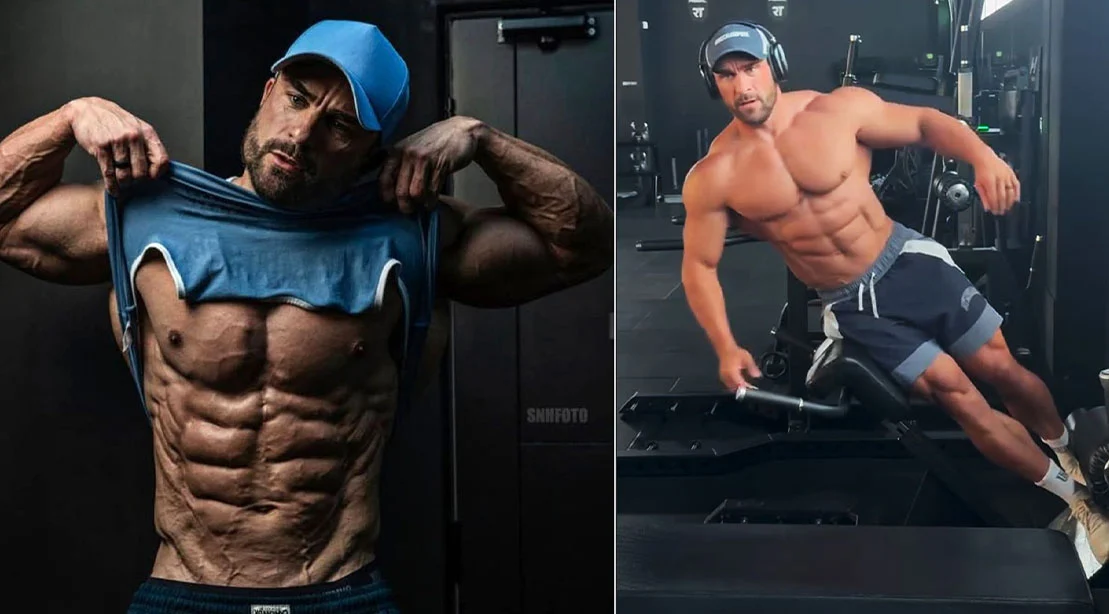
With the 2026 Olympia in Las Vegas looming on the horizon, the pressure on the world’s elite bodybuilders is reaching a fever pitch. Among them stands Ryan Terry, the reigning Olympia Men’s Physique champion, whose pursuit of a fourth consecutive title has become a masterclass in professional discipline. As he enters the final ten-week countdown, Terry has pulled back the curtain on the specific training methodologies—and the cold, hard truths about nutrition—that sustain his world-class physique.
The Foundation: A Championship Mindset
Ryan Terry is not merely a competitor; he is an institution in the Men’s Physique division. His career, marked by consistent training and a physique that appears stage-ready year-round, has set the gold standard for aesthetics. However, the path to the Olympia stage is not paved with comfort.
"I’m introducing AM abs workouts," Terry recently announced to his 2.6 million Instagram followers. This shift in his training volume marks a pivotal moment in his preparation. For an athlete of Terry’s caliber, the "ten-week out" mark is the psychological and physical turning point where the intensity shifts from general maintenance to surgical precision. It is the phase where he knows, in his own words, that "things are getting serious."
Chronology of the Pre-Contest Phase
The preparation for a title defense is a multi-layered process that begins months before the athlete steps onto the stage in Las Vegas.
- The Off-Season (Months 1-6): Focus is placed on hypertrophy and metabolic capacity. Terry utilizes this time to build the necessary density that separates a challenger from a champion.
- The Preparation Phase (12-16 Weeks Out): The focus shifts to fat loss and muscle preservation. The caloric deficit is introduced, and cardio volume is incrementally increased to ensure metabolic efficiency.
- The Intensity Phase (10 Weeks Out): This is the current stage of Terry’s journey. By introducing "AM Abs" sessions, he is increasing the frequency of direct core training to ensure that the abdominal wall is not only lean but structurally dense and deeply defined.
- The Peak Week (Final 7 Days): The final adjustments to water, sodium, and carbohydrate intake are made to ensure the "stage-ready" look—a combination of vascularity, fullness, and extreme dryness.
The Mechanics: Deconstructing the "Championship" Ab Workout
Terry’s philosophy regarding core training is rooted in hypertrophy. Rather than the outdated "100-rep" approach—which often leads to muscular endurance rather than visible muscle growth—Terry opts for sets of 10 to 15 repetitions. This range allows for the use of resistance, forcing the muscle to grow in response to tension.
1. GHD Reverse Crunches
Terry utilizes the Glute Hamstring Developer (GHD) to isolate the rectus abdominis. By allowing the legs to drop behind the body, he creates a deep stretch in the muscle belly. This eccentric loading is crucial for growth. The contraction phase, as he pulls his knees toward his chest, requires immense stability, reinforcing the core’s role as a support structure for the entire physique.
2. Side Oblique Crunches
To achieve the coveted "V-taper" look, Terry incorporates oblique work to build definition above the hips. These movements are executed with a focus on the mind-muscle connection, ensuring that the movement is driven by the obliques rather than the hip flexors.
3. Incline/Decline Situps
Terry employs a high-bench variation of the situp. By working his way up the incline, he places constant tension on the core. This exercise is the primary sculptor of the six-pack, focusing on the upper portion of the abdominal wall.
4. V-Situps (Jack Knives) on the Bench
The bench variation of the V-situp is an advanced movement that demands superior core stability. By using a bench as a base, the range of motion is extended, requiring the athlete to stabilize their entire torso while bringing the extremities together. This is a total-body engagement move that enhances the balance and symmetry of the midsection.
Supporting Data: The Science of Sustained Success
The physiological requirements for an Olympia-level midsection go beyond exercise selection. The primary limiting factor for most athletes is not the lack of abdominal strength, but the presence of subcutaneous body fat.
Terry’s approach to body composition is intentionally conservative. He advocates for a slow, steady reduction in calories rather than the aggressive "crash dieting" often seen in amateur ranks. The science supports this: rapid weight loss often results in the body entering a catabolic state, where it strips away hard-earned muscle tissue to meet energy demands. By eating slightly below maintenance, Terry ensures his body fat drops while his muscle mass remains protected.
Official Perspectives: The Philosophy of the Champion
In his recent discourse, Terry addressed the common misconception that "more training" is the solution to a better physique. He notes that the "real job" is not simply training abs harder, but managing the nutritional environment of the body.
"I’ve seen too many people lose weight fast—including me in my early career—sacrifice muscle, then end up right back where they started," Terry remarked. This reflection on his early years provides a critical lesson for aspiring bodybuilders: longevity in the sport is predicated on the ability to diet without compromising metabolic health.
Implications for the Fitness Community
The implications of Terry’s training regimen extend far beyond the Olympia stage. For the average fitness enthusiast, the takeaway is clear: structure and patience trump intensity and speed.
- Periodization is Essential: By segmenting his training into phases, Terry prevents burnout and allows for peak performance at the right time.
- Form Over Function: The insistence on "slow and controlled" repetitions is a reminder that bodybuilding is an aesthetic sport. Moving weight for the sake of ego is secondary to the quality of the muscle contraction.
- Nutrition as a Tool: Viewing food as fuel—and adjusting it with surgical precision—is what separates a hobbyist from a professional.
The Road to Las Vegas
As the clock ticks down toward the 2026 Olympia, the bodybuilding world will be watching Ryan Terry with intense interest. His commitment to a sustainable, scientifically backed, and highly disciplined routine serves as a blueprint for success in a sport that demands perfection.
Whether he secures his fourth title remains to be seen, but his preparation process offers a profound insight into the mind of a champion. It is a reminder that while the lights of Las Vegas may be bright, the work that earns the gold medal is done in the silence of the gym, during the early hours of the morning, long before the crowds arrive.
For those looking to follow the journey of the Men’s Physique champion, his updates serve as a constant reminder: the "stage-ready" look is not an accident—it is a choice made one rep, and one meal, at a time.
To keep up with Ryan Terry’s progress toward the 2026 Olympia, you can follow his training updates on his official Instagram account.