The intersection of public health policy and political rhetoric has become increasingly volatile. Recently, Calley Means—a prominent food advisor to Robert F. Kennedy Jr. and a central figure in the "Make America Healthy Again" (MAHA) movement—launched a series of pointed allegations against Marion Nestle, the renowned Paulette Goddard Professor of Nutrition, Food Studies, and Public Health, Emerita, at New York University.
The charges, which were initially leveled during a panel at the Aspen Ideas Festival and later amplified at the Great American State Fair, have prompted a sharp rebuttal from Dr. Nestle. She characterizes the accusations as not merely inaccurate, but "spectacularly false," warning that the distortion of historical scientific records poses a danger to the integrity of nutrition policy.
The Chronology of Conflict
The tension between the two figures surfaced publicly on June 30 during a session at the Aspen Ideas Festival, moderated by journalist Corby Kummer. During the discussion, Means alleged that Dr. Nestle’s extensive body of research had been bankrolled by the sugar and tobacco industries. He further claimed that her work was instrumental in shifting the American diet toward a grain-based paradigm, effectively demonizing natural fats.
The situation escalated on July 6 at the Great American State Fair, where Means repeated and expanded upon these claims. Washington Post reporter Tim Carman, investigating the claims for a broader piece on the state of MAHA’s policy initiatives, reached out to Dr. Nestle for comment.
According to the transcript provided to Dr. Nestle, Means claimed: "In the 1980s, a group called the Sugar Research Council paid her to do a lot of research. And they really funded her to say that basically the base of our diet should be carbs… she claims credit for being the architect of the 1992 food pyramid."
Dr. Nestle, a scholar who has spent decades analyzing the influence of food industry lobbying on federal dietary guidelines, maintains that these claims represent a fundamental—and perhaps intentional—misunderstanding of her career and the history of nutrition science.
Deconstructing the Allegations
To address the severity of the charges, Dr. Nestle has systematically dismantled the specific claims made by Means, providing evidence that contradicts his narrative of corporate capture.
The Conflict of Interest Accusation
Means asserted that Dr. Nestle received funding from the Sugar Research Council in the 1980s to influence dietary discourse. Dr. Nestle categorically rejects this. During that decade, she was a professor at the University of California, San Francisco (UCSF), teaching medical students and directing nutrition education programs funded by the National Institutes of Health (NIH) and the John Tung Foundation. Dr. Nestle emphasizes that she has maintained a long-standing, public policy of refusing payments from food industry entities to avoid the very conflicts of interest Means alleges.
The "Architect of the Pyramid" Claim
Perhaps the most verifiable inaccuracy is the claim that Dr. Nestle designed the 1992 USDA Food Guide Pyramid. In reality, her public record on the subject is one of critique, not creation. In her seminal work, Food Politics, Dr. Nestle provided detailed evidence of how the meat and dairy industries pressured the USDA to suppress the release of the pyramid in 1991. She notes that her involvement was strictly journalistic; she worked with New York Times reporter Marian Burros to expose the industry-led efforts to dilute the pyramid’s health messaging.
The Evolution of Dietary Guidelines
Means suggests that the 1990s guidelines were a "destructive public health document" designed to push grains at the expense of healthy fats. Dr. Nestle points out that the 1988 Surgeon General’s Report on Nutrition and Health, for which she served as managing editor, was a reflection of the prevailing scientific consensus of the era, which prioritized complex carbohydrates and fibers.
Furthermore, regarding the 1995 Dietary Guidelines Scientific Advisory Committee, of which she was a member, Dr. Nestle notes that the committee’s recommendations were aligned with broader health goals of the time. She also points out a critical chronological error in Means’ critique: the concept of "ultra-processed foods" did not enter the scientific lexicon until 2009, making it impossible for committees in the 1980s or 1990s to have specifically addressed them by that name.

The Role of Industry Influence
While Dr. Nestle rejects the claims against her, she acknowledges the underlying truth that the food industry has historically exerted—and continues to exert—significant influence over American dietary policy.
She concedes that the tobacco industry, which owned major food conglomerates like Kraft during the 1980s, utilized corporate strategies that mirrored the "tobacco playbook" to promote processed products. However, she argues that the primary architects of industry interference in the 1990s were the meat and dairy lobbies, not the sugar industry.
Dr. Nestle suggests that the current focus on these historical "bogeymen" may be a distraction. As the MAHA movement attempts to implement its own policy agenda, it faces significant pushback from entrenched food industry interests. By framing established nutrition scientists as agents of the "old guard," critics like Means may be attempting to shift the blame for the difficulties the movement faces in navigating the complex web of corporate lobbying.
Implications for Public Health Discourse
The dispute between Means and Nestle highlights a deepening divide in the American food movement. On one side are advocates who prioritize "Gold Standard Science"—the rigorous, transparent examination of peer-reviewed data and historical policy. On the other is a rising tide of populist nutrition discourse that often relies on simplified narratives to explain the systemic crisis of metabolic disease.
The danger, as Dr. Nestle identifies it, is the abandonment of factual accuracy in favor of political branding. When historical records are "invented" to serve a narrative, the ability to build a genuine, evidence-based coalition is severely compromised.
Seeking Common Ground
Despite the vitriol, Dr. Nestle maintains that she is not the enemy of the MAHA movement’s stated goals. She has consistently called for coalition-building around common objectives, such as reducing the prevalence of ultra-processed foods and holding the food industry accountable for its role in the current public health crisis.
However, her position remains firm: progress cannot be built on a foundation of falsehoods. She has invited Calley Means and other critics to engage with her work through the traditional scientific process. If they believe her analysis of the historical record is flawed, she welcomes the evidence.
Moving Forward: The Need for Rigor
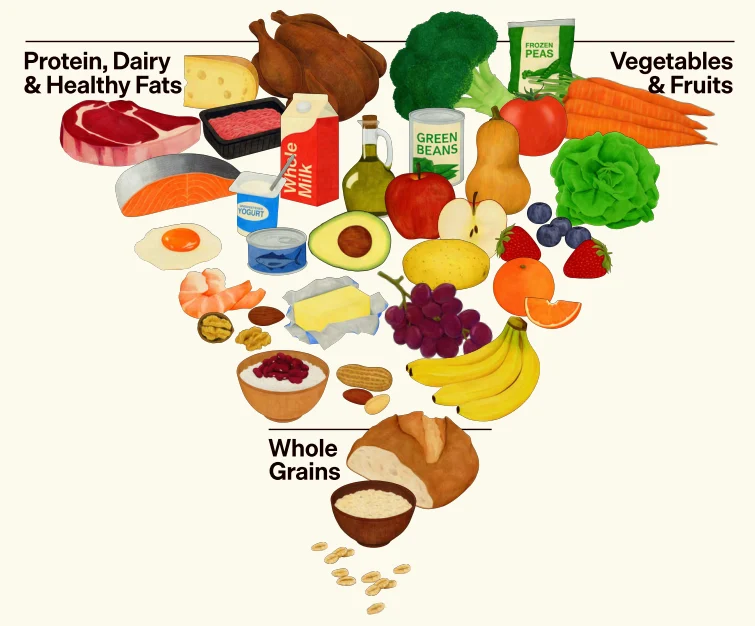
As the 2025-2030 dietary guidelines undergo scrutiny and the debate over the "inverted pyramid" continues, the public is left to navigate a minefield of conflicting claims. The confrontation between a seasoned academic and a high-profile political strategist serves as a litmus test for the future of nutrition policy.
Ultimately, the resolution of this conflict may depend on whether the food justice movement can prioritize objective truth over convenient scapegoating. As Dr. Nestle aptly summarizes: "Reasonable people can disagree about elements of nutrition policy. But reasonable people cannot invent a history that did not exist."
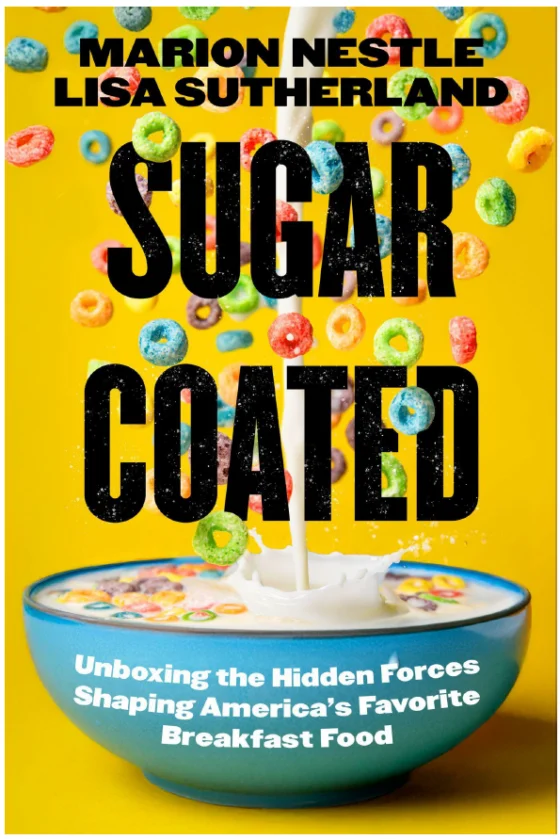
With her upcoming book, Sugar-Coated, set for release on September 8, Dr. Nestle appears ready to continue the fight for accuracy, inviting both supporters and detractors to examine the evidence behind the policies that shape the American plate. The outcome of this debate will likely determine whether the next generation of food policy is guided by rigorous science or merely the loudest voice in the room.