









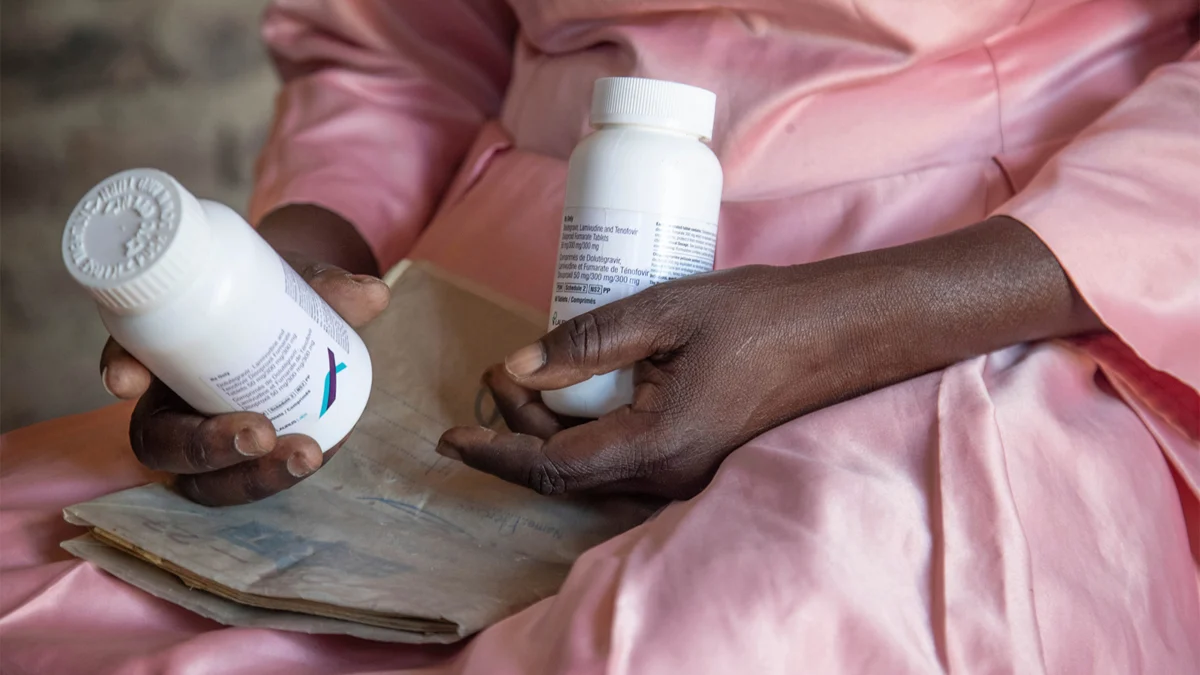
For over two decades, the President’s Emergency Plan for AIDS Relief (PEPFAR) has stood as the gold standard of American soft power and humanitarian intervention. Since its inception in 2003, the program has been credited with saving at least 26 million lives, transforming HIV from a death sentence into a manageable chronic condition across the African continent and beyond. However, a harrowing new report from amfAR, the Foundation for AIDS Research, suggests that this monumental achievement is currently under siege.
The report reveals that administrative disruptions under the Trump administration have triggered a cascading failure of global health infrastructure. By dismantling key arms of the U.S. Agency for International Development (USAID) and slashing thousands of global health grants, the administration has inadvertently—or perhaps strategically—degraded the very networks required to keep the HIV epidemic in check. Organizations on the ground are now shuttering clinics, laying off essential medical staff, and abandoning the most vulnerable populations, turning a triumph of public health into a deepening crisis.
The Anatomy of the Crisis: A Chronology of Decline
The erosion of PEPFAR’s efficacy did not happen overnight; it was the result of a deliberate, phased restructuring of U.S. foreign aid priorities.
The Foundation of Success (2003–2023)
For twenty years, PEPFAR operated with a degree of bipartisan consensus that is rare in Washington. It focused on a holistic approach, providing not only antiretroviral treatment (ART) but also comprehensive prevention, support for orphans, and infrastructure development. This stability allowed local NGOs in 46 countries to build long-term relationships with patients.
The Shift in Policy (2024)
Beginning early last year, the policy landscape shifted. The administration initiated a significant reorganization of USAID’s health portfolios. These bureaucratic changes were framed by officials as an effort to streamline operations and ensure "strategic direction." However, for the organizations receiving grants, the impact was immediate. Thousands of funding streams were frozen, audited, or terminated entirely as the administration sought to shift the focus of aid away from broad-based community support toward more centralized, government-led treatment programs.
The Current Standoff (2025)
By late 2024 and through the first half of 2025, the impact became undeniable. The amfAR report captures this period, where the delay in funding renewals and the sudden withdrawal of support left a vacuum. As clinics ran out of medical supplies and the ability to pay staff, the delicate "cascade of care"—the process of testing, linking to treatment, and keeping patients virally suppressed—began to collapse in dozens of nations.
Empirical Evidence: A System in Disarray
The amfAR report is based on a robust, albeit sobering, survey of 166 organizations across 46 countries. While researchers acknowledge that the survey may not capture the full scope of the devastation—as the most severely impacted groups often lack the resources to participate in such studies—the data provided offers a window into a systemic breakdown.
Key Findings and Infrastructure Degradation
The survey highlights a "widespread degradation of the infrastructure" built to deliver HIV services. The impact is not uniform; it is most acute among groups serving young women, adolescent girls, and children. When funding is pulled, these groups are the first to lose access to the specialized outreach programs that identify new infections.
"Taken together, these results describe widespread degradation of the infrastructure built to deliver HIV services worldwide, with the deepest damage falling on the populations and partners most essential to controlling the epidemic," the report concludes.
The Discrepancy in Official Data
The U.S. State Department has pushed back against these claims, citing specific metrics from the third quarter of 2025. According to the government, PEPFAR-supported programs provided treatment for 20.6 million people, a figure they claim is "stable" compared to 2024. Furthermore, officials point to an increase in the number of pregnant and breastfeeding women starting PrEP (pre-exposure prophylaxis) as evidence of the program’s resilience.
However, independent researchers argue that these figures are misleading. By cherry-picking specific quarters or specific interventions, the administration is masking a larger, more systemic decline. When researchers from amfAR and the International AIDS Society combined the government’s own quarterly data with annual figures, a much bleaker picture emerged. A study published in Nature Health in June confirmed this, finding a 10% decline in the number of people receiving PEPFAR-supported antiretroviral treatment in fiscal year 2025—a drop of nearly 2 million people.
"That does raise really important questions about program stability," notes Ramona Godbole, an author of the Nature Health study. "When you lose 2 million patients from a system that was functioning, you aren’t just seeing a minor fluctuation; you are seeing a systemic failure of the treatment pipeline."
Official Responses and Bureaucratic Defense
The friction between the findings of global health experts and the administration’s narrative is palpable. When asked to comment on the report’s findings, a State Department spokesperson emphasized that the administration has "strengthened PEPFAR through clear, strategic direction."
The administration’s defense hinges on the assertion that the program has become more efficient. They argue that by focusing on high-volume treatment centers and government-to-government partnerships, they can achieve better outcomes for every dollar spent. Yet, critics argue that this "efficiency" ignores the reality of the HIV epidemic, which requires high-touch, community-based care to reach marginalized populations—such as men who have sex with men, transgender individuals, and sex workers—who are often shunned by government-run health systems.
By bypassing NGOs and community-led organizations, the administration has severed the trust that was painstakingly built over decades. As Jennifer Sherwood, PhD, amfAR’s director of research and public policy, points out, "Even if money is put back into the system, it will take time to get the services up and running and regain the trust of communities."
The Human and Geopolitical Implications
The implications of this retreat are both immediate and long-term.
The Deadly Cost of Delay
In the world of infectious disease, time is a biological factor. Every day that a patient is off their antiretroviral medication, their viral load increases, their immune system weakens, and their risk of transmitting the virus to others skyrockets. As Dr. Sherwood noted, "Unfortunately, with HIV and infectious disease, each day is deadly. Each day that we don’t have those systems in place, you see new infections."
Global Stability and Health Security
The erosion of PEPFAR is not just a humanitarian issue; it is a matter of global health security. The infrastructure built by PEPFAR over the last 20 years was the backbone of many developing nations’ public health systems. It was frequently repurposed to fight other infectious threats, including Ebola and COVID-19. By dismantling this network, the U.S. is not only risking a resurgence of HIV but is also weakening the global capacity to respond to the next pandemic.
Recommendations for Restoration
The amfAR report concludes with a series of urgent recommendations:
- Immediate Reinstatement: The U.S. government must move beyond funding only core treatment and reinstate support for the full spectrum of HIV services, including prevention and community outreach.
- Support for NGOs: The administration must prioritize partnerships with nongovernmental and community-led organizations, which are uniquely positioned to reach the most vulnerable.
- Multilateral Responsibility: Other national governments must increase their own financial contributions to HIV services to hedge against the volatility of U.S. domestic politics.
As the international community watches these developments, the consensus among public health experts is clear: the path to ending the AIDS epidemic is through consistency, trust, and sustained investment. The current administrative shift has prioritized bureaucratic control over human lives, and the cost of this experiment is being measured in the loss of 2 million people from the treatment rolls and an uncertain future for the millions who remain. Without a swift correction, the progress of the last 20 years risks being undone in a fraction of the time.