









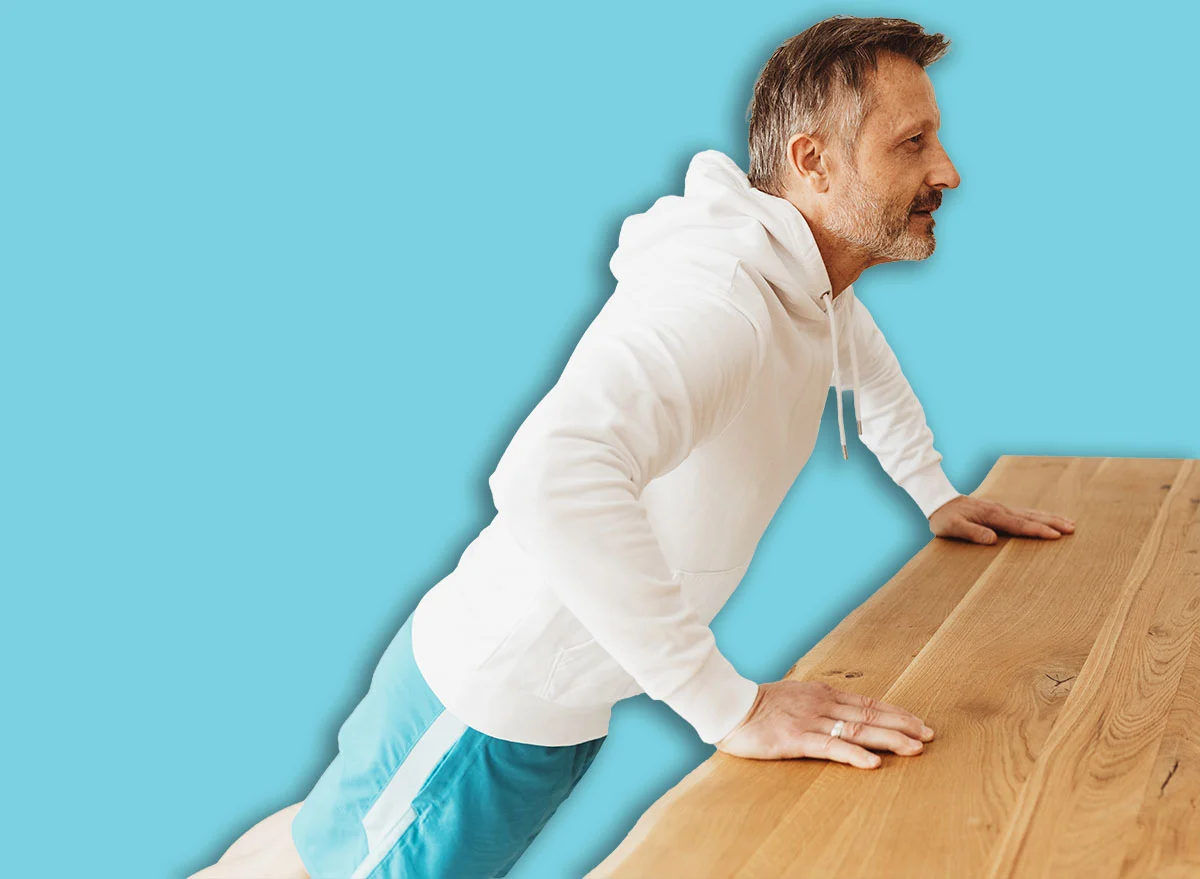
For many adults entering their sixties and beyond, the physical landscape of daily life begins to shift. Simple tasks—rising from a chair, navigating a set of stairs, or stepping over a curb—can occasionally feel less secure. This shift is rarely due to a single event; rather, it is the result of gradual changes in muscle mass, balance, and proprioception. However, experts are increasingly pointing to a solution that is hiding in plain sight: the kitchen counter.
Far from being merely a place to prepare meals, the kitchen counter serves as a sophisticated, ergonomic piece of stability equipment. Its height, sturdiness, and accessibility make it an ideal anchor for those looking to rebuild lower-body strength without the intimidation factor of a commercial gym. By integrating a simple, counter-supported routine into your daily life, you can reclaim the independence and confidence that come with stronger, more capable legs.
The Science of Stability: Why Support Matters
The primary barrier to exercise for older adults is often a lack of confidence in one’s balance. When a person feels "unsteady," the brain’s natural response is to limit movement, which ironically accelerates the loss of muscle mass—a condition known as sarcopenia.
Unlike gym machines, which often lock the body into a fixed, robotic path, counter-supported exercises allow for a more natural, functional range of motion. When you use a counter for support, you are not offloading the work; you are simply providing a safety net for your nervous system. This allows you to focus on the quality of the movement, proper alignment, and muscle recruitment rather than the fear of falling. By alleviating the "balance tax" on your brain, you can dedicate more cognitive and physical energy to the actual strength-building portion of the exercise.
Chronology of Strength: A Progressive Approach
Building strength after 60 is not about speed; it is about consistency and incremental progress. We can view the journey toward better mobility through a four-stage chronological process:
- Foundation (Weeks 1–2): Focus on movement quality. Use the counter for maximum support. Do not worry about depth or repetition counts; focus on keeping your spine neutral and your weight evenly distributed through your feet.
- Activation (Weeks 3–6): Begin to rely less on your hands. Use only your fingertips for balance. Start introducing a "pause" at the bottom of movements like squats to build time under tension.
- Integration (Weeks 7–10): Increase the range of motion. Aim for deeper squats and more controlled lunges. This is when your body begins to translate gym strength into real-world utility.
- Autonomy (Ongoing): Maintain the routine. At this stage, the counter acts only as a light tether, ensuring you remain upright during challenging movements.
The Core Four: A Counter-Supported Routine
This routine is designed to be performed two to four times per week. Each movement is curated to mimic the mechanics of daily living.
1. Counter-Supported Squats
The squat is the "king" of functional movements. It mirrors the act of sitting down and standing up, which is vital for long-term independence.
- The Benefit: It targets the quadriceps, glutes, and hamstrings simultaneously, ensuring your core remains engaged throughout the cycle.
- Execution: Stand facing the counter, feet shoulder-width apart. Lightly place your fingertips on the surface. Lower your hips as if sitting into an invisible chair, keeping your chest up and your heels planted. Drive through your mid-foot to return to a standing position.
2. The Reverse Lunge
Unlike forward lunges, which can put significant pressure on the knees, the reverse lunge is much more forgiving and easier on the joints.
- The Benefit: It improves single-leg stability, which is essential for climbing stairs and stepping over obstacles.
- Execution: Hold the counter for balance. Take a controlled step backward with one foot, dropping your back knee toward the floor. Ensure your front shin remains vertical. Push through the front heel to return to the starting position.
3. The Hip Hinge
Often overlooked, the hip hinge is critical for protecting the lower back and strengthening the posterior chain (the muscles on the back of the body).
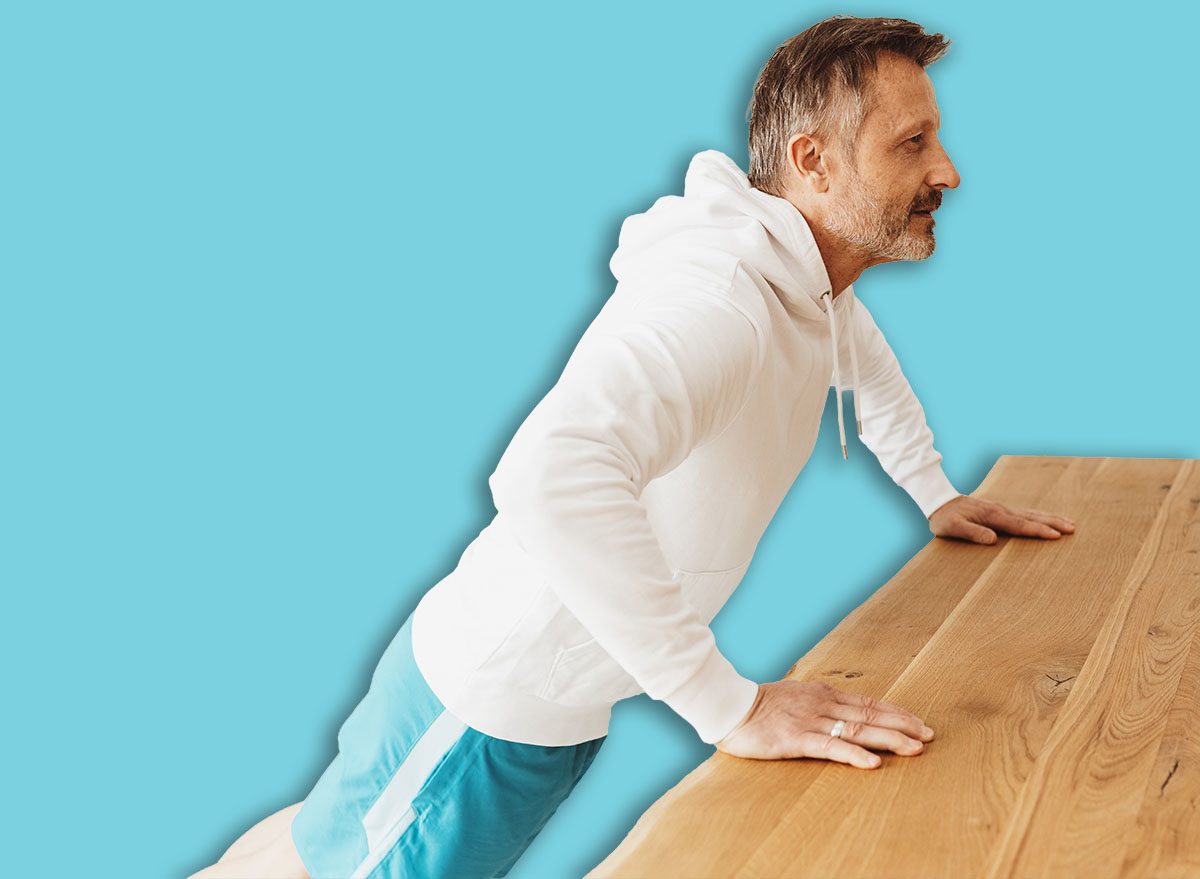
- The Benefit: It teaches the hips to act as the primary movers, which helps prevent back strain when lifting groceries or picking up objects from the floor.
- Execution: Stand a few inches back from the counter. With a slight bend in your knees, push your hips backward as if trying to touch the counter with your glutes, keeping your spine straight. You should feel a stretch in your hamstrings. Return to a standing position by squeezing your glutes.
4. The Calf Raise
The lower legs are the unsung heroes of balance. Strong calves provide the "spring" in your step and help stabilize the ankle joint.
- The Benefit: Improved gait efficiency and a significantly reduced risk of ankle rolls or trips.
- Execution: Stand tall, holding the counter for stability. Slowly rise onto the balls of your feet, pause for a second at the top, and descend with control. Ensure your ankles do not roll outward.
Supporting Data: Why Targeted Strength Training Works
Research consistently shows that resistance training for older adults yields profound physiological benefits. According to recent studies on muscle physiology in the aging population, strength training does more than just increase muscle fiber size; it enhances neuromuscular efficiency. This means that your brain becomes faster and more accurate at sending "fire" signals to your muscles, which directly improves balance.
Furthermore, the integration of movements like the hip hinge and the reverse lunge helps preserve bone density in the hips and spine. By applying controlled stress to the bones through these weight-bearing exercises, you are essentially signaling your body to maintain its structural integrity, a vital defense against age-related frailty.
Official Perspectives and Professional Guidance
Jarrod Nobbe, a renowned CSCS (Certified Strength and Conditioning Specialist), emphasizes that the "kitchen gym" concept is not just a convenience—it is a training philosophy. "For my clients over 60, the goal is not to lift the heaviest weight, but to move with the highest degree of intent," Nobbe notes. "When you remove the anxiety of falling, you unlock the ability to train with actual intensity."
Medical professionals often echo this sentiment, noting that "movement is medicine." The key, according to clinical guidelines for geriatric health, is to avoid sedentary behavior at all costs. Even if you can only complete five minutes of counter-supported work, the physiological cascade—improved blood flow, increased metabolic rate, and enhanced joint lubrication—is immediate and beneficial.
Implications for Longevity
The implications of adopting a consistent, counter-supported routine extend far beyond the kitchen. The primary goal of physical training in the latter stages of life is "functional reserve." This is the extra capacity your body has to handle unexpected physical demands—such as catching yourself when you trip, walking long distances while traveling, or simply keeping up with grandchildren.
By treating your kitchen counter as a sanctuary for strength, you are doing more than just exercising. You are investing in your future self. You are building a body that is not just capable of surviving, but capable of thriving. As you integrate these four moves into your weekly rhythm, you will likely find that the world outside your kitchen begins to feel a little more accessible and a lot less daunting.
Final Advice for Success:
- Consistency is Key: It is better to do 10 minutes of exercise four times a week than one long, exhausting session once a week.
- Listen to Your Body: A little muscle soreness is a sign of progress, but sharp pain is a signal to stop. Adjust your range of motion as needed.
- Stay Hydrated: Even light resistance training requires adequate hydration to support muscle function and joint health.
Your legs have carried you for decades; with the right support, they will continue to do so for decades to come. Start today, keep your grip light, and trust the process.