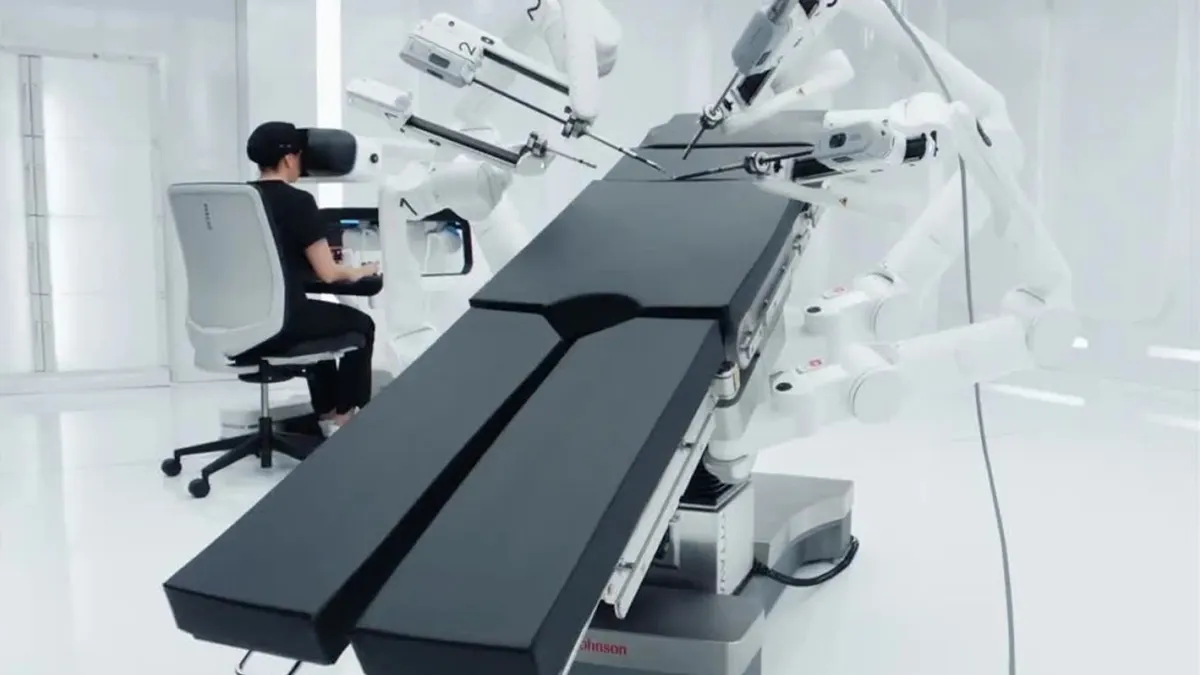
The landscape of modern surgery is undergoing a seismic shift as Johnson & Johnson (J&J) officially enters the U.S. robotic surgery market with the FDA authorization of its Ottava soft-tissue system. This milestone, which marks a significant turning point for the medtech giant, pits the company directly against the industry titan, Intuitive Surgical—the longtime hegemon of the field. While J&J heralds the arrival of Ottava as a pioneering leap in surgical design, Wall Street remains cautiously optimistic, questioning whether the newcomer can meaningfully challenge the deep-seated dominance of Intuitive’s da Vinci platform.
The Dawn of a New Surgical Paradigm
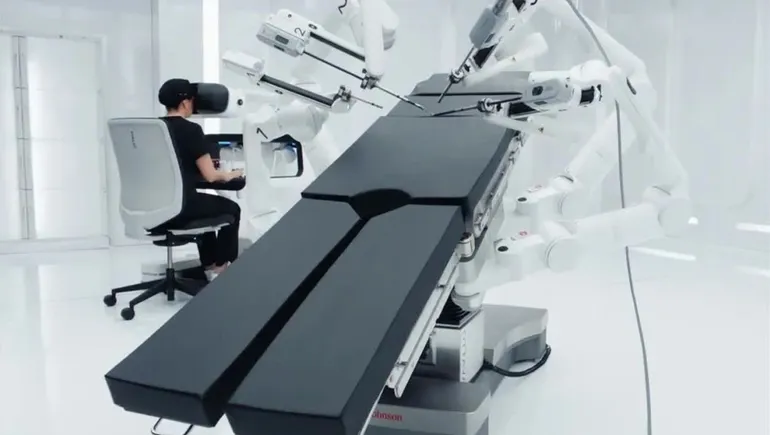
The Ottava system distinguishes itself through a radical design philosophy. Unlike traditional robotic surgery systems that rely on separate, cumbersome carts or boom-mounted arms that occupy significant floor space, Ottava integrates its robotic arms directly into the operating table itself.
Tim Schmid, J&J’s worldwide chairman for medtech, emphasized the gravity of this development in a recent statement: "We are pioneering a new category of surgical robotics with Ottava." By shifting the architecture of the robot from the periphery to the center of the surgical environment, J&J claims that the system takes up 30% to 50% less space than its competitors. This compact footprint is designed not merely for aesthetics but for practical utility: to help clinical teams streamline workflows, improve operating room efficiency, and facilitate easier access to the patient during complex procedures.
The system’s "bedside" integration allows for synchronized motion between the table and the robotic arms, a feature intended to simplify patient repositioning—a common pain point in multi-quadrant surgeries. Furthermore, Ottava boasts a suite of innovative surgical instruments and a robust digital platform designed to integrate real-time surgical data, aiming to provide surgeons with a higher degree of insight and precision.
Chronology: A Rapid Path to Authorization
The journey to this FDA authorization has been a testament to J&J’s aggressive focus on the MedTech sector. The authorization covers a broad range of general surgery indications, including:
- Bariatric and Gastrointestinal: Roux-en-Y gastric bypass, gastric sleeve, and gastrectomy.
- Abdominal: Cholecystectomy (gallbladder removal), appendectomy, and lysis of adhesions (scar tissue removal).
- Specialized Repair: Hiatal hernia repair and fundoplication.
The speed at which J&J achieved this milestone is noteworthy. Just six months after filing its FDA de novo submission, the company received the green light—a relatively quick turnaround for a device of this complexity. This pace underscores J&J’s internal momentum. Currently, the company is also conducting a U.S. clinical trial focused on inguinal hernia repair, signaling an intent to expand the system’s label as rapidly as possible.
This achievement comes after years of development, during which J&J faced significant internal and external pressure to deliver a viable robotic competitor to keep pace with the rapidly evolving digital surgery landscape.
Supporting Data and Technical Advantages
The primary value proposition for Ottava lies in its efficiency. In the high-stakes environment of a modern operating room, space is at a premium. By minimizing the footprint of the surgical robot, J&J is targeting the logistical frustrations of hospital administrators and surgeons who often struggle with the clutter of traditional boom-and-cart systems.
The ability to move the patient while the robotic arms remain in position is a "unique selling point," according to industry observers. In conventional systems, repositioning a patient often requires undocking the robot, which consumes valuable minutes and disrupts the surgical flow. Ottava’s design seeks to eliminate this friction.
However, technology is only one part of the equation. As Hani Abouhalka, J&J’s group chair of medtech surgery, noted: "Surgical robotics will play an increasingly important role in surgical care, but it’s clear that what defined the last 25 years of surgery will not define the next 25." This sentiment acknowledges that while the hardware is revolutionary, the true battleground will be in digital integration, data analytics, and the ease of adoption for surgical teams.
The Wall Street Perspective: A David vs. Goliath Narrative?
Despite the excitement surrounding the launch, the financial community remains measured. The market for robotic surgery is heavily entrenched. Intuitive Surgical, with its da Vinci systems, has spent decades building a massive installed base, a deep bench of trained surgeons, and an extensive ecosystem of service and support that is difficult for any newcomer to disrupt overnight.
The Skepticism of Market Analysts
Stifel analyst Rick Wise provided a balanced perspective to clients shortly after the announcement. While he acknowledged that the FDA authorization was a significant "win" that occurred well within J&J’s projected timeline, he cautioned against expecting an immediate market share shift.
"The robot’s launch will almost certainly take a deliberate and phased approach," Wise noted. "Significant training for physicians and staff will be required, and the indications for Ottava are still limited." He added that while J&J is now "in the game," the process of iterating and improving the system will be a long-term play.
J.P. Morgan analyst Robbie Marcus echoed these sentiments, labeling the potential impact on Intuitive as "very modest/immaterial" for the foreseeable future. "While Ottava does address certain real physician pain points," Marcus wrote, "we think it’s unlikely to materially dent Intuitive’s share."

The "Locked-in" Effect
The primary hurdle for J&J is the "da Vinci ecosystem." Surgeons who have spent their careers mastering the da Vinci interface are often reluctant to switch systems, especially when the current platform is reliable and well-supported. Furthermore, hospitals have significant capital tied up in Intuitive’s infrastructure, and switching requires massive re-training and operational adjustment.
Strategic Implications for the Future of MedTech
The entry of Ottava into the market is not just about one machine; it is about the broader strategy of Johnson & Johnson to dominate the "digital surgery" continuum. By integrating its surgical instruments, its digital data platform, and its robotic hardware, J&J is aiming to offer a comprehensive solution that captures data before, during, and after the surgery.
A Long-Term War of Attrition
J&J is playing a long game. The company’s goal is not necessarily to "kill" Intuitive, but to offer an alternative that is demonstrably better for specific, high-volume procedures. If J&J can prove that Ottava leads to better patient outcomes or significantly shorter surgical times in key areas like hernia repair, the adoption rate will likely accelerate.
The Role of Iteration
In the tech-driven world of medical devices, the first version is rarely the final version. J&J’s ability to iterate on the Ottava platform—refining the AI-driven analytics, adding new instrument types, and expanding indications—will be the true indicator of its competitive viability. As Hani Abouhalka hinted, the next 25 years of surgery will be defined by integration, not just robotic arms. If J&J can leverage its massive footprint in the pharmaceutical and medical device space to create a "connected" surgical experience, they may eventually capture a significant slice of the market.
Conclusion
Johnson & Johnson has officially fired the starting gun on a new era of surgical competition. With the Ottava system, they have introduced a novel, space-efficient, and highly integrated piece of technology that addresses real-world surgical challenges.
However, the path ahead is paved with significant hurdles. The "stickiness" of the incumbent, the requirement for extensive staff retraining, and the reality of a phased rollout suggest that the impact on the industry will be incremental rather than immediate. For now, the medical community will be watching closely to see if the clinical performance of Ottava in the real world can match the ambitious vision set forth by its creators. While the immediate threat to Intuitive Surgical may be minimal, the landscape has undeniably changed: the monopoly of the traditional robotic cart is being challenged, and the future of surgery has officially become a more crowded, and perhaps more innovative, space.