










In a counterintuitive discovery that bridges the gap between dietary habits and cardiovascular health, researchers at King’s College London have identified a surprising biochemical interaction: chewing sugary gum after consuming nitrate-rich vegetables can significantly enhance the body’s ability to lower blood pressure.
While the medical community has long championed the consumption of greens like kale, spinach, and beetroot for their nitrate content, the path from plate to bloodstream is complex. This new study, published in the British Journal of Clinical Pharmacology, suggests that the acidity levels within the oral cavity—often modulated by the simple act of chewing gum—serve as a critical, previously overlooked "switch" that determines how effectively the body utilizes these vital nutrients.
The Biological Pathway: From Soil to System
To understand the significance of this discovery, one must first look at the journey of dietary nitrates. Vegetables absorb nitrates from the soil, but these compounds are chemically inert in their raw form. They offer no immediate benefit to human cardiovascular health until they undergo a specific transformation facilitated by oral bacteria.
When we consume nitrate-rich plants, the nitrates are absorbed into the bloodstream and subsequently concentrated in our saliva. Upon entering the mouth, specialized commensal bacteria act as a biological factory, converting these nitrates into nitrites. Once swallowed, these nitrites circulate throughout the body, where they are converted into nitric oxide—a potent signaling molecule that relaxes and dilates blood vessels. This process, known as vasodilation, improves blood flow and is a well-documented mechanism for reducing systolic and diastolic blood pressure.
However, the efficiency of this "nitrate-nitrite-nitric oxide" pathway has long been a subject of scientific inquiry. Researchers have questioned whether the chemical environment of the mouth—specifically its pH level—acts as a bottleneck for this conversion.
Chronology of the King’s College Study
The research team, led by Dr. Andrew Webb, Clinical Senior Lecturer at the School of Cardiovascular & Metabolic Medicine & Sciences at King’s College London, sought to test a hypothesis that had remained largely theoretical: could increasing the acidity of saliva accelerate the conversion of nitrate to nitrite?
The Experimental Design
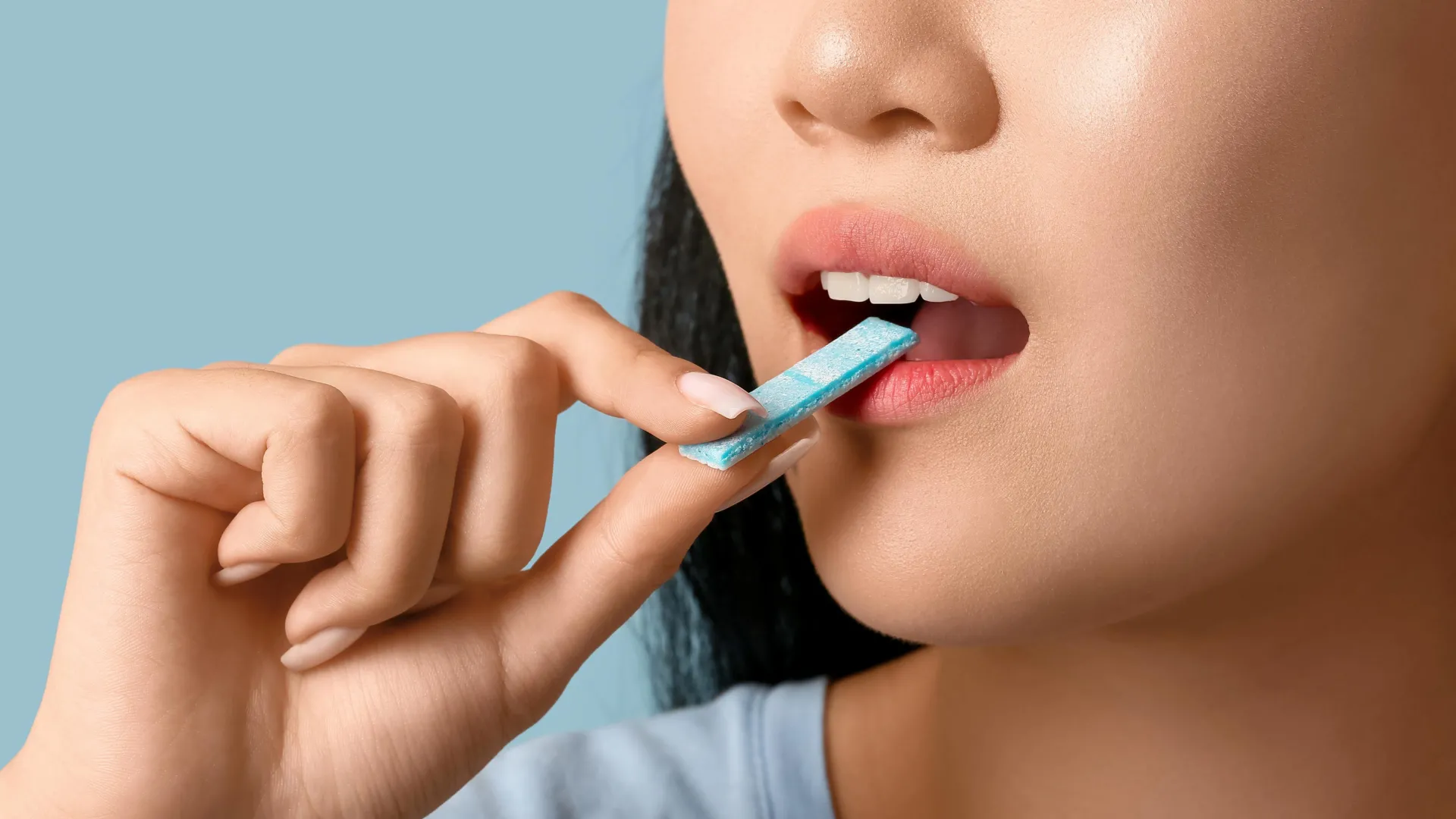
The researchers utilized a randomized, crossover study design to ensure high-quality data. Healthy participants were asked to consume a standard shot of beetroot juice, a concentrated source of dietary nitrate. Following the intake, participants were divided into groups and tasked with chewing either a sugar-containing gum (Hubba Bubba®) or a sugar-free alternative (Wrigley’s Extra®) for a period ranging between three to six hours.
To ensure the robustness of the findings, the participants returned one week later to repeat the process, with each individual switching their gum type. Throughout the duration of the experiment, the team collected continuous blood and saliva samples and monitored the participants’ cardiovascular responses.
Data Points and Observations
The results were striking. The group that chewed the sugar-containing gum exhibited a 1.4-point drop in salivary pH, indicating a significant increase in acidity. This shift in the oral environment correlated with a 45% increase in nitrite levels within the mouth and a 25% increase in circulating nitrite levels throughout the body.
The cardiovascular impact was equally measurable. Participants who chewed the sugary gum saw a reduction in systolic blood pressure—the pressure exerted when the heart beats—by nearly 3 mmHg. Diastolic blood pressure, measured during the heart’s resting phase between beats, dropped by nearly 2 mmHg compared to the sugar-free gum cohort.
Addressing the Mechanism: Why Acidity Matters
The interaction between saliva pH and nitrate reduction has been a "fundamental, yet understudied" question in physiological science, according to Dr. Webb.
Historically, scientific consensus suggested that higher acidity might inhibit the conversion process. However, this was largely based on in-vitro observations rather than whole-body, longitudinal studies. The King’s College team had previously observed an inverse effect: the combination of grapefruit juice (which alters saliva chemistry) with beetroot juice inhibited the conversion process. By testing the opposite—deliberately increasing acidity through sugar-containing gum—the researchers were able to confirm that a more acidic environment in the mouth creates a "favorable environment" for the bacterial conversion of nitrate.
Dr. Charlotte Mills of the University of Reading, a co-author of the study, noted that the duration of exposure is key. Unlike a sugary drink, which passes through the mouth quickly, chewing gum provides a sustained stimulus, maintaining the acidic environment necessary for the oral bacteria to maximize nitrate processing.
Official Responses and Expert Perspectives
The research team has been quick to manage public perception, emphasizing that these findings should not be misinterpreted as a dietary recommendation.
"We are certainly not suggesting that people should start chewing sugary gum regularly," Dr. Mills stated during the presentation of the findings. "Frequent sugar consumption is harmful for dental health and is also detrimental to cardiometabolic health when consumed in excess. Our findings provide a proof of concept that we may be able to improve how the body processes dietary nitrate, and future research should focus on developing tooth-friendly, metabolically sound approaches that achieve the same effect."
Dr. Webb added that the tradition of concluding a meal with a sweet, such as fruit, might be an accidental, health-promoting habit. "The classic culinary tradition of following a starter and a main course, especially if they contain nitrate-rich salad leaves and vegetables, with a sweet dessert—which could be fruit—may temporarily increase blood pressure-lowering and exercise enhancement," he noted.
However, the medical consensus remains firm: the short-term blood pressure benefits of sugary gum do not outweigh the long-term systemic risks of sugar, including obesity, type 2 diabetes, and dental decay.
Implications: A New Frontier for Sports Nutrition
While the general population is advised against adopting this habit, the study has opened a door for the world of elite athletics. Dietary nitrate is already an established ergogenic aid—a substance that enhances physical performance. Many endurance athletes regularly consume concentrated beetroot juice to improve oxygen efficiency and exercise performance.
If researchers can refine this "nitrate-boosting" method, they may be able to significantly increase the performance benefits athletes derive from their current supplement regimens.
"The challenge now is to identify alternative strategies that are both effective and appropriate for long-term use," Dr. Mills explained. The team is already planning a larger, more focused study involving athletes. By moving away from sugar-based solutions and toward "tooth-friendly, metabolically sound" alternatives that achieve the same pH-lowering effect, the researchers hope to unlock a safer, more effective way to enhance the physiological benefits of vegetable-based nutrition.
Looking Forward: Beyond the Sugar
The study serves as a masterclass in how human physiology is influenced by the complex interplay of environment, chemistry, and bacteria. The oral microbiome, often viewed primarily through the lens of dental hygiene, is clearly a vital participant in systemic metabolic processes.
As the scientific community digests these findings, the path forward appears clear:
- Validation: The upcoming study on athletes will determine if the 3 mmHg drop in blood pressure translates into measurable improvements in endurance or recovery.
- Innovation: Pharmaceutical and nutritional companies will likely explore ways to replicate the acidity shift caused by the gum without using high-fructose or sucrose-based additives.
- Clinical Caution: Public health messaging must remain clear that the "sugar-for-nitrate" trick is a scientific curiosity, not a clinical prescription for hypertension.
In conclusion, the research conducted at King’s College London highlights a fascinating, if paradoxical, biological mechanism. While we have known for years that vegetables are the building blocks of a healthy heart, we are only just beginning to understand the intricate chemical "negotiations" that happen inside our mouths to make those benefits possible. By identifying the role of oral acidity, Dr. Webb and his team have provided a new target for improving human performance and cardiovascular health, proving that sometimes, the secret to better health is hidden in the very way we eat.