








It has been more than two months since Dr. Marty Makary vacated the commissioner’s office at the U.S. Food and Drug Administration (FDA), yet the corridors of the agency remain without a permanent captain. This persistent leadership gap has triggered a wave of anxiety across the biopharmaceutical sector, where industry watchdogs and executives alike are warning that the lack of a Senate-confirmed leader creates a dangerous vacuum of policy direction. As the agency navigates an era of rapid technological advancement and mounting public scrutiny, the absence of a confirmed chief is not merely a bureaucratic hurdle—it is a potential bottleneck for the next generation of medical innovation.
The Chronology of a Chronic Problem
The FDA is no stranger to interim leadership, but the current duration of the vacancy is testing the patience of the industry. History suggests that the agency has often been left to drift between permanent appointments. Under the George W. Bush administration, the agency famously endured a 22-month period without a confirmed commissioner. More recently, during the early tenure of the Biden administration, the agency faced a 13-month gap.
These "acting" periods have become a recurring feature of the American regulatory landscape. Acting commissioners, who bypass the rigorous Senate confirmation process, are increasingly the norm rather than the exception. While these placeholders often provide a semblance of day-to-day operational continuity, they lack the political capital and long-term mandate required to spearhead transformative regulatory reform.
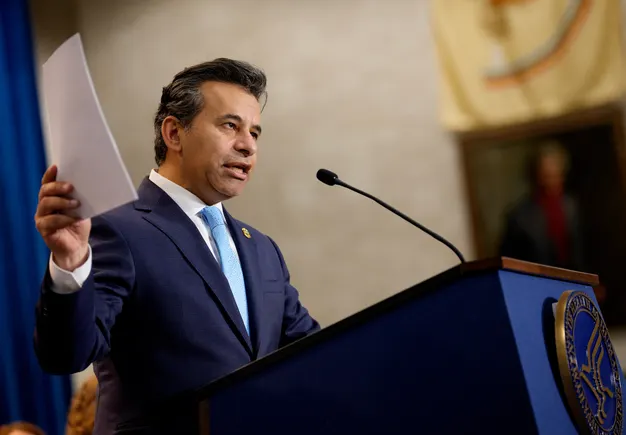
Currently, the agency is under the guidance of acting commissioner Kyle Diamantas. While Diamantas has earned praise for his legal acumen and a relatively steady hand following the tumultuous departure of Dr. Makary, his tenure is widely viewed as a temporary "holding pattern."
The Economic and Scientific Cost of Uncertainty
The pharmaceutical industry thrives on predictability. When companies invest billions of dollars into research and development, they do so based on established regulatory pathways and a clear understanding of the FDA’s evidentiary expectations. When leadership is in flux, those pathways can feel tenuous.
"Transition delays and really, any uncertainty in leadership are not good for the industry and not good for the public," says Genevieve Kanter, an economist and associate professor of public policy at the University of Southern California. "Companies will slow down their pipeline, delay their trials, and delay their submissions until they get more stability and clarity in terms of policy."
The implications for the patient community are profound. If a major pharmaceutical firm decides to pause a clinical trial or delay an application because the regulatory goalposts are shifting, patients waiting for life-saving therapies are the ones who ultimately pay the price. The "waiting game" creates a ripple effect: investors pull back, talent becomes harder to retain, and the speed of innovation slows to match the pace of Washington’s political calendar.
A Narrow Window for Confirmation
The path to installing a permanent commissioner is currently fraught with legislative obstacles. The Trump administration has yet to put forward a formal nominee, and the window for a Senate confirmation is rapidly closing.
"There are fewer than 30 legislative days between now and the election, during which either or both chambers will be in session," notes Jordan Brossi, a senior public affairs advisor at Holland & Knight. "This leaves a narrow window for Congress to advance items not already in process, let alone consider a nominee to lead a federal agency as significant as the FDA."
Furthermore, the Senate’s schedule between August and September is notoriously sparse, offering only a handful of weeks for the necessary pre-nomination vetting, staff reviews by the Senate Health, Education, Labor and Pensions (HELP) Committee, and the final floor vote. With the midterms looming, lawmakers are increasingly hesitant to engage in a contentious confirmation battle that could serve as a lightning rod for political friction.
The Candidates: A Study in Contrasts
As the White House weighs its options, three names have surfaced as potential frontrunners: Dr. Stephen Hahn, Dr. Brett Giroir, and Dr. Heidi Overton. Each brings a distinct profile to the table, and each would be interpreted differently by the market.
Dr. Stephen Hahn and Dr. Brett Giroir: The "Steady Hands"
Both Hahn and Giroir are viewed by the industry as "reassuring" choices. Their prior experience within the regulatory apparatus and their established reputations for prioritizing science-based, data-driven reviews provide a comfort level that is highly valued by pharma lobbyists. Their appointment would likely be seen as a signal that the agency is returning to its traditional, independent roots.
Dr. Heidi Overton: The Wild Card
Conversely, Dr. Heidi Overton, currently a domestic policy advisor in the Trump administration, represents a more unpredictable variable. With a smaller footprint in the traditional regulatory ecosystem, her nomination would force industry analysts to parse her past policy stances to determine whether she would act as a champion of FDA independence or as a closer extension of the White House’s specific health agenda. For the industry, this uncertainty is the primary source of the current tension.
Implications for Regulatory Integrity
The core mission of the FDA is to serve as the ultimate arbiter of safety and efficacy. However, recent years have seen the agency’s credibility tested by high-profile regulatory reversals and accusations of political interference. According to recent polling from the Kaiser Family Foundation (KFF), public trust in the FDA has hit a near-record low.
The next commissioner will inherit an agency in desperate need of a morale boost and a re-established sense of purpose. Beyond the daily reviews of drug applications, the new leader must tackle the looming reauthorization of the Prescription Drug User Fee Act (PDUFA). This "must-pass" legislation is the lifeblood of the FDA, providing the funding necessary to keep the agency’s review staff operational.
"The stakes for the FDA are high," Brossi explains. "The user fee act processes are considered mandatory, given the significant ramifications for both the FDA and regulated industries should authority to collect user fees expire."
Toward a Stable Future
If a nominee is not confirmed before the end of the current legislative session, the administration will be forced to wait until the new year to restart the process. This would effectively leave the FDA under acting leadership for months, if not another year.
For the scientific community, the "wish list" for the next commissioner is clear. As Kanter articulates, the agency needs someone with deep regulatory experience, an unwavering commitment to the science-policy process, and, perhaps most importantly, the resilience to manage "absurd levels of unpredictability."
The FDA’s strength has historically been its ability to rise above the fray of partisan politics to provide a clear, evidence-based standard for the medical industry. As the search for a permanent commissioner continues, the question is not just who will lead the agency, but whether the agency can maintain its independence in a political environment that increasingly demands loyalty over technical expertise.
Until that seat is filled, the pharmaceutical industry will continue to operate with a degree of caution, and the American public will remain in a state of suspended animation regarding the future of federal health policy. The appointment of a permanent commissioner is more than a formality—it is a critical necessity for the health of the nation’s innovation pipeline and the restoration of public confidence in the agency that guards the nation’s medicine chest.