








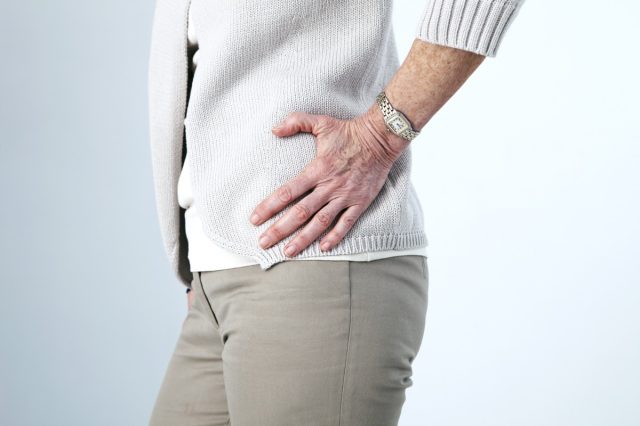
For many, the realization that aging is physically changing their life doesn’t happen during a strenuous hike or a long run. It happens in the living room, during the most mundane task imaginable: standing up from a comfortable chair. When that simple motion begins to require a grunt of effort, a push from the armrests, or a momentum-building rock, it serves as a silent warning sign that the body’s most critical engine—the hip complex—is losing its power.
Michael Betts, a veteran personal trainer with four decades of experience and co-founder of the UK’s leading fitness training institution, TRAINFITNESS, has spent the last 20 years observing this exact decline. "Hip strength is the single greatest predictor of independence for those over 60," Betts asserts. "It is the area most people neglect, and it is the area that, when restored, offers the most immediate improvement in quality of life."
The Anatomy of the Decline: Why Hips Fail
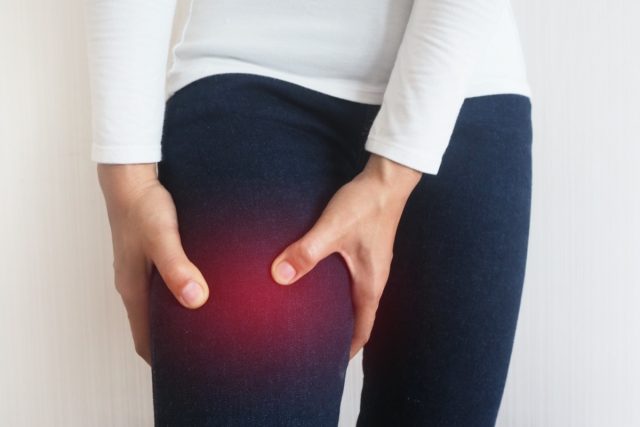
To understand why movement becomes difficult in later years, one must look at the "sitting culture" that dominates modern life. By the time a person reaches their 60s, decades of prolonged sitting have effectively "switched off" the glutes—the body’s largest and most powerful muscle group. When these muscles go dormant, they atrophy, leading to a loss of the structural support required for basic movement.
Conversely, the hip flexors—the muscles at the front of the hip—often become chronically tight and overactive. This imbalance creates a "tug-of-war" effect on the lumbar spine, frequently resulting in the trifecta of chronic issues: persistent lower back pain, knee instability, and hip discomfort.

Furthermore, the lateral stabilizers, specifically the gluteus medius, are almost universally ignored. These muscles are responsible for keeping the pelvis level during every step. When they weaken, the body begins to compensate, causing the hips to drop with every stride, which destabilizes the gait and invites injury. This leads to a dangerous psychological cycle: weakness causes "wobbles," wobbles induce caution, caution leads to restricted movement, and restricted movement accelerates further muscle loss.
Why the Chair is the Ultimate Fitness Tool
While the fitness industry often pushes high-tech gym memberships and complex machinery, Betts argues that the most effective tool for long-term mobility is already in your home: a sturdy, non-rolling dining chair.
"Gym machines often isolate muscles in ways that don’t translate to real-world function," Betts explains. "They strap you into a padded seat, removing the need for core stabilization. However, when you stand up from a dining chair, you are training your body to function as a unit."
Chair-based exercises provide a "graded progression" that machines cannot match. A beginner can use the chair to support a significant portion of their weight, gradually reducing that support as their strength returns. This removes the barrier of intimidation and significantly lowers the "friction" required to start a fitness routine.
A Four-Step Program for Hip Restoration
The following exercises are designed to be performed at home, three to five times per week. They target the functional patterns required for daily independence.
1. The Sit-to-Stand: The Gold Standard
This movement mimics the most fundamental requirement of independent living. By training the glutes, quadriceps, and hamstrings in unison, you directly improve your ability to rise from chairs, sofas, and even low car seats.
- The Technique: Sit on the edge of a sturdy chair with feet hip-width apart. Lean slightly forward, engage your core, and drive through your heels to stand.
- Form Tip: If you find yourself rocking to gain momentum, place a firm cushion on the seat to raise your starting height, making the movement more accessible while you build strength.
2. The Seated March
This exercise wakes up the hip flexors and demands core engagement to keep the trunk tall. It is essential for maintaining a healthy stride length.
- The Technique: Sit tall, hold the sides of the chair for stability, and lift one knee toward your chest in a controlled motion, then lower it slowly.
- Form Tip: Focus on keeping the spine elongated. Imagine a string pulling the crown of your head toward the ceiling.
3. The Standing Side Leg Lift
Targeting the gluteus medius, this movement is the secret to perfect balance. By strengthening the outer hip, you prevent the pelvis from dropping during walking.
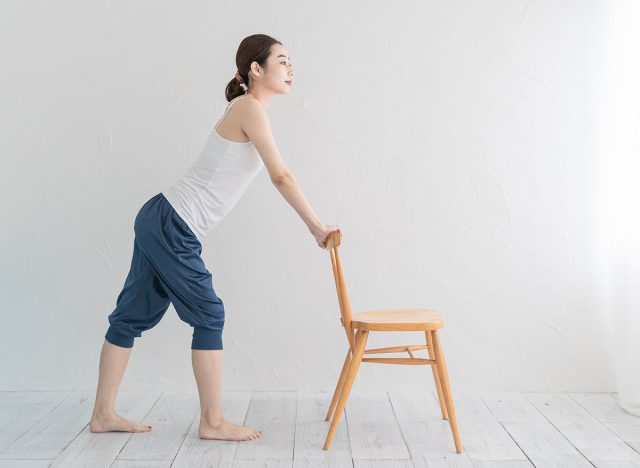
- The Technique: Stand behind your chair, holding the back for balance. Keep your trunk perfectly still while lifting one leg out to the side, then return it slowly.
- Form Tip: A small, controlled movement is vastly superior to a large, swinging motion. If your body is swaying, the exercise is too large—reduce the range of motion.
4. The Standing Hip Extension
This exercise isolates the gluteus maximus, the powerhouse used when climbing stairs or walking uphill.
- The Technique: Stand behind the chair, keeping your back straight. Slowly extend one leg straight back behind you, squeezing the glute at the peak of the movement.
- Form Tip: The focus should be on the contraction. A two-inch movement with a strong glute squeeze is more effective than a one-foot movement that forces the lower back to arch.
Safety and Clinical Considerations
While these exercises are accessible, they are not a substitute for medical advice. Those who have undergone hip or knee replacement surgery within the last 12 months, or those suffering from advanced, symptomatic arthritis, must consult their physician before starting.
Additionally, if you have experienced a fall in the last six months, it is vital to rule out underlying clinical issues such as vestibular (inner ear) disorders or orthostatic hypotension (blood pressure drops upon standing) before beginning a standing exercise program. Always use a stable, non-folding dining chair for these routines.
Timeline of Results: What to Expect
Consistency is the primary driver of success in this program.
- Two Weeks: Most practitioners report a noticeable reduction in the effort required to stand up. This is a clear indicator of improved neuromuscular recruitment and early-stage strength gains.
- Four Weeks: Users typically report a "lighter" feeling during walking. Because the hips are now firing more effectively, stride length naturally increases, and the pelvis remains stable, making it easier to keep pace with faster walkers.
- Six Weeks: Daily tasks—getting into a car, stepping over a bathtub edge, or rising from a low sofa—no longer feel like a struggle. Clinical data suggests that, at this stage, participants often see a 30 to 50 percent increase in strength on the "sit-to-stand" test.
Implications for Long-Term Health
The implications of this training extend far beyond the physical ability to stand. By reclaiming hip strength, individuals regain the confidence to move freely through their environment. This prevents the "fear-avoidance" cycle, where the elderly stop participating in social activities because of the physical difficulty of moving.
Betts concludes, "Strength is the foundation of confidence. When you stop worrying about how you are going to get out of a chair, your world stops shrinking. You start moving more, you start socializing more, and you regain the autonomy that is often lost to inactivity. It isn’t just about stronger hips; it’s about a stronger life."
By dedicating just 12 to 15 minutes, three times a week, to these foundational movements, individuals can effectively "reset" their functional baseline, ensuring that the next chapter of their lives is defined by activity rather than limitation.