NEW YORK, NY – In a monumental leap forward for assistive technology, Wandercraft has officially launched the U.S. commercial availability of Eve, heralded as the world’s first FDA-cleared self-balancing personal exoskeleton. This revolutionary device promises to redefine independent mobility for eligible adults living with spinal cord injuries (SCI) at any neurological level, offering them the freedom to stand, walk, and interact with their environment hands-free. The announcement, following years of rigorous development and clinical validation, marks a significant paradigm shift in how individuals with complex mobility challenges can engage with daily life.
Main Facts: A New Dawn for Mobility
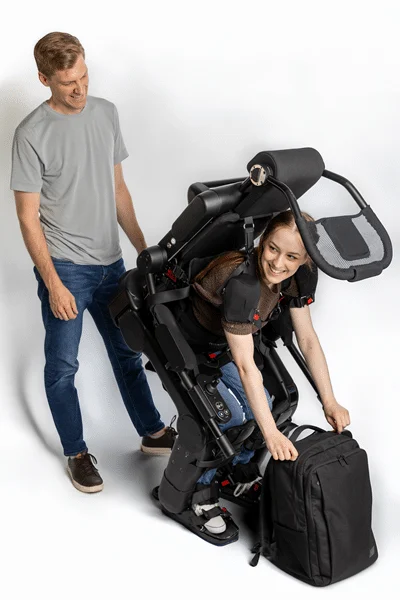
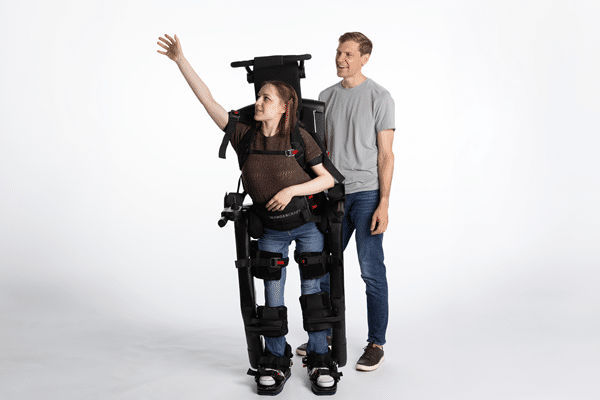
The commercial launch of Wandercraft’s Eve exoskeleton in the United States represents a pivotal moment in rehabilitative medicine and assistive technology. Designed to empower individuals with spinal cord injuries, Eve introduces a level of independence previously unattainable for many. Unlike conventional exoskeletons that necessitate the use of crutches or walkers for stability, Eve integrates sophisticated self-balancing technology, powered by advanced physical AI. This innovation liberates users’ hands, allowing them to perform a myriad of everyday tasks that require upper limb dexterity – from preparing meals and opening doors to carrying objects and engaging in social interactions at eye level.
A critical differentiator for Eve is its broad eligibility criteria. Following its FDA clearance, Eve is now accessible to adults with spinal cord injuries at any neurological level, a significant expansion from the limitations imposed by previous devices in this category. Eligibility hinges on the individual’s ability to safely operate the device’s controller and the absence of specific contraindications outlined in the User Manual. This inclusive approach reflects the robust safety data, comprehensive clinical evidence, and extensive usability testing that underpinned Wandercraft’s successful FDA submission.
The process for obtaining an Eve exoskeleton is meticulously structured, beginning with a thorough clinical evaluation and trial. Prospective users, upon successful trial completion and a physician’s order, proceed to have an Eve custom-fitted and manufactured to their specific requirements. This personalized approach extends to a comprehensive training program, conducted by the Wandercraft team, ensuring each user is proficient and confident in operating their device before delivery. Post-delivery, Wandercraft emphasizes ongoing support, underscoring its commitment to user success and long-term independence. Eve is designed to complement, rather than replace, a wheelchair, providing an invaluable alternative mobility option for moments when users choose to be upright, enriching their physical and social engagement.
A New Era of Mobility: Unpacking Eve’s Technology and Accessibility
The advent of Wandercraft’s Eve exoskeleton ushers in a new era for personal mobility devices, distinguished by its unique technological prowess and remarkably inclusive design. At its core, Eve is more than just a walking aid; it is an intelligent system engineered to restore a fundamental aspect of human experience: upright, hands-free movement.
The Self-Balancing Revolution
The most defining characteristic of Eve is its self-balancing capability, a direct result of Wandercraft’s proprietary "physical AI." This advanced artificial intelligence continuously monitors and adjusts the exoskeleton’s posture and gait, mimicking human balance mechanisms. This intricate system eliminates the need for external support devices like crutches or walkers, which are typically required with other exoskeletons. For users, this translates into an unprecedented level of freedom and functionality. Imagine being able to stand at a kitchen counter, chop vegetables, and stir a pot, all while maintaining a stable, upright posture. Or greeting a friend with a handshake, opening a heavy door, or carrying a tray – activities that become profoundly challenging or impossible when one’s hands are occupied by crutches. Eve empowers users to reclaim these seemingly small, yet profoundly impactful, moments of daily living. Its design is not merely about movement but about enabling a richer, more integrated participation in life, fostering greater independence and self-reliance in personal, domestic, and social environments.
Expanding the Horizon of Eligibility
The FDA clearance for Eve stands out for its groundbreaking lack of restrictions based on the neurological level of spinal cord injury. This is a significant departure from previous exoskeleton technologies, which often had stringent requirements regarding residual muscle function or injury level, effectively limiting their reach to a smaller subset of the SCI community. Wandercraft’s extensive data submission, encompassing comprehensive safety data, robust clinical evidence, and meticulous usability testing, convinced regulators of Eve’s safety and efficacy across a broader spectrum of users.
Consequently, eligibility for Eve extends to adults with spinal cord injuries at any level, provided they can safely operate the device’s intuitive controller and do not present with any contraindications listed in the User Manual. This expanded accessibility means that individuals with higher-level injuries, such as tetraplegia, who were previously excluded from using such devices, may now find a viable path to upright mobility. This inclusive approach not only democratizes access to advanced assistive technology but also underscores Wandercraft’s commitment to maximizing the number of individuals who can benefit from Eve’s transformative capabilities. The implications for the SCI community are profound, opening doors to improved physical health outcomes, enhanced psychological well-being, and greater social integration for a larger population than ever before.
Chronology of Innovation and Regulatory Milestones
The journey of Wandercraft’s Eve exoskeleton from an ambitious concept to a commercially available, FDA-cleared device is a testament to persistent innovation, rigorous scientific inquiry, and strategic development. The path has been marked by significant milestones, each contributing to the realization of a truly groundbreaking mobility solution.
Wandercraft, a French robotics company, embarked on its mission with a vision to revolutionize walking assistance through advanced robotics and artificial intelligence. Their initial work focused on creating exoskeletons that could replicate natural human gait and balance with unparalleled precision. This foundational research led to the development of sophisticated algorithms and robotic systems capable of dynamic self-balancing, setting the stage for what would become Eve. The company’s prior success with the Atalante X, a self-balancing exoskeleton primarily used in clinical rehabilitation settings, provided invaluable experience and data that directly informed the development and refinement of the personal-use Eve.
A critical juncture in Eve’s chronology was the pursuit and eventual achievement of FDA clearance. Navigating the stringent regulatory pathways of the U.S. Food and Drug Administration requires exhaustive testing, detailed documentation, and compelling clinical evidence demonstrating both safety and efficacy. Wandercraft meticulously gathered extensive safety data, conducted numerous clinical trials, and performed usability testing across a diverse cohort of participants with spinal cord injuries. The FDA clearance was not merely a bureaucratic hurdle overcome; it was a validation of Eve’s technological maturity, its safety profile, and its potential to deliver significant clinical benefits without the restrictive neurological level criteria common to previous devices. This clearance signified that Eve was deemed ready for broad application in the American market, paving the way for its commercial debut.
Following the FDA’s green light, Wandercraft pivoted its focus towards establishing the necessary infrastructure for commercialization. This involved setting up manufacturing processes for individualized fitting, developing comprehensive user training programs, and forging strategic partnerships for distribution and ongoing support. The official U.S. commercial launch, celebrated in New York City with the United Spinal Association, was the culmination of these efforts. This event not only marked Eve’s availability but also served as a powerful platform to showcase its capabilities through live demonstrations and to gather key stakeholders – including individuals living with SCI, clinicians, researchers, policymakers, and disability advocates – to witness this transformative technology firsthand. Matthieu Masselin, co-founder and CEO of Wandercraft, encapsulated the significance of this moment, stating, "FDA clearance showed that Eve was ready to move forward. Today is about making it a reality for the people we built it for. We have spent years developing the robotics, but our breakthroughs only matter when we’re able to better connect people to the world around them." This statement underscores the human-centric philosophy that has guided Eve’s entire developmental chronology, from its inception to its market introduction.
Supporting Data and Clinical Validation
The commercial launch of Wandercraft’s Eve is underpinned by a robust foundation of scientific research and clinical validation, ensuring that its groundbreaking capabilities are not merely theoretical but proven in real-world applications. Two recent peer-reviewed studies highlight the efficacy and safety of Eve, particularly for individuals with high-level spinal cord injuries.
Peer-Reviewed Research Paving the Way
One of the most compelling pieces of evidence supporting Eve’s transition to personal use was published in the Journal of Visualized Experiments (JoVE). This study focused specifically on evaluating how individuals with tetraplegia and high paraplegia, along with their companions, could be trained to proficiently use a self-balancing exoskeleton for personal, at-home applications. The research, conducted at the esteemed Kessler Foundation and the James J. Peters VA Medical Center, addressed a critical question: can complex assistive technology be integrated safely and effectively into daily routines by individuals with significant mobility impairments and their support networks?
The findings were overwhelmingly positive. Among the initial 16 participants who successfully completed the rigorous protocol, all achieved the study’s predefined performance goals for key mobility assessments. These included the Timed Up and Go (TUG) test, a standard measure of functional mobility, and the 6-Minute Walk Test, which assesses walking endurance. Furthermore, the study demonstrated remarkable success in training users for donning and doffing the device independently or with minimal assistance: 15 out of 16 participants achieved the donning goal after just four training sessions, and all participants successfully achieved the doffing goal. Crucially, the researchers reported no serious adverse events among the participants who completed the protocol, underscoring Eve’s robust safety profile even in complex user scenarios. This research provides a strong scientific basis for the practicality and safety of Eve for personal use, especially for a population previously underserved by exoskeleton technology.
Pivotal Study Outcomes
Further reinforcing Eve’s clinical validation, additional research findings were presented at the Academy of Spinal Cord Injury Professionals (ASCIP) Annual Meeting in Salt Lake City. This presentation detailed outcomes from Wandercraft’s pivotal study, which also involved 16 participant pairs from the James J. Peters VA Medical Center and Kessler Foundation. The results from this crucial study corroborated and expanded upon the JoVE findings, providing a comprehensive picture of Eve’s performance.
The study concluded that Eve effectively supported safe, hands-free assisted walking for people with spinal cord injury, maintaining a remarkably low adverse-event rate. Participants in the study not only demonstrated improved walking capabilities but also successfully performed a range of key mobility tasks and activities of daily living (ADLs) while using the exoskeleton. Critically, the data indicated high levels of perceived safety among users, strong user satisfaction with the device, and ease of training, suggesting that the learning curve for Eve is manageable and effective. These findings collectively paint a picture of a device that is not only technologically advanced but also user-friendly and clinically beneficial, providing compelling evidence for its commercial deployment and widespread adoption. The meticulous research and positive outcomes highlight Wandercraft’s commitment to evidence-based innovation, ensuring that Eve offers a truly transformative and validated solution for personal mobility.
Official Responses and Strategic Partnerships
The launch of Wandercraft’s Eve in the U.S. is not just a technological announcement; it’s a testament to a collaborative ecosystem involving the company’s leadership, the invaluable input of test pilots, and strategic partnerships designed to ensure broad access and comprehensive support.
Voices from Wandercraft
Matthieu Masselin, co-founder and CEO of Wandercraft, articulated the profound significance of this milestone. His statement, "FDA clearance showed that Eve was ready to move forward. Today is about making it a reality for the people we built it for," underscores the company’s deep-seated commitment to its users. Masselin further elaborated on the extensive effort behind the scenes: "We have spent years developing the robotics, but our breakthroughs only matter when we’re able to better connect people to the world around them. That’s why we built an infrastructure that supports people every step of the way, from evaluation and fitting to reimbursement, training, and ongoing service." This holistic approach highlights Wandercraft’s understanding that a revolutionary device requires an equally robust support system to truly impact lives, addressing every facet of the user journey from initial inquiry to long-term use.
User Perspectives
The most powerful endorsements often come directly from those who experience the technology firsthand. Caroline Laubach, a dedicated Wandercraft test pilot, shared a deeply personal perspective on Eve’s impact. "With Eve, being upright isn’t just about standing. It’s about having the freedom to use my hands, move through my home, and connect with people in a new way," she expressed. Her words capture the essence of Eve’s transformative potential, emphasizing the qualitative improvements in daily life beyond mere physical mobility. "Those everyday moments bring me so much joy. What makes this milestone especially meaningful is knowing that more people will now have the chance to experience Eve for themselves and find that same joy in their own way," Laubach concluded, highlighting the emotional and social benefits that accrue from regained independence and freedom.
Distribution and Access Ecosystem
To ensure Eve reaches those who can benefit most, Wandercraft has established a comprehensive distribution and access network. A cornerstone of this strategy is the partnership with National Seating & Mobility (NSM), which serves as Wandercraft’s exclusive Complex Rehabilitation Technology (CRT) distribution partner for Eve. NSM, with its extensive network of over 180 locations across the U.S., plays a crucial role in facilitating the evaluation, education, access, and delivery of Eve. Their expertise in connecting users with clinicians, Assistive Technology Professionals (ATPs), payers, and other specialists is vital for navigating the complexities of acquiring and utilizing a sophisticated mobility device.
Complementing this national network, Good Shepherd Rehabilitation has been designated as a Wandercraft Center of Excellence. This partnership expands access to Eve in Pennsylvania’s Lehigh Valley, leveraging Good Shepherd’s deep expertise gained from supporting patients with Wandercraft’s Atalante X exoskeleton. As an exclusive Eve partner in the region, Good Shepherd’s Hyland Center will provide a dedicated space for eligible users and their companions to learn about and experience the technology, with plans for additional access locations in the future.
Furthermore, recognizing the unique needs of veterans, USVetServ, a Service-Disabled Veteran-Owned Small Business, will act as an authorized independent distributor of both Eve and Atalante X for the U.S. Department of Veterans Affairs (VA). This partnership ensures that veterans across the nation, through VA medical centers and other facilities, will have dedicated access to these advanced mobility solutions, reaffirming a commitment to those who have served.
Wandercraft also maintains a dedicated access team to assist users and their care teams in navigating the often-complex landscape of benefits, documentation, reimbursement, and financing. For eligible individuals who meet medical necessity requirements, Medicare covers qualifying personal exoskeletons as custom-fitted orthoses under HCPCS billing code K1007, subject to individual coverage requirements. This multi-faceted approach to distribution, support, and financial navigation underscores Wandercraft’s commitment to making Eve accessible and manageable for its intended users.
Implications and Future Outlook
The U.S. commercial launch of Wandercraft’s Eve exoskeleton is more than just a product release; it represents a significant inflection point in the journey toward enhanced independence for individuals with spinal cord injuries. Its implications extend far beyond the immediate users, touching upon societal perceptions of disability, healthcare economics, and the future trajectory of assistive robotics.
Transformative Impact on Daily Life
The most immediate and profound implication of Eve’s availability is the transformative impact it will have on the daily lives of eligible users. The ability to stand and move hands-free, irrespective of the neurological level of injury, offers not just physical benefits but also immense psychological and social advantages. Being at eye level during conversations, performing household chores without assistance, or simply reaching for an item on a high shelf can significantly boost self-esteem and foster a sense of autonomy. This increased independence can also lead to a reduction in caregiver burden, freeing up family members or professional caregivers for other tasks and improving their quality of life as well. Social participation is likely to increase as users feel more confident and capable in various environments, breaking down barriers that often isolate individuals with mobility impairments. Furthermore, the physical act of weight-bearing and walking, even assisted, has known health benefits, including improved bone density, circulation, and bowel function, potentially reducing secondary complications associated with prolonged sitting.
Navigating the Path to Personal Use and Reimbursement
While Eve’s technology is groundbreaking, its widespread adoption hinges on accessibility, particularly through robust reimbursement pathways. Wandercraft has proactively addressed this by establishing a dedicated access team to guide users and their care providers through the intricate processes of navigating benefits, documentation, and financing. The fact that Medicare covers qualifying personal exoskeletons as custom-fitted orthoses under HCPCS billing code K1007 is a crucial step. However, individual coverage requirements and the varying policies of private insurers will still present challenges. The success of this launch will depend significantly on continued advocacy and education to ensure that medical necessity is broadly recognized, and that financial barriers are minimized. The collaboration with partners like National Seating & Mobility and USVetServ is strategic in demystifying this process and maximizing the chances of successful acquisition for a diverse user base, including veterans.
The Road Ahead for Exoskeleton Technology
Eve’s self-balancing "physical AI" sets a new benchmark for exoskeleton technology, likely spurring further innovation across the industry. The future may see even more compact, intuitive, and versatile designs, potentially incorporating advanced sensor fusion, enhanced AI algorithms for predictive movement, and broader applications beyond spinal cord injury rehabilitation. Wandercraft, having established itself as a leader in this niche, is poised to continue driving these advancements. The success of Eve could accelerate research into integrating exoskeletons with brain-computer interfaces or developing devices that adapt even more seamlessly to individual user intent and environmental cues. This launch is not just about a single product; it’s a testament to the potential of robotics to profoundly improve human lives and a clear signal that the era of intelligent, personal mobility assistance is now fully upon us. As more data from real-world usage emerges, further refinements and expanded indications for Eve and future generations of exoskeletons are highly anticipated, promising an even brighter future for mobility-impaired individuals worldwide.
To learn more about Eve or to request an evaluation, interested individuals can visit: https://www.wandercraft.eu/form.