











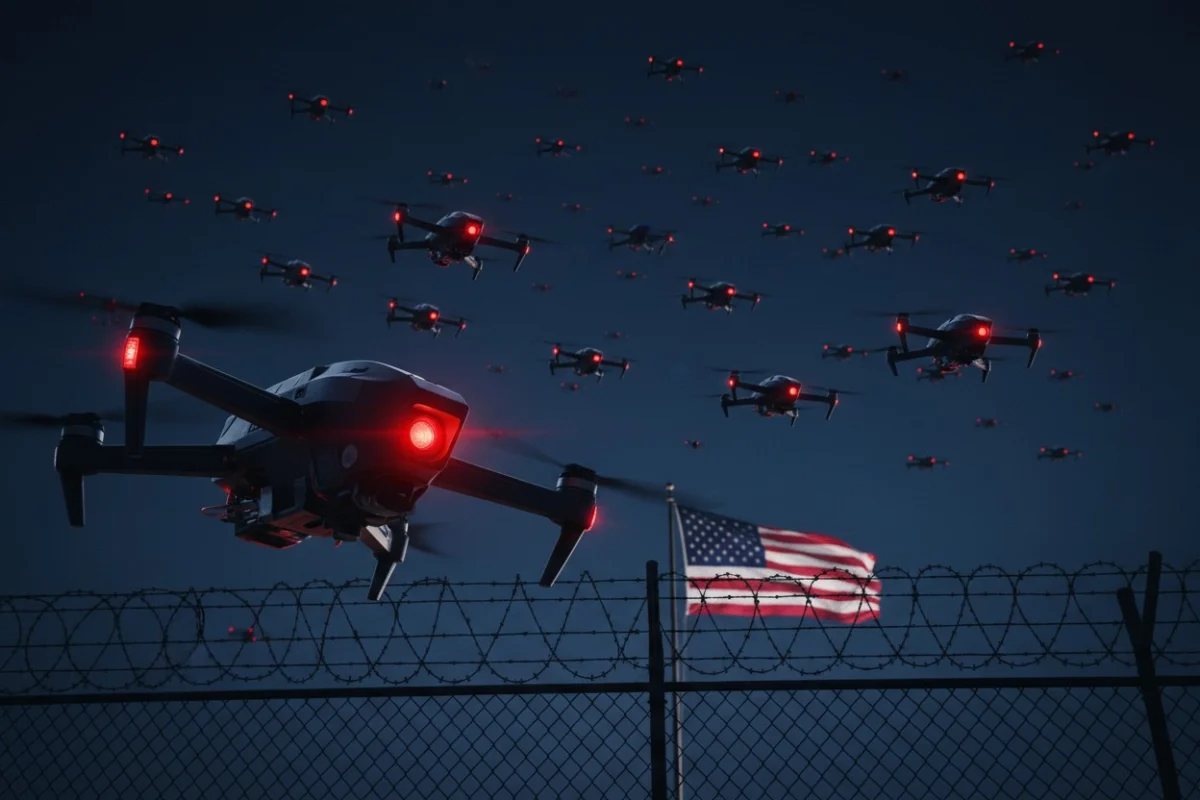
WASHINGTON, D.C. — In a decisive move to fortify the nation’s critical infrastructure and airspace, Federal Communications Commission (FCC) Chairman Brendan Carr announced a sweeping proposal on July 21 aimed at prohibiting the importation and sale of foreign-produced military-grade drones within the United States. The initiative, which targets high-end aerial systems capable of "swarming" maneuvers and other dual-use technologies, marks a significant escalation in the federal government’s efforts to neutralize what officials have termed an "unacceptable risk to national security."
The proposal seeks to tighten the regulatory net around drone hardware that has historically bypassed standard scrutiny, effectively cutting off the domestic market from foreign manufacturers whose systems could be repurposed for espionage, cyber-warfare, or kinetic attacks.
Main Facts: A Pivot Toward Hardened Supply Chains
The FCC’s proposed rule is designed to restrict the continued importation and sale of foreign-made military-grade drones and their critical components to any entity outside the U.S. government. By targeting technologies that possess "dual-use" capabilities—meaning they can serve both legitimate commercial functions and offensive military operations—the FCC is positioning itself as a primary gatekeeper in the battle for technological sovereignty.
Chairman Carr, taking to the social media platform X (formerly Twitter) shortly after the announcement, framed the move as a vital component of a broader strategy. "This is another step to strengthening and securing America’s drone supply chain," Carr stated, emphasizing that the era of unfettered access to foreign drone technology is rapidly drawing to a close.
The primary focus of the regulation involves systems engineered for "swarming"—a tactic where dozens or hundreds of drones operate in a coordinated, autonomous fashion to overwhelm traditional defense systems. As these platforms become more lethal and accessible, the FCC’s regulatory mandate—traditionally focused on spectrum management—is increasingly shifting toward the physical security of the hardware that utilizes that spectrum.
Chronology of Regulatory Escalation
The FCC’s current proposal does not exist in a vacuum; it is the culmination of a multi-year effort to decouple U.S. technological interests from foreign adversaries.
- 2022–2025: The FCC initiated a series of bans targeting Chinese telecommunications and surveillance giants, including Huawei, ZTE, Hytera, Hikvision, and Dahua, citing long-standing concerns regarding espionage and data exfiltration.
- December 2025: The agency implemented a landmark ban on new drone models from major manufacturers DJI and Autel. This action served as the first major salvo against the dominance of Chinese-manufactured hardware in the U.S. consumer and enterprise drone markets.
- July 13, 2026: A pivotal report from ZeroHedge shed light on the ease with which military-grade hardware is being sold on the open market. The investigation revealed that a Hong Kong-based company was openly advertising interceptor drones via social media platforms like Facebook, providing prospective buyers with pricing sheets in minutes—bypassing traditional export controls.
- July 21, 2026: Chairman Carr formally unveiled the proposal to extend these bans to all foreign-made military-grade drones, citing the urgent need to address the vulnerabilities exposed by the ZeroHedge report and broader intelligence assessments.
The Proliferation of Lethal Robotics: Supporting Data
The urgency of the FCC’s proposal is underscored by the rapid evolution of "low-cost, high-lethality" drone technology. During a Senate hearing on July 21, Joint Chiefs of Staff Chairman Gen. Dan Caine provided a stark assessment of the current threat landscape.
"The battlefield now stretches from the seabed to space," Gen. Caine noted, highlighting that the ubiquity of affordable drone technology has effectively democratized high-precision lethal capabilities. Where military-grade hardware was once the sole province of nation-states, it is now available to non-state actors and rogue individuals. This shift has rendered traditional border security and airspace management strategies obsolete.
Experts point to the "swarming" phenomenon as the most dangerous development in recent robotics. By utilizing AI-driven coordination, these drones can bypass conventional radar and interception systems. Furthermore, the ease of access via social media marketplaces creates a "gray market" for military hardware that defies federal oversight, leaving the U.S. vulnerable to asymmetric threats that could target critical power grids, military installations, or public gatherings.
Official Responses and Industry Sentiment
The proposal has drawn a complex mix of support and apprehension. Security hawks and defense officials have lauded the FCC for taking a proactive stance, arguing that the U.S. can no longer afford to rely on supply chains controlled by geopolitical rivals.
However, the industry response has been more guarded. While most major U.S. drone manufacturers support the tightening of security standards, some civil liberties groups and commercial drone operators have raised concerns regarding potential government overreach. Critics argue that a broad ban on "military-grade" components could inadvertently stifle innovation, as many dual-use components (such as high-end GPS modules or encrypted communication chips) are also essential for agricultural, surveying, and search-and-rescue drone operations.
Chairman Carr has remained steadfast, arguing that the security risks—specifically the threat of foreign intelligence agencies utilizing these drones to conduct persistent surveillance over U.S. soil—far outweigh the economic inconvenience to commercial sectors.
Implications for U.S. Airspace Security
Federal law enforcement and intelligence agencies now view a significant domestic drone incident as a "when, not if" scenario. The FCC’s proposal is a key pillar in a "whole-of-government" approach to hardening the domestic landscape.
Hardening Critical Infrastructure
The proposed ban directly supports the hardening of military bases, energy plants, and data centers. By limiting the availability of drones that can navigate around GPS-denied environments or utilize encrypted frequencies, the FCC hopes to force a transition to "trusted" domestic hardware that can be audited for backdoors.
Law Enforcement Capabilities
The government’s ability to track and intercept unauthorized drones is also maturing. Recent incidents, such as the successful tracking and arrest of two men operating a drone near Logan Airport, demonstrate that federal agencies (including the FCC and the Department of Homeland Security) are becoming increasingly proficient at identifying drone operators in real-time. The new regulatory framework will provide these agencies with a stronger legal basis to seize or block the importation of the hardware before it even reaches the end-user.
The Future of the Drone Market
The long-term impact of this rule could be a permanent shift in the global drone market. By making the U.S. a "closed" market for foreign military-grade systems, the FCC is effectively incentivizing the domestic manufacturing sector to scale up production. While this may increase costs for end-users, the administration appears willing to pay this "security premium" to ensure that the hardware operating in American skies is not compromised.
Conclusion: A New Precedent for Tech Regulation
The FCC’s proposal to ban the importation of foreign military-grade drones is more than just a supply chain regulation; it is a declaration of intent. As the line between civilian technology and military weaponry continues to blur, the federal government is signaling that it will no longer permit the proliferation of dual-use systems that threaten national security.
As the formal comment period commences, stakeholders from across the technological and political spectrum will have the opportunity to weigh in. However, the trajectory is clear: the U.S. is moving toward a highly restricted, security-first airspace policy. If implemented, this rule will serve as a global precedent, potentially forcing other nations to reevaluate their reliance on foreign drone hardware in an increasingly volatile and automated world. The era of "open skies" for drone technology is closing, replaced by a new, more rigid era of technological sovereignty and defensive vigilance.