











In a significant blow to the clinical development program of Capricor Therapeutics, an FDA advisory committee has delivered a stinging assessment of deramiocel, an investigational cellular therapy intended to treat cardiomyopathy associated with Duchenne muscular dystrophy (DMD). In a decisive 9-3 vote, the Cellular, Tissue, and Gene Therapies Advisory Committee concluded that current clinical trial data fails to provide substantial evidence that the therapy is effective in addressing cardiac dysfunction in these patients.
The rejection highlights a widening chasm between the sponsor’s interpretation of complex clinical data and the stringent regulatory standards required for the approval of novel biologics. As the medical community and patient advocacy groups watch closely, the FDA’s decision-making process regarding deramiocel serves as a stark reminder of the rigorous scrutiny applied to gene and cellular therapies, particularly when primary and secondary endpoints diverge across different statistical models.
The Clinical Backdrop: Understanding Duchenne Muscular Dystrophy
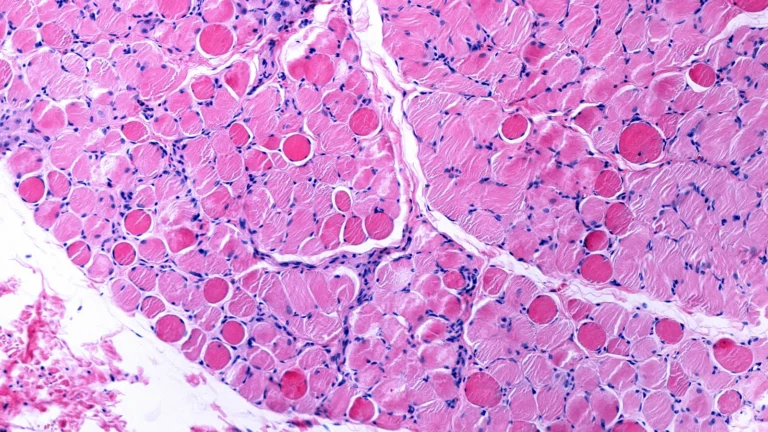
Duchenne muscular dystrophy is a devastating, X-linked genetic disorder caused by mutations in the DMD gene, which prevents the production of functional dystrophin protein. Without this essential "shock absorber" for muscle fibers, skeletal and cardiac muscles undergo progressive, irreversible degeneration.
The pathology of DMD is complex: it triggers a relentless cascade of pro-inflammatory and pro-fibrotic immune responses that inhibit natural tissue repair. Over time, this leads to a steady decline in physical function, eventually culminating in life-threatening cardiac events and respiratory failure. Because the condition primarily affects males, the patient population is highly specialized, and the quest for disease-modifying therapies has been long and fraught with setbacks.
Deramiocel represents a unique approach to this crisis. Unlike traditional small-molecule drugs, it is a cellular therapy composed of allogeneic cardiosphere-derived cells. These cells are hypothesized to confer immunomodulatory and anti-fibrotic properties, theoretically slowing the decline of muscle tissue. However, proving this mechanism in a clinical setting has proven elusive.
Chronology of the HOPE Trials
The trajectory of deramiocel has been defined by the HOPE clinical development program, which sought to validate the efficacy of these cardiosphere-derived cells.
HOPE-2: The Preliminary Signal
The initial Phase II trial, HOPE-2, provided early, though limited, evidence. With a cohort of only 20 participants, the study suggested potential benefits in upper limb function. While the results were promising enough to justify further investigation, the small sample size left significant questions regarding the statistical power and generalizability of the findings.
HOPE-3: The Phase III Pivot
To address these limitations, Capricor launched the Phase III HOPE-3 trial. This study enrolled 106 late-ambulatory and non-ambulatory male patients with DMD, all at least 10 years of age. Participants were randomized to receive quarterly infusions of either deramiocel or a placebo.
The primary endpoint of HOPE-3 was the change in upper limb function, measured by the Performance of Upper Limb 2.0 (PUL 2.0) score. However, the FDA’s advisory committee meeting focused heavily on the cardiac endpoint—specifically the left ventricular ejection fraction (LVEF)—because Capricor had initially sought a marketing indication specifically for cardiomyopathy.
Data Discrepancies and Statistical Conflict
The core of the recent controversy lies in a dispute over statistical methodology. During the advisory committee meeting, the FDA and Capricor presented divergent interpretations of the HOPE-3 results.
The Sponsor’s Perspective
Capricor’s leadership, including CEO Linda Marbán, PhD, has been vocal in defending their analysis. According to the company, the trial successfully demonstrated that deramiocel preserved LVEF at 12 months. Furthermore, they argued that the drug significantly slowed upper limb functional decline, reporting a mean percent change from baseline in PUL 2.0 of -3.86 in the treatment group compared to -8.41 in the placebo group—a difference of 4.55 (P=0.029).
The FDA’s Rebuttal
The FDA, however, conducted its own analysis using what it identified as the prespecified Statistical Analysis Plan (SAP) version 1.1. According to FDA reviewer Prateek Shukla, MD, when using this version, the difference in the PUL 2.0 score between the two groups was a negligible 0.66, with a P-value of 0.24—well outside the threshold for statistical significance.
Regarding the cardiac endpoint (LVEF), the FDA’s analysis found no significant difference between the deramiocel and placebo arms (a change of -0.04%, P=0.97). This direct conflict between the sponsor’s "later version" of the SAP and the agency’s "prespecified" version created a technical impasse.
Dr. Marbán expressed intense frustration with this discrepancy, stating, "This would be like your professor grading your term paper on an early draft you had never even submitted."
Advisory Committee Deliberations
The committee members’ concerns extended beyond simple statistical disputes, focusing instead on the overall "fragility" of the clinical evidence.
Steven Pavlakis, MD, of SUNY Downstate Health Sciences University, was particularly critical, stating that for both upper limb and heart outcomes, the data was simply too weak to support a positive recommendation. His sentiment was echoed by John Teerlink, MD, of the University of California San Francisco. While Dr. Teerlink acknowledged "some glimpses" of potential efficacy, he concluded that he could not support the drug’s approval based on the current evidence, noting that the data lacked the robustness required for a high-stakes clinical intervention.
Implications for the DMD Community
The implications of this advisory committee vote are significant. While the FDA is not strictly bound by the recommendations of its advisory committees, it often follows their guidance, particularly in instances where the clinical data is deemed "fragile" or contradictory.
1. Regulatory Hurdles
For Capricor, the path to approval is now substantially more difficult. The company may be required to initiate further clinical studies or provide more definitive data analysis to resolve the conflict regarding the Statistical Analysis Plan. This could lead to significant delays in the potential commercialization of deramiocel.
2. The Burden of Proof in Rare Diseases
The situation highlights the ongoing struggle to balance the need for speed in bringing life-saving therapies to market for rare, fatal conditions with the mandate to ensure that those therapies are actually effective. Patients and families, desperate for any potential treatment, often push for accelerated approval, while regulators are tasked with preventing the authorization of ineffective or potentially harmful treatments that may have been evaluated through statistically flawed models.
3. Future of Cellular Therapy
Deramiocel remains a test case for the efficacy of allogeneic cardiosphere-derived cells. If the program fails to secure approval, it may discourage further investment in similar regenerative cellular approaches for muscular dystrophies. Conversely, if the sponsor can address the FDA’s concerns, it could set a new precedent for how novel, non-traditional therapies are validated for complex, multisystem disorders.
Conclusion
As the FDA considers its final decision, the case of deramiocel remains a cautionary tale of clinical trial design. The divergence in statistical outcomes—rooted in conflicting analysis plans—has created a hurdle that the company may find insurmountable without further, more robust data.
For the Duchenne muscular dystrophy community, the wait for an effective, disease-modifying therapy continues. While the "glimpses" of potential observed in the HOPE-3 trial provide a sliver of hope, the overwhelming consensus of the advisory panel remains that hope, in the absence of rigorous and reproducible data, is insufficient to meet the standard of care required for the thousands of patients and families navigating the daily realities of this progressive disease. The upcoming months will be critical as Capricor determines its next move in what has become one of the most closely watched regulatory battles in recent rare disease history.