










By Sree Roy
Paid for by YRT Limited
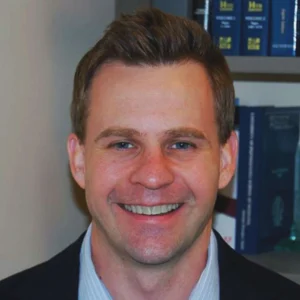
In the field of sleep medicine, few names carry the weight and investigative legacy of Magdy Younes, MD, FRCP(C), PhD. A titan of respiratory physiology and sleep architecture, Dr. Younes has spent over four decades peering into the electroencephalogram (EEG) to decode the hidden nuances of human sleep. Now 87 years old, he finds himself navigating a new chapter—one defined by an urgent desire to ensure his life’s work is not merely preserved, but actively utilized to advance clinical practice before his time in the field concludes.
To this end, Dr. Younes is taking the bold step of opening access to the Odds Ratio Product (ORP) and its suite of derivatives to the global research community. By moving away from proprietary, hardware-locked models and toward a collaborative research-forward approach through YRT Limited, Younes aims to finally see the full potential of his flagship metric realized in sleep laboratories worldwide.
The Genesis of a Metric: Understanding the Odds Ratio Product (ORP)
To understand why this shift is significant, one must first understand what the Odds Ratio Product represents. Traditional sleep staging, rooted in the foundational work of Rechtschaffen and Kales, relies on 30-second epochs. This categorical approach—binning a patient into "Light," "Deep," or "REM" sleep—has served the field for decades but lacks the granular precision required to capture the full spectrum of sleep quality.
Dr. Younes developed ORP to move beyond these rigid boundaries. ORP is a continuous measure of sleep depth that assigns a value between 0 (deepest sleep) and 15 (fully awake) to any given segment of EEG data. Unlike traditional staging, which can be subjective and prone to inter-scorer variability, ORP provides a mathematical, objective look at the transition states between wakefulness and sleep. It captures the "micro-architecture" of sleep, identifying subtle shifts in brain activity that traditional systems often miss.
Chronology: From Concept to Clinical Pivot
The Early Years of EEG Research
Dr. Younes’ career began with a focus on the physiological control of breathing, but his curiosity inevitably drew him toward the brain’s role in sleep-disordered breathing. He realized that the standard AHI (Apnea-Hypopnea Index) was an insufficient predictor of clinical symptoms. Patients with similar AHI scores often experienced vastly different levels of daytime impairment, suggesting that the "quality" of sleep—how deep or fragmented it truly was—remained the missing variable.
The Cerebra Health Era
In the early 2010s, the ORP metric found a home with Cerebra Health. The goal was to package this sophisticated metric within a user-friendly, type II home sleep testing (HST) system. For a time, it seemed as though ORP would become the new standard for sleep diagnostics. However, as the market evolved, Cerebra faced significant headwinds. The company shuttered its operations in early 2025, leaving many in the field to wonder what would become of the ORP technology.
The Market Reality Check
In retrospect, Dr. Younes views the Cerebra period as a "failed delivery mechanism." He notes that the reliance on a specific type II hardware system limited the metric’s reach. At the time, reimbursement models for home sleep testing were strictly focused on simple apnea detection. Introducing a high-fidelity sleep depth metric into a hardware-locked ecosystem created a barrier to entry that many clinics were unwilling or unable to clear.
"The ORP metric itself did not fail," Dr. Younes maintains. "It was the attempt to force it into a rigid, hardware-centric delivery model that missed the mark."
The Birth of YRT Limited
Following the closure of Cerebra, Dr. Younes founded YRT Limited to act as a steward for his research. By decoupling the ORP software from specific hardware, YRT Limited is now inviting researchers to apply the ORP algorithm to any sleep study—including type I in-lab polysomnograms (PSG). This pivot is essential, as in-lab studies remain the gold standard for clinical sleep medicine.
Supporting Data: Why Granularity Matters
The scientific literature surrounding ORP is robust. Studies have consistently shown that ORP correlates more strongly with patient symptoms, such as daytime sleepiness and cognitive performance, than traditional metrics.
The Nine Architectures of Sleep
One of Dr. Younes’ most significant recent contributions is the identification of the "Nine ORP Architecture Types." This framework maps the stability and depth of sleep across a night, allowing clinicians to visualize sleep in a way that is immediately actionable.

- Type 1 & 2: Highly stable, restorative sleep patterns.
- Intermediate Types: Patterns indicating fragmented sleep, often associated with undiagnosed sleep-disordered breathing or periodic limb movements.
- The "Unstable" Patterns: High ORP values throughout the night, suggesting that despite a lack of obvious apneas, the patient is never achieving deep, restorative sleep.
This data is transformative. It allows for the categorization of patients who were previously dismissed as "normal" by standard criteria but who continue to suffer from chronic fatigue. By providing this data to researchers, YRT Limited hopes to build a massive, multi-center dataset that will finally force a change in how insurance providers and regulatory bodies view sleep quality.
Official Responses and Collaborative Intent
YRT Limited has adopted a radical transparency model for research. Recognizing that the barriers to entry in sleep research are often financial, the company is offering a tiered approach to access.
"For research projects where fees are not waived, YRT Limited determines pricing strictly at cost," the company states. "We are calculating charges based on the actual tech hours required to perform the sleep study scoring. Our priority is the science, not the profit margin."
This approach has been welcomed by academic investigators who have long struggled to access proprietary algorithms owned by larger, venture-backed companies. By making the tool accessible, Dr. Younes is effectively crowd-sourcing the validation of his life’s work.
Implications for the Future of Sleep Medicine
The implications of opening access to ORP are far-reaching.
Moving Beyond AHI
For decades, the sleep industry has been shackled to the AHI. While useful, AHI is a blunt instrument. A shift toward ORP represents a move toward "Precision Sleep Medicine." If a clinician can see exactly how much time a patient spends in various depths of sleep, they can tailor therapies—whether CPAP, oral appliances, or pharmacotherapy—based on the specific architectural deficit of the patient.
Revolutionizing Clinical Trials
Pharmaceutical companies are also taking note. The ability to quantify sleep depth objectively allows for more sensitive endpoints in clinical trials for insomnia and sleep apnea medications. If a drug improves "sleep depth" as measured by ORP, it provides a much stronger regulatory case than subjective patient questionnaires.
The Legacy of Dr. Magdy Younes
For Dr. Younes, the goal is simple: he wants to see the field he helped build move into the 21st century. His 87 years have taught him that scientific progress is rarely a straight line. It requires persistence, the occasional failure, and a willingness to share knowledge when the time is right.
"My career has been defined by a search for truth within the EEG," Younes says. "I have seen the potential of ORP to change lives. My only remaining ambition is to ensure that those who are best positioned to use it—the researchers, the clinicians, and the students—have the keys to the door."
How to Engage with YRT Limited
As the field of sleep medicine stands on the precipice of a new era, the availability of ORP represents a unique opportunity for academic and clinical researchers. Interested investigators are encouraged to reach out to YRT Limited to discuss potential collaborations.
Whether you are looking to re-analyze historical datasets or initiate a new study on sleep architecture in specific disease populations, the infrastructure is now in place to support these efforts.
- Contact Information: Interested parties can visit www.yrtsleep.com/contact to begin a dialogue with the team.
- Call to Action: When reaching out, please mention that you heard about the service through Sleep Review to help the team prioritize research-based inquiries.
As we look toward the future, the legacy of Magdy Younes will likely be defined not just by the metric he created, but by the generosity with which he shared it. In the high-stakes world of medical research, such an act of open collaboration is as rare as it is essential. The race against time may be on, but with the opening of ORP to the world, Dr. Younes has ensured that his influence will be felt in sleep labs for generations to come.