








By Keith Appleton, LMSW, Combat Veteran
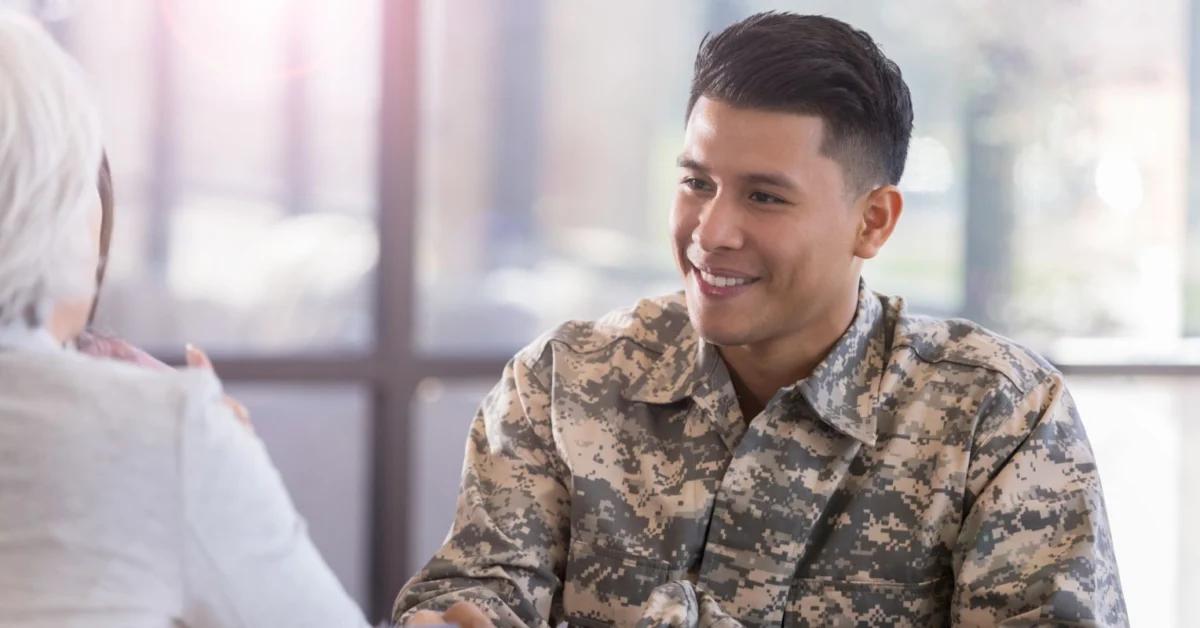
In the stark, sterile environment of a detox ward, a veteran sat on the edge of his bed, his bags packed, ready to walk out. He was suffering from the compounding weight of Post-Traumatic Stress Disorder (PTSD) and substance-use disorder. He was convinced, as many are, that no civilian clinician could possibly grasp the visceral reality of his pain. As a fellow veteran, I didn’t approach him with generic platitudes. I sat down and spoke his language—the language of the mission, of accountability, and of shared sacrifice. By reframing his recovery not as a passive "treatment" but as a strategic operation, he stayed. That moment was more than a clinical win; it was a testament to the fact that culturally competent care is the difference between life and death for those who have served.
The Invisible Crisis: Facts and Statistics
The mental health landscape for American veterans is fraught with systemic barriers. According to data from the National Center for PTSD (2023), roughly 7% of U.S. veterans live with PTSD, and over 20% grapple with substance-use disorders. These numbers are, in many ways, an underestimation.
Despite the prevalence of these conditions, the U.S. Department of Veterans Affairs (2022) reports that more than half of those in need never receive care. The primary culprits are twofold: the persistent stigma surrounding mental health in military culture and the deeply held belief that civilians "just don’t get it." When a veteran feels their experiences are fundamentally unbridgeable, they retreat into isolation. Military service is not merely a job; it is a total identity forged through rigorous structure, cryptic symbols, immense hardship, and the absolute requirement of shared sacrifice. To ignore this cultural foundation is to ignore the very lens through which the veteran views the world.
Chronology of the Transition: From "Soldier" to "Civilian"
The transition from active duty to civilian life is not a simple career change; it is a profound identity rupture.
- The Period of Enlistment: The individual is absorbed into a highly structured environment where identity is tied to the unit, the rank, and the mission. Symbols—combat patches, service ribbons, and specialty schools—act as a non-verbal shorthand for one’s history and character.
- The Moment of Separation: The sudden loss of these symbols creates a "disruption of attachment." As defined by attachment theorist John Bowlby (1980), when key identifiers are stripped away, the individual loses their "secure base."
- The Post-Service Vacuum: Without a new "tribe," veterans often experience disorientation, grief, and profound isolation. This is the period where the risk of untreated PTSD and substance use spikes, as the veteran attempts to self-medicate the loss of their primary community.
- The Clinical Intervention: When a veteran enters therapy, they are often still in a state of mourning for the identity they left behind. Effective intervention requires acknowledging the military past while guiding the veteran toward an integrated future.
Supporting Data: The Impact of Cultural Competence
Research consistently reinforces that clinical outcomes are significantly improved when providers possess "cultural humility"—the willingness to learn about the veteran’s specific military culture.
In his seminal work Tribe, Sebastian Junger (2016) posits that humans possess a primal need to belong to cohesive, purpose-driven groups. For the veteran, the military was the ultimate tribe. Therapy, therefore, must not just be about "fixing" a brain injury or a behavioral issue; it must be about helping the veteran transition that sense of purpose into a new context.
Furthermore, integrating positive deployment experiences—the pride of a mission completed, the camaraderie of a birthday in a desert, the resilience shown in extreme heat—is essential. As noted by Dell’Osso et al. (2022), narrating positive memories alongside traumatic ones fosters post-traumatic growth. It prevents the trauma from becoming the singular, defining story of the veteran’s life.
The Role of Family: An Undervalued Asset
Too often, the veteran is treated in a vacuum, ignoring the family system that serves as their primary support network. Families are the first witnesses to the veteran’s struggle, yet they are frequently excluded from the clinical process.
By empowering families as allies rather than treating them as observers, clinicians can facilitate a more holistic healing process. I once treated a veteran paralyzed by "moral injury"—a deep sense of psychological distress stemming from a violation of his moral code (in this case, not deploying with his unit after 9/11). By bringing his spouse into the therapy sessions, we were able to reframe his service. We shifted the narrative from "I failed my unit" to "I served my country and remained a protector of my home." This inclusion restored the connection that trauma had severed, proving that the family is an integral part of the treatment team.
Official Perspectives and Clinical Implications
The clinical community, including the VA and private practitioners, is increasingly moving toward "trauma-informed care" that mirrors military values. This approach is not about coddling; it is about precision, mentorship, and mission-focused guidance.
Implementing a Military-Informed Framework:
- Direct Engagement: Therapists should ask about a veteran’s Military Occupational Specialty (MOS) and the meaning behind their insignia. This immediately establishes that the clinician is invested in understanding the veteran’s world.
- Structural Integrity: Using evidence-based modalities like CBT (Cognitive Behavioral Therapy) or EMDR (Eye Movement Desensitization and Reprocessing) resonates with veterans because these therapies are structured, goal-oriented, and disciplined.
- Reframing Identity: Clinicians must assist veterans in evolving their identity. A veteran is not just a "soldier who left"; they are a leader, a mentor, and a protector whose skills are highly transferable to civilian life.
- Moral Injury Integration: Address the specific, soul-crushing weight of moral injury by affirming the veteran’s values and helping them find new ways to live in alignment with those values outside of the military.
The Mission Continues: A Call to Action
We have a societal responsibility to serve those who served. This requires moving beyond a "one-size-fits-all" approach to mental health. It requires a commitment to precision.
When we treat veterans, we must honor the "invisible badges" they carry. Therapy should not be viewed as a surrender of their military identity, but as a new, challenging mission. It is a mission that calls upon the same courage they demonstrated on the battlefield—the courage to look inward, to confront the shadows, and to write the next chapter of their story.
As a combat veteran and a clinician, I see the strength beneath the struggle every day. When we provide care that is culturally competent, we stop seeing "patients" and start seeing people with a profound capacity for resilience. The uniform may be left behind, but the mission of living a meaningful, connected life continues. For the clinician, the family, and the veteran, the task is clear: we must continue to show up, stay in the fight, and ensure that no veteran has to navigate the aftermath of service alone.
References
- Bowen, M. (1978). Family Therapy in Clinical Practice. Jason Aronson.
- Bowlby, J. (1980). Attachment and Loss: Vol. 3. Loss, Sadness and Depression. Basic Books.
- Davis, L. Y. (2023). Moral Injury: The Hidden Adversary of War.
- Dell’Osso, L., et al. (2022). Post Traumatic Growth (PTG) in the Frame of Traumatic Experiences. Clinical Neuropsychiatry.
- Hurley, E. C. (2021). A Clinician’s Guide for Treating Active Military and Veteran Populations with EMDR Therapy. Springer Publishing.
- Junger, S. (2016). Tribe: On Homecoming and Belonging. Twelve.
- National Center for PTSD. (2023). PTSD in Veterans: Facts and Figures. U.S. Department of Veterans Affairs.
- Shapiro, F. (2018). Eye Movement Desensitization and Reprocessing (EMDR) Therapy. Guilford Press.
- U.S. Department of Veterans Affairs. (2022). National Veteran Suicide Prevention Annual Report.