










For many adults, hitting the 60-year mark brings a realization that the midsection is no longer as firm as it once was. The emergence of a "stomach pouch" is often met with frustration, leading many to seek out high-tech gym machines or endless crunches in a bid to reclaim their waistline. However, as personal trainers and physiological experts have long noted, the secret to a tighter, healthier core after 60 does not lie in isolation machines—it lies in functional, standing movement.
The Reality of Midsection Changes After 60
The development of a stubborn abdominal pouch is a multifaceted issue. While it is easy to attribute these changes solely to the passage of time, the reality is more nuanced. Muscle atrophy—the natural loss of muscle mass known as sarcopenia—begins to accelerate after the age of 50. When combined with decreased metabolic activity, sedentary habits, and shifts in hormonal profiles, the body begins to store fat differently, often prioritizing the abdominal area.
Many individuals fall into the "spot-reduction trap." They assume that by targeting the abdominal muscles with machines, they can "burn off" the fat covering them. Physiologically, this is a myth. No amount of isolated crunching or machine-based twisting will force the body to shed fat from a specific location. Instead, true abdominal health and aesthetics come from a combination of metabolic conditioning, postural alignment, and full-body muscle recruitment.
The Case for Standing Exercises
When you rely on seated gym machines, your body often receives unnecessary support, allowing the core to "switch off." Conversely, standing exercises force your midsection to act as the primary stabilizer for your entire frame. By performing movements while upright, you recruit the legs, hips, shoulders, and deep abdominal wall simultaneously.
The Benefits of Functional Movement
- Caloric Expenditure: Because standing movements engage multiple large muscle groups at once, they require more energy to execute, leading to higher caloric burn compared to seated isolation exercises.
- Postural Support: A strong core is the foundation of the spine. Standing exercises improve the structural integrity of your posture, which can instantly make the midsection appear firmer and more toned.
- Everyday Applicability: Functional fitness mimics the motions of daily life. By training the body to move as a single unit, you gain the practical strength needed for carrying groceries, gardening, or maintaining balance.
Chronology of Progress: A Roadmap for Longevity
Achieving a leaner waistline is not an overnight process. It is a cumulative effort that requires consistency.
- Weeks 1-2 (Foundation): Focus on movement quality. The goal is not intensity; it is learning to engage the deep core muscles—specifically the transverse abdominis—during simple marches and reaches.
- Weeks 3-6 (Integration): As coordination improves, incorporate rotational movements. This is where the body learns to link the upper and lower halves, creating a more "athletic" midsection.
- Month 3 and Beyond (Sustainability): By now, these movements should become part of your daily routine. Paired with adequate protein intake and consistent walking, the structural changes—firmer posture and increased muscle density—become highly visible.
Supporting Data: Why "Standing" Outperforms "Seated"
Research in kinesiology suggests that stabilization requirements are significantly higher during weight-bearing exercises. When you stand, your center of gravity is constantly shifting. To prevent falling, your body’s deep core must perform micro-adjustments in real-time.
In a clinical setting, experts have observed that seniors who prioritize standing, multi-planar movements show a higher retention of bone density and functional independence. While a machine-based leg press may build quadriceps strength, it does little for the stability of the lumbar spine. A standing squat, however, trains the legs, glutes, and the entire core complex, providing a "two-for-one" benefit that is essential as we age.
Expert Insight: The Core Principles of Training
"I have coached adults over 60 for over a decade," says Tyler Read, a certified personal trainer. "The clients who see the most transformative results are not the ones spending an hour on an abdominal crunch machine. They are the ones who focus on total-body movement. When you train your body to move as an integrated system, the core naturally strengthens, and the midsection tightens as a byproduct of that increased functional efficiency."
Five Essential Standing Exercises for the Core
1. Standing High Knee March
This is the foundational movement for core stability. By lifting the knees, you force the abdominal muscles to contract to stabilize the pelvis.
- How to do it: Stand tall with feet hip-width apart. Slowly lift your right knee toward your chest while keeping your torso perfectly upright. Lower it with control and repeat on the left side. Focus on a slow tempo; the slower the movement, the harder your core has to work.
2. Standing Wood Chops
Rotational strength is often the "missing link" in fitness after 60.
- How to do it: Stand with feet shoulder-width apart. Clasp your hands together. Rotate your torso to the right, bringing your hands toward your hip, then swing them diagonally upward to the left. Keep your knees slightly soft and ensure the rotation comes from your midsection, not your lower back.
3. Lateral Step with Reach
Moving in the frontal plane (side-to-side) is critical for hip and core stability.
- How to do it: Step to the right with your right foot, then bring the left foot to meet it. As you step, reach both arms overhead. This creates an unstable environment that forces your obliques to fire to keep your spine aligned.
4. Standing Cross-Body Punches
This movement serves as both cardio and core training.
- How to do it: Stand with feet wide for balance. Punch your right arm across your body toward the left side, rotating your torso and pivoting your right foot. Return to center and repeat on the other side. The key is the twist—ensure your midsection is doing the heavy lifting.
5. Squat with Overhead Reach
The ultimate functional move.
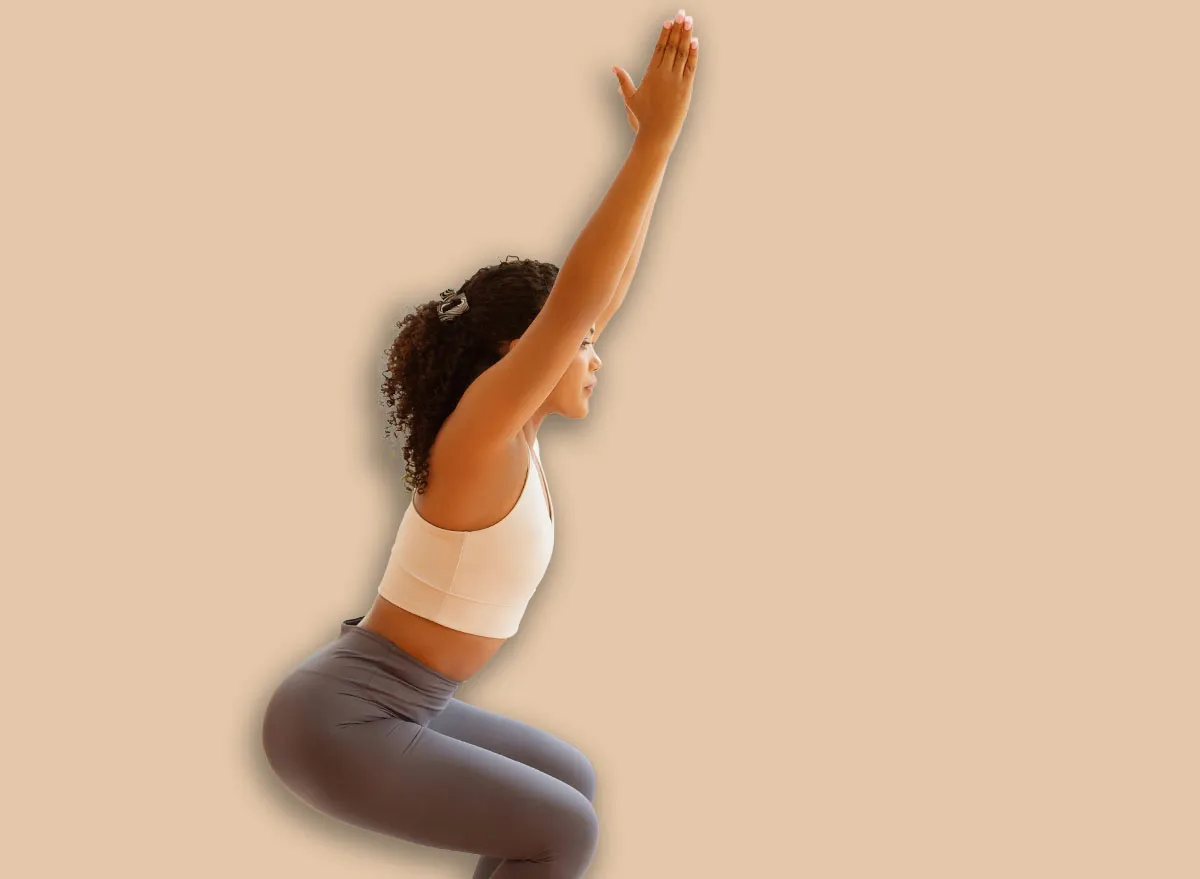
- How to do it: Lower your hips back into a comfortable squat. As you stand back up, reach your arms straight toward the ceiling. The transition from a seated position to an overhead reach forces the core to stabilize the entire spinal column, promoting both strength and better posture.
Implications for Health and Vitality
The goal of these exercises extends far beyond cosmetic improvements to the waistline. A weak core in older age is a primary contributor to lower back pain, balance issues, and a higher risk of falls. By transitioning away from restrictive gym machines and toward functional, standing movements, you are investing in your long-term independence.
When you strengthen your core, you are essentially "tightening the corset" of your body. This improves your gait, reduces the pressure on your spinal discs, and gives you the energy to remain active.
Conclusion
If you are over 60 and feeling frustrated by changes in your midsection, it is time to change your perspective. Skip the isolation machines and step onto the floor. By incorporating these five functional movements into your daily life, you will not only build a firmer waistline, but you will also build a stronger, more resilient body. Consistency is the final ingredient; keep moving, keep reaching, and keep standing tall.