











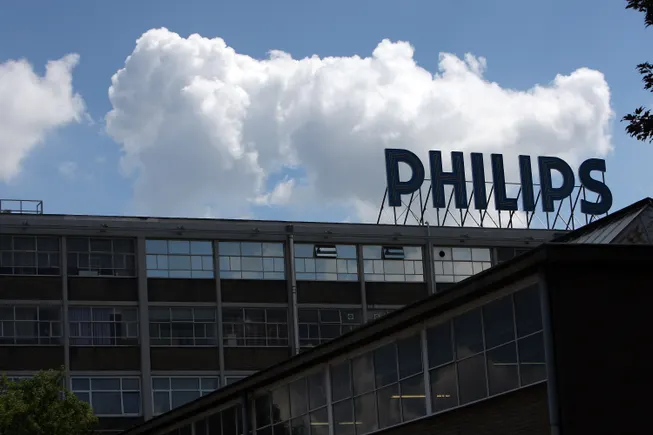
In a complex second quarter defined by macroeconomic volatility and shifting geopolitical landscapes, Philips has delivered a mixed financial performance that underscores the company’s ongoing transformation. While the health technology giant saw its net income soar by 61% year-over-year to 386 million euros, revenue growth remained modest, edging up by only 1% to 4.36 billion euros. This divergence between bottom-line success and top-line stagnation highlights a company meticulously managing a labyrinth of external pressures, ranging from legacy trade disputes to modern-day supply chain inflation.
Central to this quarter’s narrative is the successful recovery of capital tied up in long-standing U.S. tariff disputes, a development that provided a significant tailwind for the firm’s profitability. However, as the company puts the era of the Trump-era trade barriers behind it, it now faces a new, more pervasive set of challenges: global cost inflation, heightened logistics expenses due to Middle Eastern instability, and a fundamental recalibration of its strategy in the Chinese market.
The Chronology of a Trade Recovery
The financial relief reported by Philips this quarter is the culmination of a years-long legal and strategic struggle. When the Trump administration first imposed sweeping tariffs on medical devices manufactured in China, Philips found itself in the crosshairs of a trans-Pacific trade war.
Initially, the impact was severe. Philips cautioned investors that the net impact of these levies could reach 300 million euros. As trade diplomacy evolved and the U.S. reached intermittent agreements with both China and the European Union, the company was able to downwardly revise its forecast to 200 million euros. The final turning point arrived when the U.S. Supreme Court struck down a significant portion of the tariffs, enabling Philips to launch an intensive recovery effort.
During the second quarter of 2026, Philips effectively brought this chapter to a close, recouping 186 million euros (approximately $212 million). CEO Roy Jakobs described the completion of the refund process as a testament to the "agility of our teams in a changing environment," noting that the recovery was a strategic priority to reclaim capital for reinvestment in innovation.
Supporting Data: By the Numbers
The Q2 financial snapshot reveals a company focused on operational efficiency rather than aggressive top-line expansion.
- Total Revenue: 4.36 billion euros (a 1% increase year-over-year).
- Net Income: 386 million euros (a 61% increase year-over-year).
- Tariff Recovery: 186 million euros successfully reclaimed.
- Market Growth Drivers: Significant double-digit growth in India, coupled with strong momentum in North America and European markets.
While the 61% surge in net income is the headline figure, analysts are looking closely at the core revenue growth, which remains hampered by localized downturns and the broader inflationary environment that continues to exert downward pressure on profit margins.
Official Responses and Strategic Outlook
During the company’s earnings call on Tuesday, executive leadership provided a transparent look at the hurdles currently facing the firm. CFO Charlotte Hanneman painted a candid picture of the inflationary landscape.
"Our cost inflation forecast has ticked up slightly from our previous high-single-digit prediction," Hanneman stated, noting that the company is intensifying its mitigation efforts. The CFO identified three specific areas of concern:
- E-Component Costs: The price of electronic components has risen sharply, and unlike other raw materials, Philips currently lacks sufficient hedging strategies to offset these specific price hikes.
- Freight and Logistics: Geopolitical tensions in the Middle East have disrupted shipping lanes, causing a significant and unexpected spike in freight costs.
- Energy Costs: While rising energy prices are a persistent issue, Hanneman noted that this is a manageable pressure, as the company has established hedges to curb the volatility.
CEO Roy Jakobs emphasized that while these pressures are real, the company’s focus remains on "selective go-to-market" strategies. He addressed the "turmoil" in the Chinese market, which has been exacerbated by the expansion of China’s centralized procurement policy. This government-led initiative has introduced delays and created margin pressure for standardized, undifferentiated technologies. In response, Philips has shifted its focus in China toward high-value, innovative products where it can maintain a competitive edge despite the new regulatory hurdles.
Implications: The Geography of Growth
As Philips navigates the turbulence in China, it is aggressively pivoting toward markets that show greater resilience and appetite for digital health integration.
The North American and European Resilience
Despite a 1% decline in order intake in North America, Jakobs dismissed concerns of a demand slowdown, attributing the dip to a timing mismatch where several major deals were pushed into the third quarter. The underlying fundamentals in the U.S. remain robust, driven by a healthcare system that continues to prioritize technological investment.
Europe, meanwhile, is experiencing a period of renewed investment. The Nordic region and Central Europe have emerged as key growth areas. Furthermore, the U.K.’s National Health Service, despite its well-documented service delivery challenges, is currently channeling significant capital into digital transformation—a move that aligns perfectly with the Philips product portfolio.
The Indian Opportunity
Perhaps the most optimistic note from the earnings call was the performance of India. Describing the region as an "exciting growth prospect that we have only started to untap," Jakobs highlighted that India contributed double-digit growth to the company’s performance this quarter. Philips is currently in active discussions with the Indian government to integrate its advanced diagnostic and artificial intelligence (AI) systems into the nation’s rapidly modernizing hospital infrastructure. This underscores a broader shift in the company’s strategy: moving away from commodity-based hardware and toward integrated, AI-driven solutions that provide long-term value to national health systems.
Conclusion: A Balanced Trajectory
Philips enters the second half of 2026 as a leaner, more agile organization, but one that remains deeply sensitive to global macroeconomic shifts. The successful recovery of tariff funds has provided a much-needed financial cushion, but the company’s long-term success will likely depend on its ability to manage the "new normal" of high logistics costs and the geopolitical complexities of the Chinese medical device market.
By doubling down on digital innovation and leaning into high-growth, emerging markets like India, Philips is attempting to insulate itself from the volatility that defined its recent past. The coming quarters will be a test of whether these strategic pivots—combined with more aggressive cost-mitigation efforts—can turn modest revenue growth into sustained, long-term margin expansion. As the company navigates this transition, investors and healthcare providers alike will be watching to see if the "agility" lauded by CEO Roy Jakobs can effectively outpace the mounting pressures of a fragmented global economy.