











In the quiet hours of the night, the human body is designed to undergo a precise physiological transition. As we drift toward slumber, our internal core temperature naturally dips, signaling to the brain that it is time to rest, recover, and consolidate memories. However, as global temperatures climb, this biological rhythm is facing an unprecedented disruption. A warming climate is effectively “stealing” sleep from millions, creating a compounding public health challenge that threatens our cognitive performance, physical health, and long-term well-being.
The Science of Thermal Regulation and Rest
Sleep is not merely a passive state of inactivity; it is a complex physiological process that relies heavily on thermoregulation. For a person to fall asleep quickly and remain in the deeper, restorative stages of the sleep cycle, the body must be able to shed heat.
Under normal conditions, our bodies dissipate heat through the skin. However, when the ambient temperature of a bedroom remains elevated throughout the night, this heat-shedding process is stalled. When the environment is too warm, the body remains in a state of physiological arousal, struggling to reach the lower core temperature required for high-quality sleep. The result is a cycle of fragmented rest, increased wakefulness, and an inability to achieve the deep, slow-wave sleep necessary for physical repair.
Chronology: A Growing Trend of Lost Hours
The escalation of heat-related sleep loss is not a sudden phenomenon, but a trend that has been accelerating over the past five decades. Since the early 1970s, the amount of temperature-related sleep loss linked to climate change has at least doubled in nearly every city studied by researchers.
The 2020–2025 Milestone
Data from a recent analysis by Climate Central highlights the severity of this shift. Between 2020 and 2025, global high nighttime temperatures caused the average person to lose nearly 56 hours of sleep annually. This is not merely a temporary annoyance; it represents over two full days of lost rest each year, a deficit that accumulates with profound consequences for the immune system and mental health.
Real-World Evidence: The 2026 UK Heat Wave
The theoretical projections of climate scientists became a harsh reality during the summer of 2026. A massive heat wave across the United Kingdom provided a clear case study in how modern infrastructure—often built to retain heat—can exacerbate the issue. A YouGov poll conducted during the height of the heat wave revealed that 65% of adults struggled to achieve adequate rest. Perhaps most concerning, nearly half of those respondents reported losing three or more hours of sleep per night, leading to widespread reports of daytime fatigue, irritability, and decreased workplace productivity.
Supporting Data: By the Numbers
The link between ambient temperature and sleep duration is supported by robust, large-scale data. A landmark study published in the journal One Earth analyzed over 7 million sleep records alongside local weather data to establish a direct correlation.
- The 86-Degree Threshold: The study found that on nights where temperatures exceeded 86°F (30°C), sleep duration dropped by an average of 14 minutes.
- The 77-Degree Threshold: Once nighttime temperatures climbed above 77°F (25°C), the likelihood of a person obtaining less than the recommended seven hours of sleep increased significantly.
- Lack of Adaptation: Perhaps the most sobering finding from the research is the lack of evidence that humans are naturally adapting to warmer nights. Unlike other environmental stressors, the body does not seem to “get used” to hot nights, suggesting that as the planet warms, our sleep will remain perpetually vulnerable.
Geographic Vulnerability and Socioeconomic Factors
While the entire planet is subject to rising temperatures, the burden is not distributed equally. Climate change-linked sleep loss is most severe in regions that are already predisposed to high temperatures.
The Global South
Areas in the Middle East, southern India, Southeast Asia, and parts of West Africa are witnessing the highest levels of heat-related sleep disruption. In these regions, the combination of high humidity and elevated nighttime temperatures creates a “heat island” effect, particularly in densely populated urban centers.

The United States Landscape
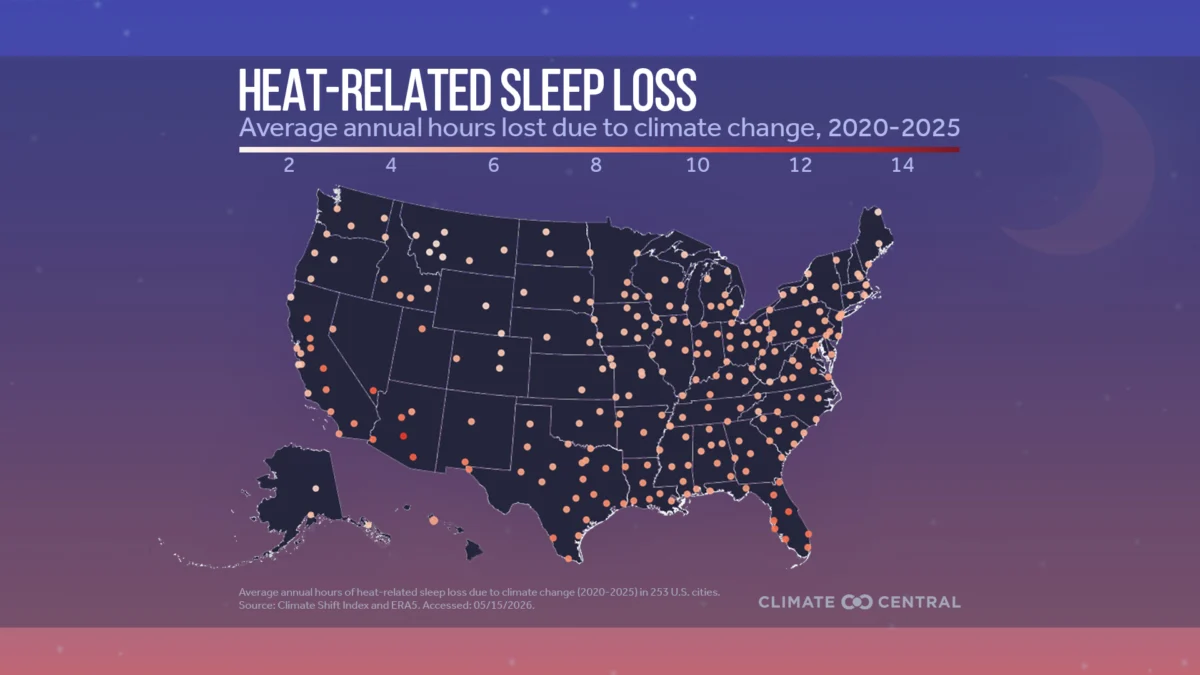
In the United States, the impact is similarly stark. An analysis of 253 U.S. cities found that residents lost an average of 36 hours of sleep per year due to high nighttime temperatures. The states experiencing the most acute losses—between seven and nine hours annually—are Arizona, California, Florida, and Nevada.
The Air Conditioning Paradox
While air conditioning (AC) is the primary tool for mitigating indoor heat, it is not a panacea. First, there is a global disparity in access to cooling technology, leaving lower-income populations at a higher risk of health complications. Second, even with AC, the energy costs and the environmental feedback loop—where the heat exhausted by AC units warms the outside air—create a cycle that further complicates the climate crisis.
Implications for Public Health and Cognition
The consequences of losing sleep extend far beyond simple drowsiness. A critical study in PLOS Medicine examined 44 young adults during a 2016 heat wave. Students living in buildings without air conditioning displayed significantly lower scores on cognitive tests measuring attention, processing speed, and working memory compared to those in temperature-controlled environments.
These cognitive deficits have real-world implications:
- Workplace Safety: Sleep-deprived employees are more prone to errors, particularly in fields requiring high levels of concentration, such as construction, medicine, and transportation.
- Academic Performance: For students, cumulative sleep loss during hot months can lead to reduced learning capacity and poorer performance on standardized assessments.
- Chronic Health Risks: Long-term sleep deprivation is linked to an increased risk of cardiovascular disease, obesity, diabetes, and mental health disorders like depression and anxiety.
Strategic Mitigation: How to Reclaim Your Rest
While individual actions cannot reverse global climate trends, there are evidence-based strategies to optimize the bedroom environment for better sleep during hot spells.
Environmental Optimization
- Ventilation Strategy: During the day, keep windows and curtains closed to block out solar heat. Open them in the late evening only when the outside temperature drops below the inside temperature.
- Bedding Materials: Utilize breathable, natural fibers like cotton or bamboo. These materials wick moisture away from the body, assisting in the cooling process.
- Targeted Cooling: If central AC is unavailable, consider using fans in conjunction with damp towels or ice packs. Positioning a fan to blow across a bowl of ice can create a localized cooling effect through evaporation.
Behavioral Adjustments
- The Pre-Sleep Routine: Take a lukewarm (not cold) shower before bed. A warm shower helps the body release heat by increasing blood flow to the skin, which facilitates faster cooling once you step out.
- Hydration: Maintain adequate hydration throughout the day, but taper off liquid intake in the two hours before bed to minimize nocturnal awakenings.
- Consistent Sleep Hygiene: Regardless of the temperature, maintain a consistent sleep schedule to anchor your circadian rhythm, which can help buffer against environmental disturbances.
When to Seek Professional Intervention
It is important to distinguish between occasional difficulty sleeping and chronic insomnia. If you find that your sleep quality is consistently poor, or if you feel dangerously sleepy during the day, it is time to seek professional medical advice.
Persistent sleep issues can exacerbate underlying health conditions and should be addressed by a healthcare provider. A sleep specialist can help determine if the heat is merely exacerbating an existing sleep disorder or if there are other factors at play. For those struggling, consulting an AASM-accredited sleep center can provide access to diagnostic tools and personalized treatment plans.
The Bottom Line
Climate change is no longer just a distant threat to polar ice caps or coastal cities; it is an intimate intruder in our bedrooms. As nights grow progressively warmer, the fundamental human need for sleep is under siege. While we must address the systemic causes of climate change to ensure a sustainable future, we must also recognize that sleep is a pillar of public health. By acknowledging the data, understanding our own vulnerabilities, and taking proactive steps to manage our sleep environments, we can better protect our health in an increasingly warming world.
Healthy sleep is not a luxury—it is a biological necessity that demands our attention, even when the thermometer refuses to drop.