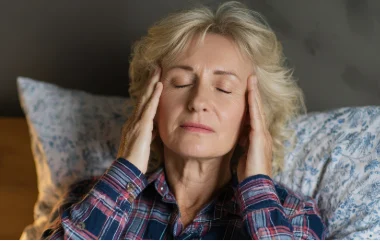












Years after the world emerged from the shuttered silence of COVID-19 lockdowns, a quiet crisis continues to pulse through the global population. While headlines have shifted away from infection rates and social distancing, new research indicates that a specific, debilitating legacy of the pandemic remains deeply embedded in our daily lives: a persistent, widespread failure to sleep.
A landmark longitudinal study, recently published in the Journal of Sleep Research and spearheaded by researchers from King’s College London and Flinders University, reveals that the sleep disturbances established during the height of the pandemic did not resolve once restrictions were lifted. Perhaps most alarmingly, this chronic fatigue and poor sleep quality appear to be independent of whether an individual ever contracted the SARS-CoV-2 virus.
Main Facts: The Pandemic’s Invisible Inheritance
The study, which analyzed comprehensive data from 2,390 participants in the UK COVID Symptom Study Biobank, paints a sobering picture of post-pandemic life. Researchers tracked participants through the restrictive landscape of 2021 and followed up in 2022, as societies attempted to return to "normalcy."
The data confirms a grim reality: the biological and psychological toll of the pandemic created a "new normal" characterized by exhaustion. The research demonstrates that sleep quality did not rebound once the external pressures of lockdown—such as isolation, anxiety, and the disruption of routines—were removed. Instead, the sleep architecture of the population seems to have been permanently altered.
Crucially, the study dismantles the assumption that these issues were merely symptoms of "Long COVID." The prevalence of sleep disruption was equally high among those who never caught the virus, suggesting that the pandemic’s broader psychosocial impact may have been just as damaging to human physiology as the pathogen itself.
A Chronology of Disrupted Rest
To understand the scope of this crisis, one must view it as a multi-stage phenomenon that began in early 2020 and has yet to reach its conclusion.
The Acute Phase: Lockdown Anxiety (2020–2021)
When the initial lockdowns were implemented, the world entered a state of collective hyper-arousal. For many, the sudden loss of structure, the constant cycle of negative news, and the blending of workspaces with bedrooms decimated sleep hygiene. Studies from this era famously documented "COVID-somnia," a phenomenon driven by high cortisol levels, decreased exposure to natural light, and the erasure of boundaries between rest and labor.
The Transition: The Illusion of Recovery (2021–2022)
As restrictions began to ease, there was a widespread expectation that human biology would self-correct. Public health discourse shifted toward economic recovery and social re-engagement. However, the data from the King’s College/Flinders study shows that this period was not a recovery phase for the brain’s sleep centers. Instead, it was a period of consolidation, where the poor sleep habits formed during lockdowns became entrenched as chronic behavioral patterns.
The Current State: The New Chronic Reality (2023–Present)
We are now in the post-pandemic aftermath. For millions, the "lockdown hangover" manifests as a persistent inability to achieve restorative sleep. The research suggests that we have transitioned from acute pandemic-related stress to a chronic, low-grade malaise that affects cognitive function, mood, and immune system efficiency on a global scale.
Supporting Data: By the Numbers
The research team’s analysis of the 2,390 participants offers a granular look at the correlation between pandemic-era stressors and current health outcomes:
- Longitudinal Consistency: The study utilized repeated measures, allowing researchers to see that individuals who reported poor sleep in 2021 were statistically highly likely to report the same symptoms in 2022, regardless of changes in government restrictions.
- The Infection Variable: By isolating variables related to SARS-CoV-2 infection, the team found that the incidence of sleep disturbance was statistically equivalent between cohorts who had been infected and those who had remained healthy.
- The Long COVID Link: While approximately 1.9 million people in the UK suffer from self-reported Long COVID symptoms, the study clarifies that while Long COVID patients often suffer from sleep issues, they do not possess a monopoly on them. The broader population is suffering from a parallel, non-viral form of chronic sleep degradation.
- Health Implications: The research highlights a "triad of damage"—reduced immunity, increased systemic inflammation, and degraded mental health. These factors create a feedback loop: poor sleep leads to anxiety, and anxiety, in turn, prevents the restorative REM cycles necessary to process that anxiety.
Official Responses and Expert Insights
The study’s authors emphasize that this is not merely a lifestyle issue, but a critical public health failure that requires immediate intervention.
Professor Emma Duncan, co-senior author and professor of clinical endocrinology at King’s College London, notes the significance of the findings in a press release: "The high levels of both poor sleep and fatigue established during lockdowns persisted after restrictions were lifted—independent of SARS-CoV-2 infection, or whether individuals reported having Post-COVID Syndrome." Her statement serves as a wake-up call to healthcare systems that have largely been focused on the viral aspect of the pandemic while ignoring the psychological and physiological trauma left in its wake.
Dr. Sutapa Mukherjee, professor in respiratory and sleep medicine at Flinders University, highlights the difficulty of treating this condition once it has taken root. "We knew from pre-pandemic clinical experience that once sleep disturbance is present, it is unlikely to improve without intervention," she explains. According to Dr. Mukherjee, the medical community must pivot toward proactive sleep medicine. "Given the high prevalence of both sleep disturbance and fatigue in some people after the COVID shutdowns, addressing sleep disturbance may be part of a patient’s long-term recovery and wellbeing."
Implications: A Call for Systemic Change
The implications of this research are profound for both the individual and the state. If a significant portion of the population is chronically sleep-deprived, the societal costs are staggering:
1. The Economic Toll
Sleep deprivation is linked to decreased productivity, higher rates of workplace accidents, and increased absenteeism. A "tired workforce" is less innovative, more prone to error, and less resilient in the face of economic volatility.
2. The Mental Health Crisis
The link between sleep and mental health is bidirectional. As the world struggles with a post-pandemic mental health crisis, this study suggests that we have been ignoring a fundamental pillar of treatment: the biological capacity to sleep. Improving sleep hygiene and providing interventions for chronic insomnia must become a primary, rather than secondary, focus of mental health care.
3. Public Health Strategy
The researchers recommend that primary care providers make routine sleep assessments a standard part of patient intake, especially for those presenting with fatigue. In a post-pandemic world, doctors cannot assume that a patient’s sleep issues will resolve on their own. Instead, they must treat the sleep disturbance as a condition requiring active management, whether through cognitive behavioral therapy for insomnia (CBT-I), sleep hygiene education, or, where appropriate, clinical intervention.
4. Beyond the Virus
The most vital takeaway for policymakers is that the pandemic’s legacy is not just viral. It is environmental and behavioral. The societal experiment of the pandemic changed how we live, how we interact with technology, and how we process stress. Moving forward, health initiatives must focus on the "recovery of rhythm"—helping populations re-establish the biological boundaries that allow for healthy, restorative sleep.
In conclusion, the findings from the Journal of Sleep Research serve as a crucial reminder that while the emergency phase of COVID-19 has passed, the healing phase is far from over. Addressing the epidemic of poor sleep is not just a matter of individual well-being; it is a prerequisite for a healthy, functioning, and stable society in the years to come. The "lockdown" may have ended, but for our circadian rhythms, the struggle continues—and it is time for our healthcare systems to respond with the urgency this crisis deserves.