Every July, the global disability community observes Disability Pride Month. This annual commemoration is not merely a calendar event; it is a profound reclamation of identity and a defiant pushback against systemic exclusion. Tied historically to the signing of the Americans with Disabilities Act (ADA) on July 26, 1990, the month serves as both a celebration of hard-won civil rights and a critical reminder of the work that remains.
As we navigate 2026, the movement has shifted from a focus on legal compliance to a deeper, more radical philosophy: that disability is not a tragic anomaly to be "cured," but a fundamental, vibrant part of human variation.
The Foundations: A History of Resistance
The road to Disability Pride is paved with decades of advocacy, much of which remains absent from standard history curricula. The movement was never granted; it was seized through the persistence of those who refused to be rendered invisible by a society designed for the able-bodied.
The Independent Living Movement
In the 1970s, the Independent Living Movement emerged as a seismic shift in how society viewed the autonomy of disabled individuals. Led by figures like Ed Roberts—a quadriplegic activist and UC Berkeley student—the movement challenged the prevailing medical model that prioritized institutionalization. Roberts and his peers demanded that disabled people possess the agency to control their own care, their own homes, and their own futures. This philosophy led to the 1972 founding of the Center for Independent Living in Berkeley, providing a blueprint for the hundreds of centers that now support millions across the country.
The 504 Sit-In: 28 Days of Defiance
Before the ADA existed, there was Section 504 of the Rehabilitation Act of 1973. While the law technically prohibited discrimination in federally funded programs, the government consistently refused to enforce it. In 1977, activists decided they had waited long enough. In San Francisco, disabled protesters occupied the Department of Health, Education, and Welfare offices for 28 days. This event stands as the longest sit-in at a federal building in U.S. history, ultimately forcing the government’s hand to codify protections that were previously ignored.
The Capitol Crawl: A Visual Reckoning
The momentum culminated in March 1990, when 1,000 activists converged on the U.S. Capitol to demand the passage of the ADA. In a moment of visceral protest, activists abandoned their mobility aids and ascended the 83 marble steps of the Capitol on their hands and knees. This "Capitol Crawl" remains one of the most powerful images of American civil rights history, forcing lawmakers to confront the physical barriers that had kept disabled citizens from participating in democracy. Four months later, the ADA was signed into law.
The Disability Pride Flag: A Symbol of Intersectional Identity
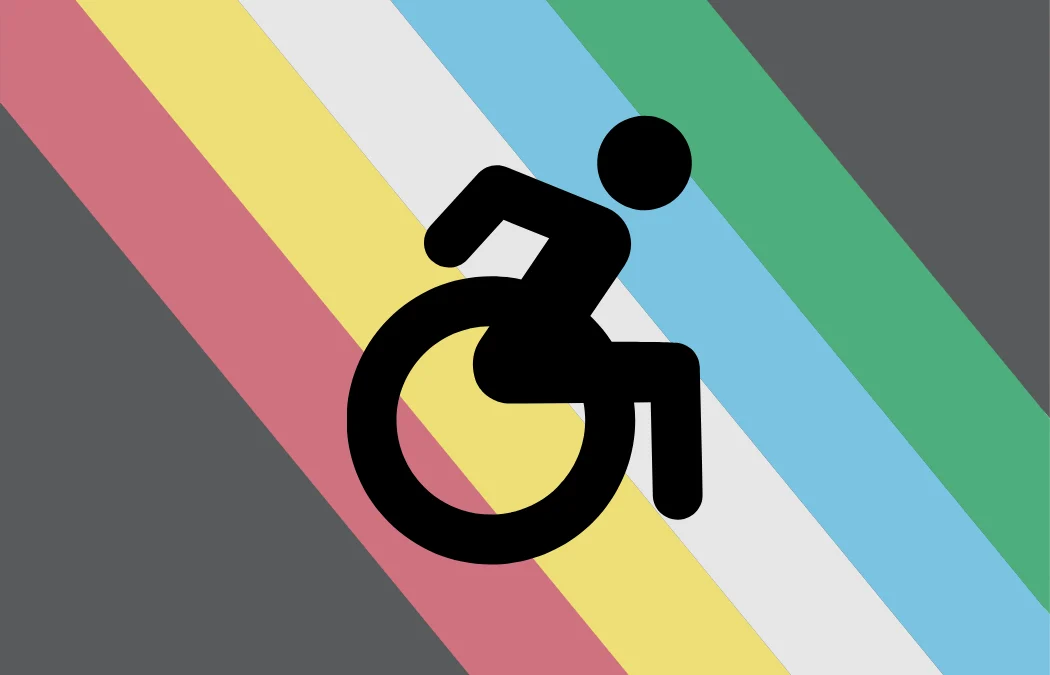
The Disability Pride flag is more than a banner; it is a visual manifesto. Designed by Ann Magill in 2019 and refined in 2021, the flag uses a dark charcoal background to signify the mourning of those lost to violence, neglect, and systemic ableism.
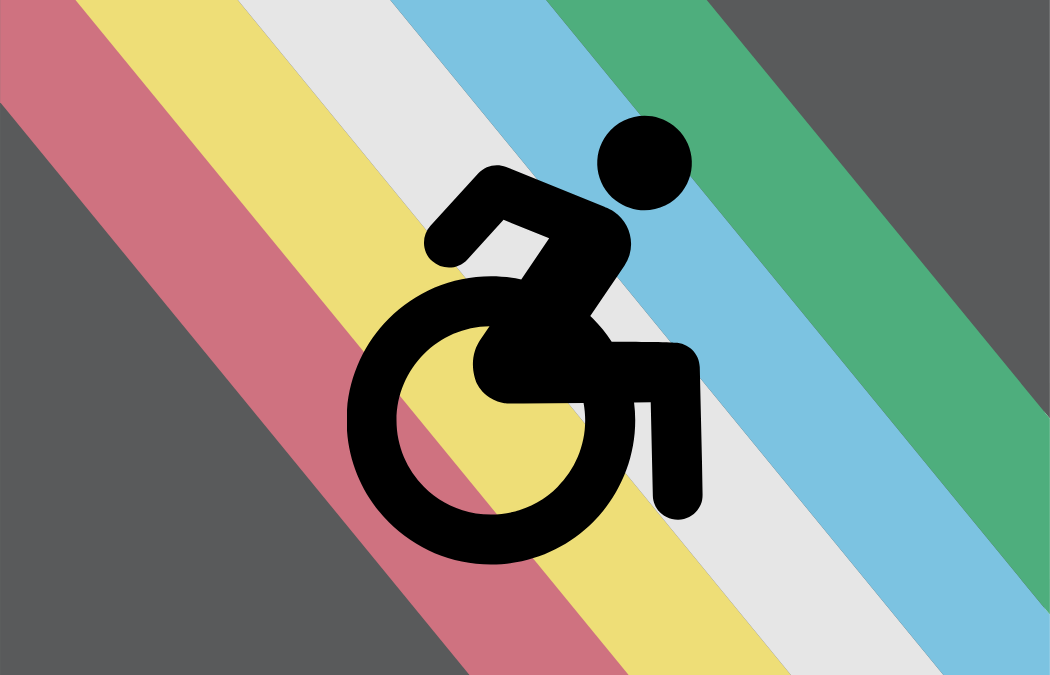
The diagonal stripes represent the community "cutting across" society, refusing to be pushed into the margins. Each color holds specific significance:
- Red: Physical disabilities.
- Gold: Neurodiversity.
- White: Invisible disabilities.
- Blue: Emotional and psychiatric disabilities.
- Green: Sensory disabilities.
The move from jagged to straight, diagonal lines was a deliberate choice made in collaboration with the community to ensure the flag remained accessible to those with visual and light sensitivities, embodying the very principles the movement represents.
The "Curb Cut Effect": Why Accessibility is Universal
This year’s theme, “The World Works Better With Us,” selected by The Arc’s National Council of Self-Advocates (NCSA), challenges the notion that accommodations are "special favors." Instead, the movement highlights the "Curb Cut Effect."
When infrastructure is built for the most marginalized, it inevitably improves the quality of life for the entire population. Curb cuts—the sloped sections of sidewalk initially mandated for wheelchair users—are now essential for parents with strollers, delivery workers, travelers with luggage, and cyclists. Closed captioning, developed for the Deaf and hard-of-hearing community, has become a standard feature for commuters in noisy environments, language learners, and students globally.
When we design for disability, we design for humanity. Inclusion is not a zero-sum game; it is an engine for innovation.
Data and Demographics: A Universal Experience
The urgency of Disability Pride is underscored by the scope of the population it represents. According to the Centers for Disease Control and Prevention (CDC), 1 in 4 adults in the United States currently lives with a disability.
However, the disability community is the only minority group that anyone can join at any time. As the population ages and medical conditions evolve, the majority of people will experience a period of disability during their lifetime. Despite this, shame and stigma remain prevalent, acting as a barrier to both the individual’s quality of life and the collective progress of our society. Disability is a human topic, and the failure to center it in our infrastructure is a failure of foresight.
Beyond Rights: The Rise of Disability Justice
While the traditional disability rights movement focused heavily on legal access and employment equality, the modern framework of "Disability Justice" has expanded the scope of the fight. Founded by activists like Patricia Berne and Leroy Moore through the Sins Invalid project, Disability Justice explicitly centers the experiences of BIPOC, LGBTQ+, and low-income disabled individuals.
This movement recognizes that ableism does not exist in a vacuum; it is deeply intertwined with racism, economic inequality, and environmental injustice. The 10 Principles of Disability Justice teach us that any movement for liberation that fails to account for the most marginalized disabled bodies is inherently incomplete. This intersectional approach ensures that as we fight for rights, we are not simply replicating existing power structures, but dismantling them for everyone.
Implications: The Ongoing Fight for Autonomy
While Disability Pride is a time for celebration, it is also a time for vigilance. In 2026, the community faces significant headwinds. Recent policy discussions have threatened the core rights of disabled people to live independently within their communities, with potential rollbacks on integration protections and access to essential medical supplies and home-based care.
The "Pride" in Disability Pride is an act of resistance against the shame that keeps disabled individuals isolated. By choosing to be visible, by demanding accommodation as a right rather than a request, and by building community, the movement breaks the cycle of stigma.
How to Engage and Celebrate
Celebrating Disability Pride means moving from performative allyship to active advocacy. Whether you are disabled, a caregiver, or an ally, consider these actions:
- Educate Yourself on History: Move beyond the ADA. Learn about the 504 Sit-ins, the Capitol Crawl, and the contributions of BIPOC activists like Leroy Moore.
- Support Disability-Led Organizations: Follow and donate to groups like the National Council of Self-Advocates or local Centers for Independent Living.
- Audit Your Own Spaces: Look at your workplace, school, or community center. Is it truly accessible? If not, ask why and advocate for changes that benefit everyone.
- Practice Community Care: Recognize that accessibility is a communal responsibility. Respect the needs of others without requiring them to justify their requests.
- Amplify Disabled Voices: Follow disabled creators and activists on social media. Listen to their experiences regarding healthcare, employment, and the daily barriers they face.
Conclusion: A Future Built Together
The assertion that "The World Works Better With Us" is not a slogan—it is a fact. When disabled people are centered in the design of our public life, we create a more resilient, innovative, and equitable society. As we mark another July, let us acknowledge that the barriers we face are not inherent to our disabilities, but to a world that has yet to fully embrace the necessity of our inclusion.
Disability Pride is the acknowledgment that we exist, that our lives have intrinsic value, and that the future is brighter when we move forward together. By breaking down the stigmas of the past, we are not just advocating for the disabled; we are building a world that works better for everyone.