






Introduction: A New Frontier in Respiratory Disease Management
Chronic Obstructive Pulmonary Disease (COPD) remains one of the most pressing global health challenges, affecting over 200 million individuals worldwide. Characterized by progressive airway inflammation and often-debilitating exacerbations, the disease places a significant burden on both patients and healthcare infrastructure. A pivotal new collaboration between Imperial College London and biotechnology firm ProAxsis seeks to change the diagnostic landscape.
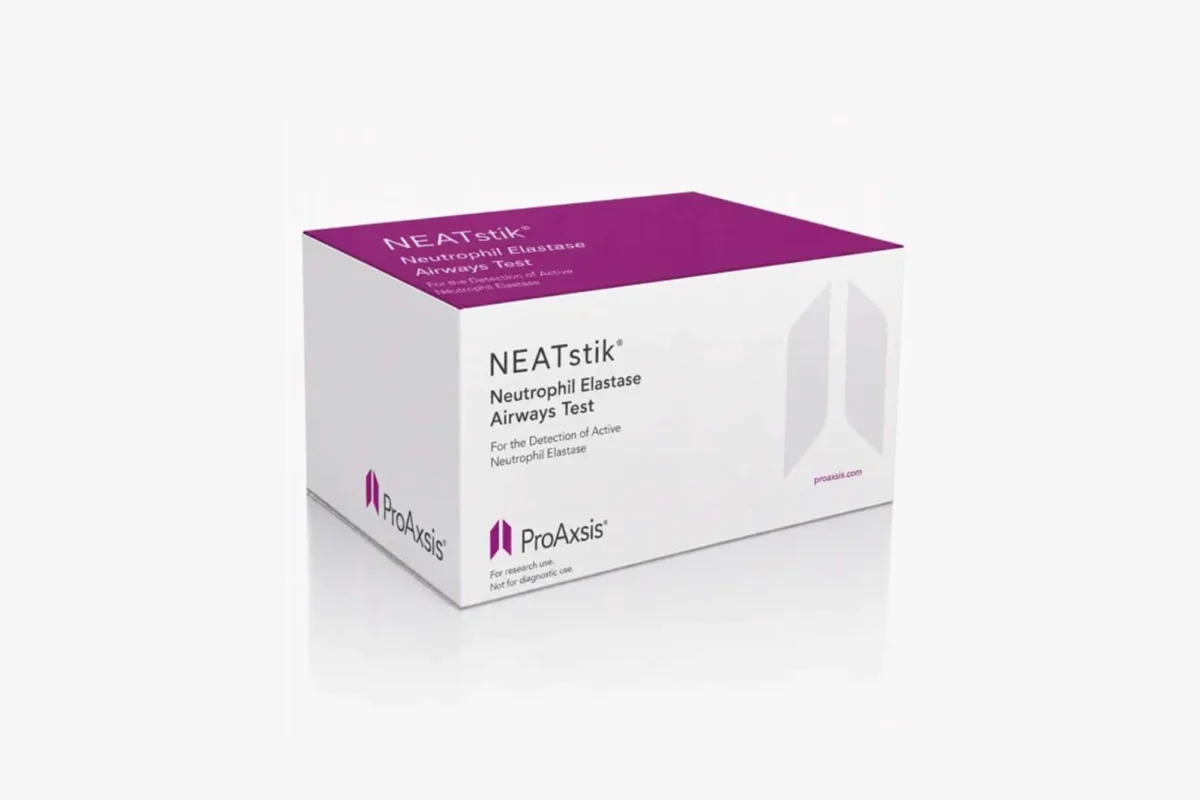
The two organizations have officially launched a 21-month clinical research study to evaluate NEATstik (Neutrophil Elastase Airways Test), a cutting-edge point-of-use diagnostic tool designed to detect active neutrophil elastase (NE) in sputum samples. This initiative represents a potential turning point in how clinicians monitor, manage, and treat COPD, with results anticipated by mid-2027.
The Core Technology: Detecting Active Neutrophil Elastase
At the heart of this research is the NEATstik, a lateral flow assay that utilizes proprietary technology to identify the presence of active NE in sputum. Unlike traditional laboratory-based testing, which can be time-consuming and logistically complex, NEATstik is designed for point-of-use application, delivering actionable results within approximately 10 minutes.
What is Neutrophil Elastase (NE)?
Neutrophil Elastase is an enzyme released by neutrophils, a type of white blood cell, during the body’s inflammatory response. While essential for fighting infections, uncontrolled or excessive NE activity in the lungs is a well-established biomarker for bacterial infection and chronic inflammation. In the context of COPD and bronchiectasis, high levels of NE are directly associated with an increased risk of exacerbations—the acute, life-threatening episodes where symptoms suddenly worsen—and a decline in overall lung function.
By providing a rapid, real-time measurement of this biomarker, NEATstik offers a window into the patient’s inflammatory status, potentially allowing for earlier intervention and more personalized treatment strategies.
Chronology of Development: From Bronchiectasis to COPD
The collaboration with Imperial College London is not an isolated experiment; it is the culmination of years of targeted development and successful clinical validation.
- Initial Foundation: ProAxsis established its technical proficiency through earlier work in bronchiectasis and alpha-1 antitrypsin deficiency. These projects provided the proof-of-concept required to demonstrate that NE levels could serve as a reliable, measurable marker for lung health.
- The WILLOW Study Success: A significant milestone occurred when ProAxsis’ technology supported the Phase II WILLOW study for Insmed. This collaboration demonstrated the utility of lab-based assays in identifying patient subsets that respond to targeted therapies.
- FDA Recognition: The company’s diagnostic expertise played a crucial role in supporting the U.S. Food and Drug Administration (FDA) approval of Brensocatib (branded as Brinsupri), a transformative treatment for non-cystic fibrosis bronchiectasis. This success cemented ProAxsis’ reputation as a leader in biomarker-led respiratory care.
- Present Day: The current 21-month study with Imperial College London marks the transition from specialized respiratory conditions to the massive, global COPD market. The study, which commenced in early 2026 (projecting to completion in mid-2027), is expected to refine the device for broader clinical use.
Supporting Data: Why COPD Needs Rapid Diagnostics
The necessity for a tool like NEATstik is underscored by the current limitations of COPD management. Patients often wait until symptoms are severe before seeking care, by which point the inflammatory cascade is well-established, leading to prolonged hospital stays and increased mortality risks.
The Impact of Point-of-Use Testing
Data suggests that "point-of-use" diagnostics—tests performed near the patient rather than in a centralized lab—drastically reduce the "time-to-decision" for clinicians.
- Immediate Monitoring: In a research setting, NEATstik allows investigators to track fluctuations in active NE levels over time, providing a more granular view of disease progression than static snapshots.
- Biomarker Precision: By focusing on active NE, rather than total protein levels, the test offers higher specificity for inflammation, helping to distinguish between stable disease and active exacerbation.
- Scalability: The lateral flow format is inherently scalable and cost-effective, making it an ideal candidate for integration into large-scale clinical trials and, eventually, routine primary care.
Official Responses and Strategic Vision
The leadership at ProAxsis views this study as a logical, albeit ambitious, progression of their corporate strategy.
"The aim is to not only evaluate our NEATstik test in a disease area that affects hundreds of millions of people worldwide, but also to explore broader applications for the technology across respiratory research, drug development, and patient monitoring," said Louise Ryan Murphy, Managing Director of ProAxsis. Her focus remains on the "versatility" of the platform—ensuring it serves not just as a diagnostic, but as a research enabler for pharmaceutical companies.
Steven Myint, Chairperson of ProAxsis, emphasized the strategic importance of the Imperial College partnership: "ProAxsis has already demonstrated the value of its technology through collaborations with leading global pharmaceutical companies and its contribution to an FDA-approved treatment in bronchiectasis. The Imperial College COPD study represents a natural and significant step forward, targeting one of the world’s largest respiratory disease markets."
Implications: The Path to Future Care
The success of this study would have profound implications for the medical community and the biotechnology sector.
Implications for Pharmaceutical and CROs
For pharmaceutical companies and Contract Research Organizations (CROs), a validated NEATstik test provides a standardized tool to recruit and monitor patients in clinical trials. By utilizing a common biomarker, trials become more efficient, potentially accelerating the drug development pipeline for new COPD treatments.
Implications for Patients and Telemedicine
Perhaps the most transformative potential lies in the development of a "next-generation self-test." If the clinical trial confirms the device’s efficacy and ease of use, ProAxsis aims to adapt the technology for home use.
- Remote Disease Management: COPD patients could monitor their own NE levels from home, acting as an early warning system for exacerbations.
- Digital Integration: These results could be seamlessly integrated into digital health platforms, allowing healthcare providers to receive real-time updates on a patient’s inflammatory status. This would transition the model of care from "reactive" (treating a full-blown flare-up) to "proactive" (adjusting therapy at the first sign of a biomarker shift).
Implications for Healthcare Systems
Healthcare systems globally are struggling with the rising cost of chronic respiratory diseases. By enabling remote assessment and preventing emergency hospitalizations, NEATstik could contribute to a significant reduction in direct healthcare expenditures, freeing up critical hospital capacity and improving the quality of life for millions of COPD sufferers.
Conclusion
The partnership between Imperial College London and ProAxsis is a testament to the power of biomarker-led innovation. As the 21-month study progresses, the focus will remain on validating the NEATstik technology within the complex environment of COPD. If the data aligns with the preliminary successes seen in bronchiectasis, the medical community may soon have a powerful new tool in its arsenal—one that brings the laboratory to the bedside, and eventually, to the home. With results due in mid-2027, the respiratory health community is watching closely, hopeful that this collaboration will pave the way for a new era of precision medicine in chronic disease.