










For many, the physical experience of aging is characterized by a creeping sense of rigidity. The stride becomes shorter, the ankles feel stiff, and the once-resilient "spring" in one’s step seems to have vanished, replaced by the jarring impact of concrete and the reliance on stiff, supportive footwear. However, fitness experts and biomechanical researchers are increasingly pointing to a overlooked culprit: we have systematically neglected the most complex structure in the human body—our feet.
As we cross the threshold into our 60s and beyond, the state of our feet dictates our quality of life, balance, and mobility. While modern society prioritizes the aesthetics of shoes, it often ignores the biological necessity of foot strength. Understanding the foot not as a rigid block, but as a sophisticated, dynamic suspension system, is the first step toward restoring mobility and preventing the cascade of joint pain that often plagues the aging population.
The Engineering Marvel Beneath You
To understand why our feet fail us, we must first appreciate what they actually are. The human foot is a masterclass in evolutionary engineering. Within each foot, there are 26 to 28 bones—meaning that between both feet, you possess roughly one-quarter of all the bones in your entire body. These are connected by over 33 joints and a complex network of more than 100 muscles, tendons, and ligaments.
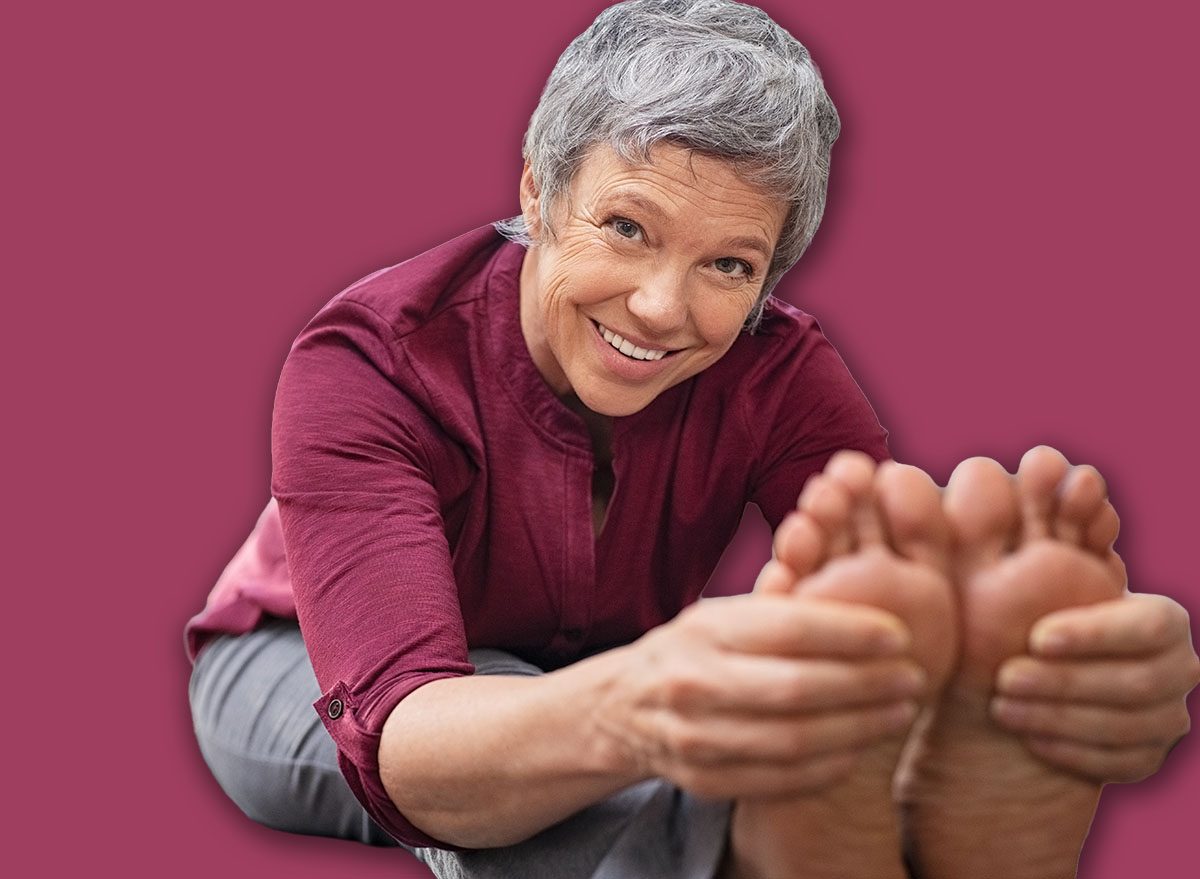
Most of us have been taught to visualize the foot as having a single "medial arch." In reality, the foot is a three-dimensional marvel featuring a lateral arch and a transverse arch, all of which work in harmony to distribute weight and rotation. These structures are not static; they are designed to deform, expand, and recoil with every single step. When we move, the foot must transition from a flexible structure that adapts to the terrain to a rigid, powerful lever that propels us forward. When this mechanism is locked away in restrictive footwear for decades, these arches lose their ability to fluctuate, leading to the "stiff foot" syndrome common in later years.
The Suspension Analogy: Protecting Your Joints
If you were to drive a truck without shock absorbers, every pothole would send a violent jolt through the vehicle’s chassis. Your body functions identically. Every step you take generates force equal to two to three times your body weight. During high-impact activities like running, that force can spike to 12 or 15 times your body weight.
Without a functional, elastic foot, that force does not dissipate. Instead, it travels directly up the kinetic chain: through the ankles, into the knees, through the hips, and eventually into the lumbar spine. This is why many chronic knee and lower back issues are actually "bottom-up" problems. A healthy foot uses the plantar fascia—a thick, fibrous band of tissue—like a winch cable. As the toes extend, this cable tightens, pulling the arch into a supportive, spring-loaded position. By failing to train these muscles, we essentially "bottom out" our suspension, forcing our joints to pay the price for our lack of foot mobility.
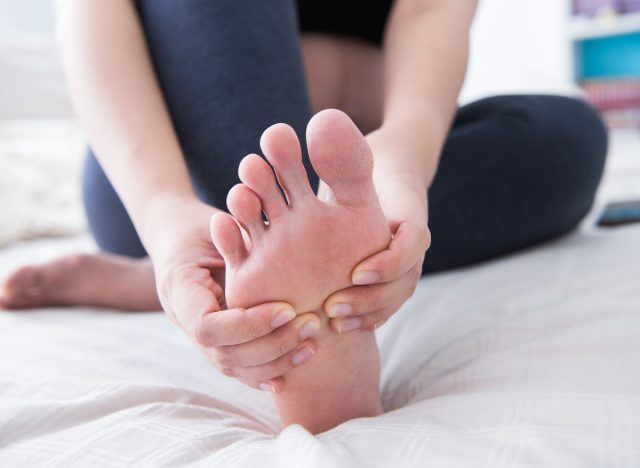
The Role of Proprioception: The Body’s Internal GPS
Beyond mechanics, the feet are our primary sensory interface with the world. The soles of our feet are packed with thousands of sensory receptors that provide constant feedback to the brain regarding pressure, texture, and position. This is known as proprioception.
Think of your feet as your body’s global positioning system (GPS). When you walk barefoot, your brain receives a high-definition signal, allowing it to make micro-adjustments in your gait to maintain balance and stability. As we age, if we spend 16 hours a day in thick, cushioned shoes, that signal becomes "noisy" or muffled. The brain receives less information, leading to a decline in coordination and an increased risk of falls. By intentionally spending time barefoot and engaging in sensory-rich movement, we are essentially recalibrating our nervous system’s navigation map.
The Myth of Perpetual Support
The orthopedic industry has long advocated for rigid, high-support shoes and custom orthotics. While these tools are life-changing for individuals with specific medical conditions, congenital deformities, or acute injuries, they are often a "crutch" for the average person.
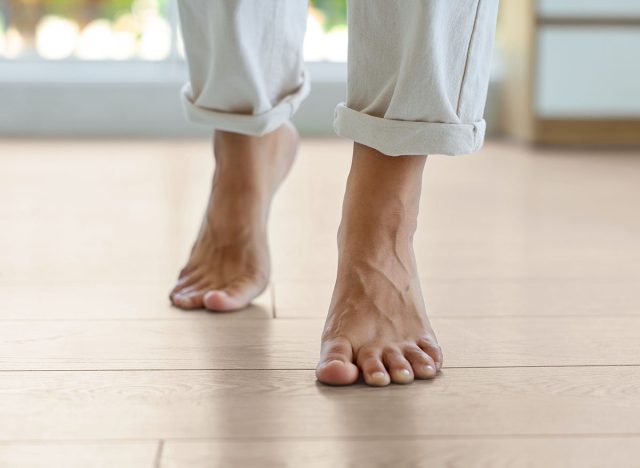
When you wear a shoe that does all the work for you, your intrinsic foot muscles—the ones responsible for holding your arch and stabilizing your gait—begin to atrophy. It is a biological law: if you don’t use it, you lose it. The goal of "barefoot training" is not necessarily to walk around the city barefoot, but to treat the foot as a muscle group that requires regular, dedicated stimulation. We need to move away from the idea that our feet must be "held up" and toward the reality that they must be "built up."
Four Essential Moves for Restoration
To rebuild your foot’s natural suspension, you must introduce movement patterns that prioritize articulation, coordination, and strength. The following routine, which can be performed in as little as 10 to 15 minutes a day, is designed to wake up the feet and restore their function.
1. Manual Fascial Release (Self-Massage)
Before you can train the foot, you must release the chronic tension caused by years of compression.
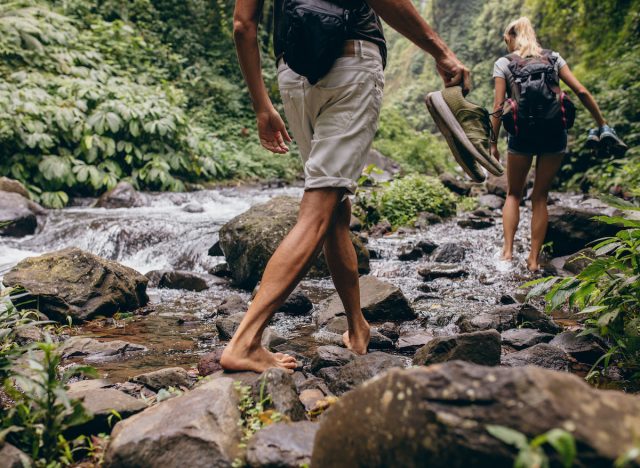
- The Technique: Sit in a chair with one foot crossed over the opposite knee. Use your thumbs or a massage ball to apply firm, deep pressure to the sole of your foot. Start at the heel and work your way toward the toes, focusing on the arches.
- The Goal: You are essentially "flossing" the plantar fascia. If your feet are particularly tight, the movement may feel uncomfortable initially. Consistency is key; aim for three to five minutes per foot daily. You will notice that your toes feel more mobile and "splayed" immediately following the session.
2. Single-Leg Standing Toe Coordination
Balance is the foundation of all movement. Once you can balance, you must learn to control the smaller muscles in the toes.
- The Technique: Stand on one leg. Focus on gripping the floor with your toes while maintaining a tall posture. Once steady, try to lift just the big toe while keeping the others down, then reverse the process.
- The Progression: If standing is too difficult, start seated. Move to a kneeling position, and eventually progress to full standing balance. This trains the nervous system to isolate specific muscle groups, a skill that is vital for preventing stumbles.
3. The "Shuffle Walk"
This exercise, inspired by gait analysis, improves the transition phase of your step.
- The Technique: Imagine you are performing a controlled "moonwalk." As you take a step, drag the sole of your foot along the floor, consciously feeling the surface texture. As the toe comes up, the sensory receptors are activated. As you roll onto the ball of the foot, focus on the weight distribution.
- The Goal: This provides a massive influx of proprioceptive information to the brain. By dragging the foot, you force the ankle and foot to remain active throughout the entire range of motion, preventing the "flat-footed" slap common in inefficient gaits.
4. The March with Calf Raise
This is the ultimate test of the "toe-off" phase of your stride.
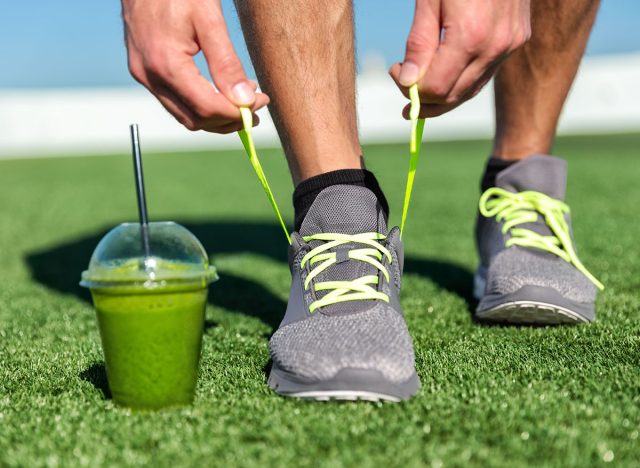
- The Technique: Stand tall and march in place, lifting your knees high. At the top of the march, hold for a second to ensure stability. As you place the foot down, transition into a calf raise, driving through the big toe.
- The Goal: This mimics the propulsion phase of walking or running. By training the toes to handle the load of the calf raise, you are conditioning the "winch" mechanism of the plantar fascia to handle the weight of your body, effectively offloading stress from your knees and hips.
Implications for Longevity
The implications of foot health extend far beyond the feet themselves. For those over 60, the primary concern regarding mobility is the "fear of falling." By strengthening the foot, you are improving the quality of the data your brain receives from the ground. A stronger, more responsive foot means faster reaction times when you lose your balance, a more efficient gait that conserves energy, and a significant reduction in the chronic pain that limits physical activity.
Reclaiming your foot health is not about abandoning shoes; it is about reclaiming the ability to function within or without them. By dedicating time to these four exercises, you are investing in the "suspension system" that carries you through the world. Every step you take is an opportunity to either degrade or rebuild. With the right movements, you can ensure that your foundation remains as sturdy and resilient as it was decades ago.