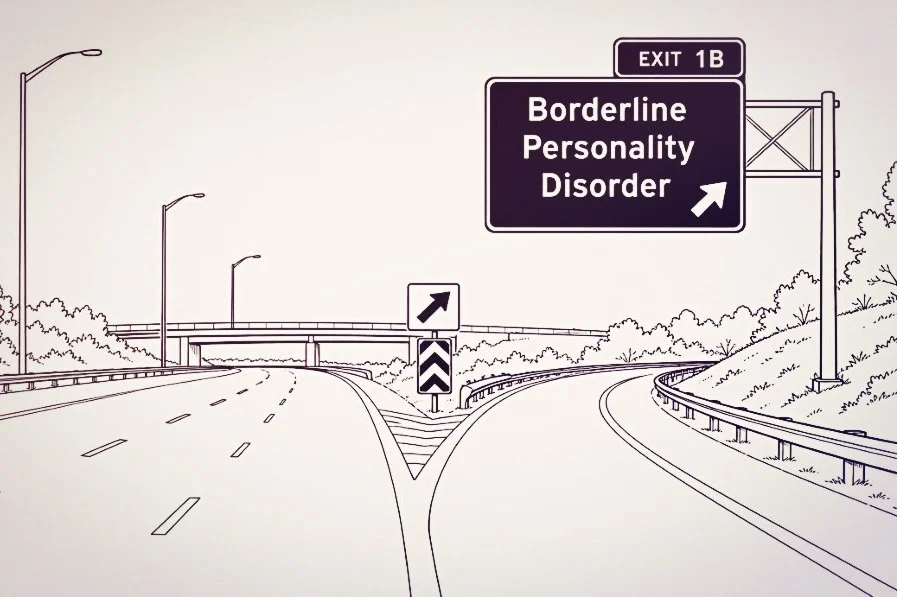
In the modern mental health landscape, a diagnosis is intended to be a compass, guiding both clinician and patient toward an effective treatment path. However, for many navigating the complexities of trauma, the diagnostic process has morphed into a bureaucratic tool—a means of "off-ramping" difficult cases, managing limited budgets, and silencing those who do not recover within a predetermined timeframe.
The following report examines a growing crisis in psychiatric care through the lens of a patient’s descent from progress to systemic abandonment. It explores how the overlap between Complex Post-Traumatic Stress Disorder (CPTSD), Attention Deficit Hyperactivity Disorder (ADHD), Autism, and Emotionally Unstable Personality Disorder (EUPD) is being weaponized by healthcare systems to discharge patients rather than treat them.
Main Facts: The Intersection of Trauma and Bureaucracy
The core of the issue lies in the clinical tension between trauma-informed care and the administrative requirements of public health systems. When a patient presents with a history of severe trauma, the resulting symptoms—emotional dysregulation, hypervigilance, and interpersonal difficulties—often mirror a variety of neurodevelopmental and personality disorders.
In recent years, several critical factors have emerged:
- The Overlap Crisis: Symptoms of CPTSD are frequently indistinguishable from ADHD, Autism, and Borderline Personality Disorder (BPD/EUPD) without longitudinal, deep-dive assessments.
- The "Wastebasket" Diagnosis: EUPD/BPD is increasingly used as a label for patients who are deemed "treatment-resistant" or "difficult," often leading to their exclusion from trauma-specific services.
- Resource Rationing: Public health sectors often utilize specific diagnoses (like adult autism) to justify a lack of service provision, effectively pushing patients toward an expensive private sector or leaving them without care.
- Clinician Bias: Research consistently shows that once a "personality disorder" label is applied, clinicians view the patient’s prognosis more negatively and are less likely to provide compassionate, sustained intervention.
Chronology: From Recovery to Systemic Gaslighting
The journey of the anonymous patient featured in this report illustrates a disturbing pattern of "diagnostic hopping" that serves the institution rather than the individual.
The Initial Breakthrough
Following a severe assault, the patient was diagnosed with Complex Post-Traumatic Stress Disorder (CPTSD). Entering trauma therapy, they reported significant progress—a rarity in the often slow-moving world of trauma recovery. For the first time, the patient was learning to map triggers and understand the physiological manifestations of their trauma.
The ADHD Pivot
Halfway through this successful treatment, the attending psychologist pivoted. Based on an assessment that the patient felt was "pre-decided," the psychologist diagnosed the patient with ADHD. Crucially, rather than treating the conditions as co-occurring, the psychologist terminated the trauma therapy entirely. The patient was told that ADHD medication would be a "magic pill" that would resolve all underlying issues, including the trauma.
The Year of Abandonment
The patient was placed on a year-long waiting list for psychiatric medication. During this period, the hard-won gains of trauma therapy evaporated. Without support, the patient’s hypervigilance returned with renewed intensity, and flashbacks became a constant state of existence. The system’s decision to "wait and see" effectively left a vulnerable survivor in a state of unmanaged crisis.
The Carousel Continues: Autism and EUPD
When the patient finally saw a consultant psychiatrist a year later, the ADHD diagnosis was dismissed. Instead, the psychiatrist suggested the patient was likely autistic. When the patient requested to return to their original, successful trauma therapy, they were met with a bureaucratic wall: the clinic had a "one-year limit" on trauma treatment, regardless of patient need.
When the patient pushed back, the psychiatrist issued a "clinical diagnosis" of Emotionally Unstable Personality Disorder (EUPD) on the spot, without a formal assessment. This final label served as the ultimate off-ramp, categorizing the patient as "difficult" and justifying their discharge from the system.
Supporting Data: The Science of Misdiagnosis
The patient’s experience is not an anomaly; it is supported by a growing body of clinical research highlighting the dangers of diagnostic overlap.
The CPTSD vs. BPD Distinction
A landmark clinical guide published in the British Journal of Psychiatry (Karatzias et al., 2023) was created specifically to help clinicians distinguish between CPTSD and BPD. While the two can look identical on a chart—both involving emotional dysregulation and social difficulties—the ICD-11 identifies "disturbances in self-organization" (DSO) as the unique hallmark of CPTSD. These include a persistent negative self-concept and interpersonal disturbances rooted in trauma, rather than a pervasive pattern of instability in self-image as seen in BPD.
The Sarr et al. Study (2024)
Recent research by Sarr and colleagues confirms a "profound overlap" between CPTSD, Autism, and EUPD. The study highlights that without deep, longitudinal assessment, it is nearly impossible to tell these conditions apart in an acute setting. This creates a "convenience gap" where rushed clinicians reach for the label that is easiest to manage administratively.
Clinician Bias and the BPD Label
The consequences of the BPD/EUPD label are documented and dire. Research by Lam et al. (2015) found that clinicians rate the same patient’s prognosis significantly more negatively once the BPD label is applied, even if the symptoms remain unchanged. Further studies by Baker & Beazley (2022) and Black et al. (2011) indicate that healthcare providers often hold subconscious or overt negative attitudes toward these patients, viewing them as manipulative or "not worth" the intensive resources required for trauma recovery.
Official Responses: The Bureaucratic Logic
While individual clinicians make these diagnoses, they do so within a systemic framework designed for efficiency and cost-containment. When queried about these practices, public health entities often cite the following justifications:
1. The "Step-Down" and Discharge Protocols
Many public mental health trusts operate on a "brief intervention" model. This model assumes that one year of therapy should be sufficient for "stabilization." When a patient requires more, the system often lacks the flexibility to extend care, leading to a "reclassification" of the patient’s needs to fit available (or unavailable) services.
2. The Neurodevelopmental Resource Gap
In many jurisdictions, an Autism or ADHD diagnosis shifts the patient into a different funding bucket. By labeling a trauma survivor as "autistic," the public health system can claim it lacks the specific specialized resources for adult neurodevelopmental support. This effectively clears the "public books" by moving the patient into a category where the state has fewer statutory obligations to provide immediate, intensive therapy.
3. The Defense of "Clinical Judgment"
Clinics often defend "on-the-spot" diagnoses as "clinical judgment" by senior staff. This creates a power dynamic where patients have little recourse. As noted in the patient’s account, the head of a clinic can use their authority to deny second opinions, effectively making their word the final, unchallengeable law of the patient’s medical record.
Implications: The Human Cost of Systemic Gaslighting
The weaponization of diagnosis has far-reaching consequences that extend beyond the walls of the clinic.
The Shattering of Trust
For a trauma survivor, the therapeutic relationship is a primary tool for healing. When that relationship is used to "trap" or "off-ramp" the patient, the resulting "institutional betrayal" can be more damaging than the original trauma. The patient in this case left the clinic with "more trauma than they started with," a sentiment echoed by many who feel gaslit by the professionals they turned to for help.
The Stigma of the "Personality Disorder"
The BPD/EUPD label carries a social and professional weight that CPTSD does not. Once labeled as having a "disordered personality," a patient’s valid complaints about their care are often dismissed as "symptoms" of their disorder (e.g., "splitting" or "emotional instability"). This creates a circular logic where the patient cannot defend themselves without further confirming the diagnosis in the eyes of the clinician.
The Need for Accountability and Reform
The current system prioritizes labels over lives. To rectify this, several structural changes are necessary:
- Mandatory Longitudinal Assessments: No "personality disorder" or "neurodevelopmental" diagnosis should be made without an extensive review of the patient’s trauma history.
- Elimination of Arbitrary Care Limits: Treatment should be based on clinical need and progress, not on a one-year "bureaucratic schedule."
- Independent Review Boards: Patients must have access to a transparent, third-party grievance process when they believe a diagnosis has been used as a tool for discharge or discrimination.
Conclusion
The "descent into the cracks" of the mental health system is often paved with well-meaning but misguided diagnostic pivots. When clinicians use labels to simplify complex human suffering for the sake of administrative efficiency, they do not just fail the patient—they actively harm them. The case of the CPTSD survivor turned "EUPD discharge" serves as a stark warning: without a fundamental shift toward accountability and compassion, the mental health system will continue to be a source of trauma rather than a sanctuary from it.