





By Investigative Desk
Living with chronic pain is often described as an exercise in boundary-setting. For the millions of Americans navigating persistent, invisible ailments, life becomes a series of calculated maneuvers: managing medication schedules, gauging energy levels, and strictly adhering to routines that ensure survival. However, a new movement in patient advocacy is challenging the idea that these boundaries must be permanent.
Michele Rice, a patient advocate and recent leader of the U.S. Pain Foundation’s daily peer support group, has become the face of a growing trend in patient-led recovery: the intentional, daily pursuit of community as a therapeutic intervention. Her journey from a person living within the "lines" of chronic pain to a leader of a vital daily lifeline offers a profound look at how human connection can serve as a potent, albeit unconventional, medicine.
The Anatomy of a Daily Lifeline: Main Facts
The U.S. Pain Foundation facilitates a nationwide network of support groups, but their daily peer-led virtual sessions have emerged as a cornerstone of their advocacy efforts. These sessions are not clinical environments; they are peer-driven forums designed to combat the profound isolation that frequently accompanies chronic pain.
The core mission of these groups is simple yet radical: to provide a consistent space for individuals whose lives are dictated by physical discomfort. By meeting every weekday morning, the program addresses the most vulnerable time for many patients—the transition from sleep to wakefulness, often the period of highest pain and stiffness.
For the attendees, the "meeting" is not merely a calendar entry. It is a scheduled point of accountability, a community anchor, and a platform for shared lived experience. The initiative highlights a shift in modern healthcare: moving away from a purely medicalized, top-down approach toward a horizontal, peer-to-peer support structure where "lived experience" is considered an expert qualification.
A Chronology of Transformation: From Hesitation to Leadership
The evolution of the program, and Michele Rice’s role within it, serves as a case study in overcoming the inertia of chronic illness.
Phase I: The Resistance
For years, Rice operated within a rigid framework. The reality of her chronic pain necessitated a slow, deliberate start to every day. Like many others in her position, she relied on predictable routines to conserve energy. When first presented with the opportunity to lead the morning group, her immediate response was one of instinctual rejection. The thought of adding a high-responsibility commitment to her already taxed morning routine seemed antithetical to her survival strategy.
Phase II: The Catalyst
The turning point occurred when the U.S. Pain Foundation signaled a critical need for leadership. Rice was faced with a choice: allow a vital community resource to potentially dissolve or push past her perceived physical and emotional boundaries. Driven by an empathetic impulse to protect the community’s lifeline, she bypassed the typical analytical deliberation. She accepted the role not as a personal goal, but as a commitment to the collective well-being of the group.
Phase III: The Daily Practice
The initial weeks were characterized by "uncomfortable growth." Rice had to navigate the physiological barriers of early mornings and the psychological toll of "showing up" on camera during flares. However, this period of discomfort eventually gave way to a new equilibrium. What began as an act of service evolved into a symbiotic relationship where the facilitator was as nourished by the community as the attendees were by her leadership.
The Data of Connection: Why Peer Support Works
While anecdotal evidence of the benefits of peer support is vast, the underlying data confirms why these groups are essential to public health.
According to research from the Journal of Pain, social isolation is a primary driver of disability in chronic pain patients. Patients who report higher levels of social support consistently exhibit lower levels of depression, anxiety, and pain-catastrophizing behaviors.
- The "Buffer Effect": Clinical studies indicate that regular interaction with peers who share the same diagnosis acts as a "buffer" against the stress of illness.
- The Empowerment Metric: Peer groups facilitate "health literacy," where members learn to navigate medical systems, medication side effects, and advocacy from one another more effectively than they might through isolated research.
- Consistency vs. Intensity: Data suggests that the frequency of connection (meeting every morning) is more impactful than the intensity of the sessions. The routine of logging on provides a cognitive anchor, reducing the "brain fog" and psychological malaise often associated with chronic health conditions.
Official Perspectives: The Role of the U.S. Pain Foundation
The U.S. Pain Foundation has long advocated for the "biopsychosocial" model of care, which posits that health is determined by the intersection of biological, psychological, and social factors.
In a statement regarding the success of their peer-led groups, organizational spokespeople emphasized that these programs are not meant to replace clinical care, but to augment it. "We are filling the void that medical systems often leave behind," one representative noted. "Doctors treat the physical symptoms, but the peer group treats the human experience of those symptoms."
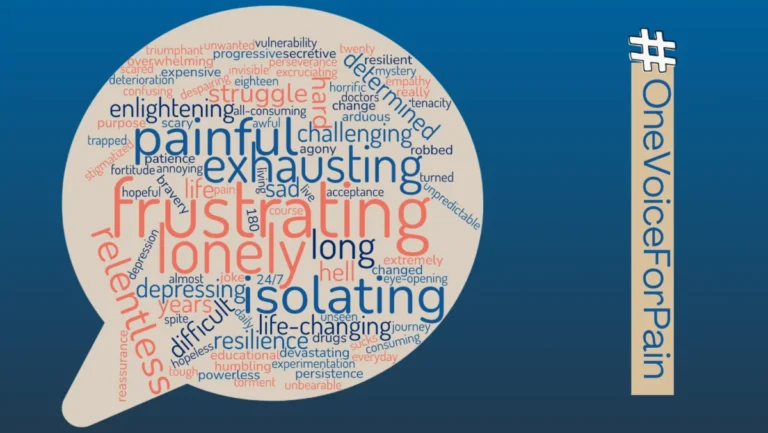
The foundation’s commitment to these groups is part of a broader push to destigmatize chronic pain. By providing a platform where pain is discussed openly, humorously, and resiliently, the organization is effectively changing the narrative from "suffering in silence" to "thriving in community."
Implications for the Future of Chronic Care
The success of Rice’s initiative has significant implications for how we define "recovery" and "growth" in the face of incurable conditions.
1. Redefining Success
Traditionally, medical success is measured by the reduction of pain scores or the improvement of biomarkers. The experience of this support group suggests that success should also be measured by "social participation." Even on days when pain levels remain constant, the act of participating in a community constitutes a major recovery victory.
2. The Power of "Small" Acts
The narrative that only grand gestures—such as running a marathon or achieving a career milestone—constitute growth is being dismantled. As Rice noted, for someone managing chronic pain, the act of turning on a camera and engaging with others is an act of defiance against the illness. This shifts the focus from physical output to psychological presence.
3. Sustainability Through Symbiosis
Perhaps the most important implication is the realization that support is not a one-way street. In professional caregiving, "burnout" is a constant threat. However, in peer-led models, the reciprocal nature of the support—where the leader is also a patient—creates a sustainable ecosystem. The "helper" is supported by the "helped," creating a cycle of mutual resilience.
4. Beyond the Boundaries
Chronic illness forces a narrowing of life’s horizons. Yet, the evidence from this group demonstrates that these horizons are not as rigid as they appear. By "stepping outside the lines," individuals can discover that they possess more agency than their diagnosis implies. The ability to connect, contribute, and find joy remains intact, even if the physical vehicle for those actions has changed.
Conclusion: A New Morning
As Michele Rice’s experience illustrates, the most profound changes often occur in the quietest, most mundane moments of our day. The simple, daily act of reaching out to others can effectively re-draw the boundaries of a life defined by pain.
For the participants of the U.S. Pain Foundation’s daily group, the morning is no longer a time to dread the onset of symptoms. It is a time for connection. It is a time to acknowledge that while chronic pain may alter the shape of a life, it does not dictate its quality. Through the simple, consistent act of saying "Good morning," these individuals are proving that the human spirit—when supported by a compassionate community—can grow well beyond the lines that pain attempts to draw.
In the final assessment, the greatest medicine might not be found in a pharmacy, but in the shared resilience of those who refuse to let their pain be the only thing that defines them.