









A groundbreaking case report presented at the 2026 American Academy of Dental Sleep Medicine (AADSM) Annual Meeting has provided fresh evidence that the future of treating obstructive sleep apnea (OSA) may lie not in aggressive mandibular advancement, but in the strategic combination of dental appliances and nasal airflow optimization.
The study, which documented a 45-year-old female respiratory therapist struggling with moderate-to-severe OSA, demonstrated that a "less is more" approach—using a chairside titratable oral appliance paired with a mouth shield—can yield rapid, clinically significant results. As dental sleep medicine continues to evolve, this findings suggest a paradigm shift in how clinicians might address treatment-resistant cases.
Main Facts: A Synergistic Approach to Airway Management
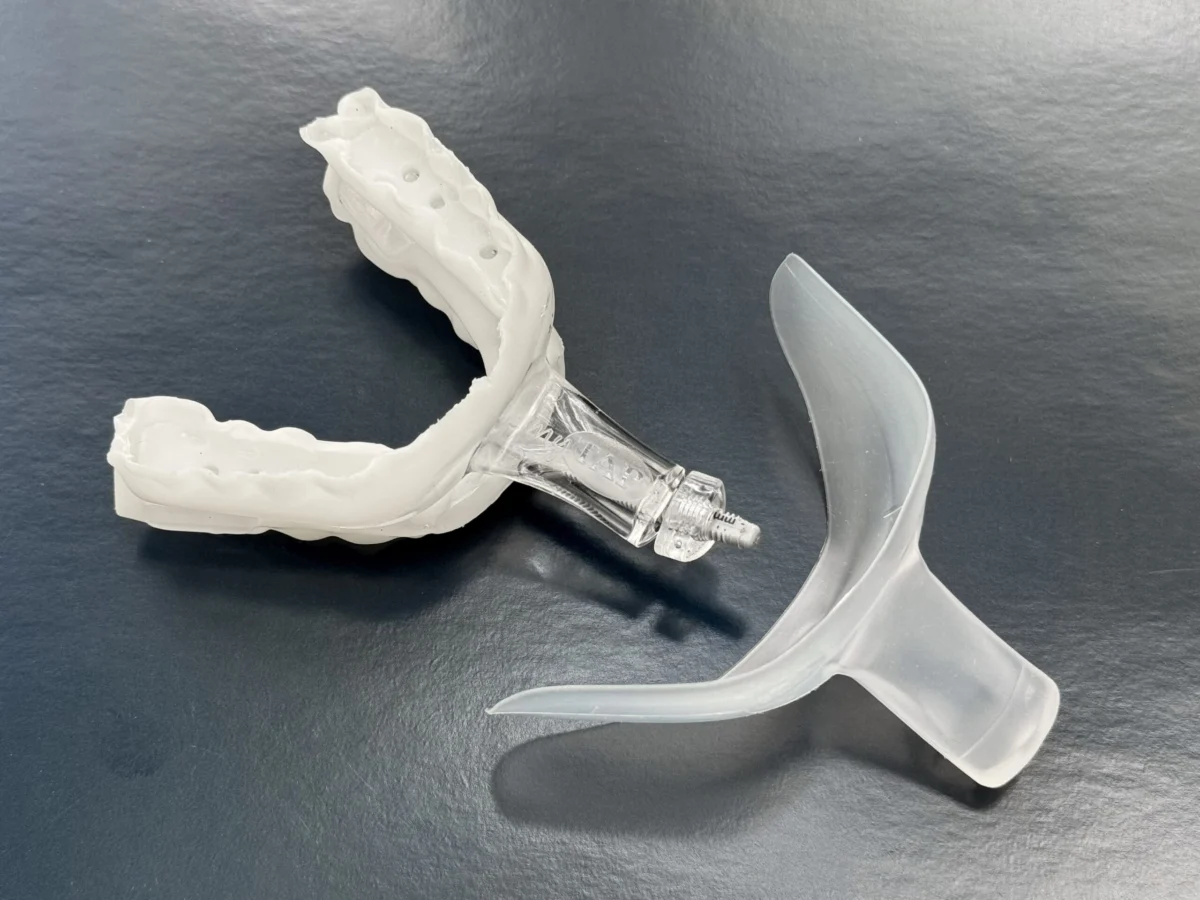
The core of the case report centers on the myTAP oral appliance, manufactured by TAP Sleep Care. Unlike traditional custom-molded devices that can take weeks to manufacture, the myTAP is a precision-fit, non-custom appliance designed for immediate, chairside application.
In this specific case, the patient’s treatment protocol was unique: rather than relying solely on the device to physically pull the mandible forward to open the airway, the clinicians introduced a mouth shield. The shield’s purpose was to enforce nasal breathing, a physiological state that researchers argue is vastly superior to oral breathing for patients with sleep-disordered breathing.
By combining the myTAP’s ability to stabilize the jaw with the mouth shield’s ability to ensure air is processed through the nasal passages, the researchers achieved a remarkable 86% reduction in the patient’s Apnea-Hypopnea Index (AHI). This result was not achieved over months of trial and error, but rather over the course of just two nights of polysomnography (PSG) testing.
Chronology: From Diagnosis to Rapid Clinical Remission
The patient, a 45-year-old respiratory therapist, presented with a complex profile. Despite her professional background, she had previously struggled to manage her moderate-to-severe OSA effectively.
Phase 1: Baseline Assessment
Before the intervention, the patient’s diagnostic sleep study confirmed a significant AHI of 25.4 events per hour. In the world of sleep medicine, this is a clear indication of moderate-to-severe sleep-disordered breathing, which carries long-term risks for cardiovascular health, cognitive function, and metabolic stability. Interestingly, the patient reported being largely asymptomatic, a common occurrence in patients who have lived with chronic sleep deprivation for years and have normalized their state of fatigue.
Phase 2: The Chairside Intervention
The researchers—Jason Hui, DDS, MAGD, ABDSM, of the Texas A&M College of Dentistry, and Alan G. McDavid, DDS, MAGD, ABDSM, of Texas Sleep and TMJ Solutions—initiated treatment using the myTAP system. The fitting process took approximately 15 minutes. The patient was instructed to use the device in conjunction with a mouth shield designed to encourage nasal patency.
Phase 3: The Follow-Up Polysomnography
Following the initial fitting, a follow-up polysomnography study was conducted to measure the physiological impact of the combination therapy. The results were immediate. The AHI plummeted from 25.4 to 3.6 events per hour—a drop that technically moved the patient from a "moderate-to-severe" category to a range considered within normal physiological limits for sleep.
Supporting Data: Why Nasal Breathing Matters
The data extracted from the two-night study provides a compelling argument for the role of the autonomic nervous system in sleep apnea.
Quantitative Improvements
Beyond the 86% reduction in AHI, the study noted significant improvements in several critical markers:
- Oxygenation: The patient experienced a stabilization in blood oxygen levels throughout the night.
- Hypoxic Burden: The cumulative "load" of low oxygen episodes was drastically reduced, protecting the heart and brain from the oxidative stress associated with OSA.
- Autonomic Balance: The researchers observed a restoration of healthy vagal tone, indicating that the patient’s nervous system was no longer in a state of "fight or flight" due to nocturnal airway obstructions.
The Physiology of the Nasal Shield
The authors of the report, Dr. Hui and Dr. McDavid, emphasize that oral appliances are often over-engineered to force the jaw into extreme, uncomfortable positions. By contrast, this study highlights that nasal breathing acts as a natural "airway stabilizer."
Nasal breathing increases the production of nitric oxide, a signaling molecule that acts as a potent vasodilator. This improves oxygen uptake and reduces airway resistance. By enforcing nasal breathing with a mouth shield, the myTAP device does not have to work as hard to keep the airway open. This allows for "minimal mandibular advancement," which significantly increases patient compliance and reduces the risk of long-term TMJ (temporomandibular joint) pain or dental shifting.
Official Responses: Insights from the Field
The clinical community and the leadership at TAP Sleep Care have responded to the findings with considerable enthusiasm.
"This case illustrates myTAP’s unique ability to deliver same-day therapy and achieve clinically meaningful results quickly, even at conservative advancement levels," said Dr. Alan G. McDavid in a press release. "Combining it with simple nasal patency support amplified outcomes dramatically, offering a practical, patient-friendly approach for dental sleep medicine practices."
Charles Collins, CEO of TAP Sleep Care, echoed these sentiments, noting that the results challenge the status quo in sleep medicine. "By pairing minimal mandibular advancement with enforced nasal breathing, we achieved an 86% reduction in AHI in just one additional night, along with major gains in oxygenation, hypoxic burden, autonomic balance, and snoring elimination."
The clinical significance is clear: when the airway is managed holistically, the reliance on high-pressure mechanical interventions—such as full-face CPAP masks—may be avoidable for many patients.
Implications: A New Era for Dental Sleep Medicine
The implications of this case report extend far beyond the success of a single patient. They challenge the foundational assumptions of how we treat sleep apnea.
Challenging Airflow Equivalence
A key takeaway from the investigation is the critique of "airflow equivalence." Traditionally, sleep medicine has focused on the volume of air reaching the lungs, often prioritizing CPAP machines that blast air into the airway. However, the researchers suggest that the quality and path of the air (nasal vs. oral) are just as important as the volume. The success of the mouth shield implies that the mouth is a poor conduit for sleep-time respiration and that the nasal passages are designed to prepare air for the lungs.
The "Same-Day" Advantage
One of the most significant barriers to sleep apnea treatment is the delay between diagnosis and the commencement of therapy. Custom oral appliances often require multiple office visits, dental impressions, and lab manufacturing time. The myTAP device, which is FDA-cleared and fit in roughly 15 minutes, changes the clinical workflow. It allows dentists to provide immediate relief, which is vital for patients who are struggling with the psychological and physical burden of untreated OSA.
The Path Forward
While the results are promising, the authors are careful to note that this is a case report—a foundational piece of evidence that necessitates further study. The research team has identified several areas for future investigation:
- Long-term Efficacy: Can these results be sustained over months and years?
- Overjet and Dentition: Does the long-term use of the myTAP, even at minimal advancement, affect the alignment of teeth or the jaw structure?
- Broadened Patient Demographics: Will these results hold true for patients with more severe comorbidities, such as obesity or complex anatomical restrictions?
As the medical community looks toward future trials, this case stands as a landmark for the potential of "minimalist dentistry" in the treatment of sleep-disordered breathing. By prioritizing natural physiological functions like nasal breathing and using precision-fit, non-invasive technology, dental sleep medicine is moving toward a more patient-centric, efficient, and effective future.
For the millions of individuals currently struggling with treatment-resistant OSA or finding CPAP therapy intolerable, this study offers more than just data—it offers a viable, rapid, and highly effective pathway back to restorative, healthy sleep.