











By Investigative Desk
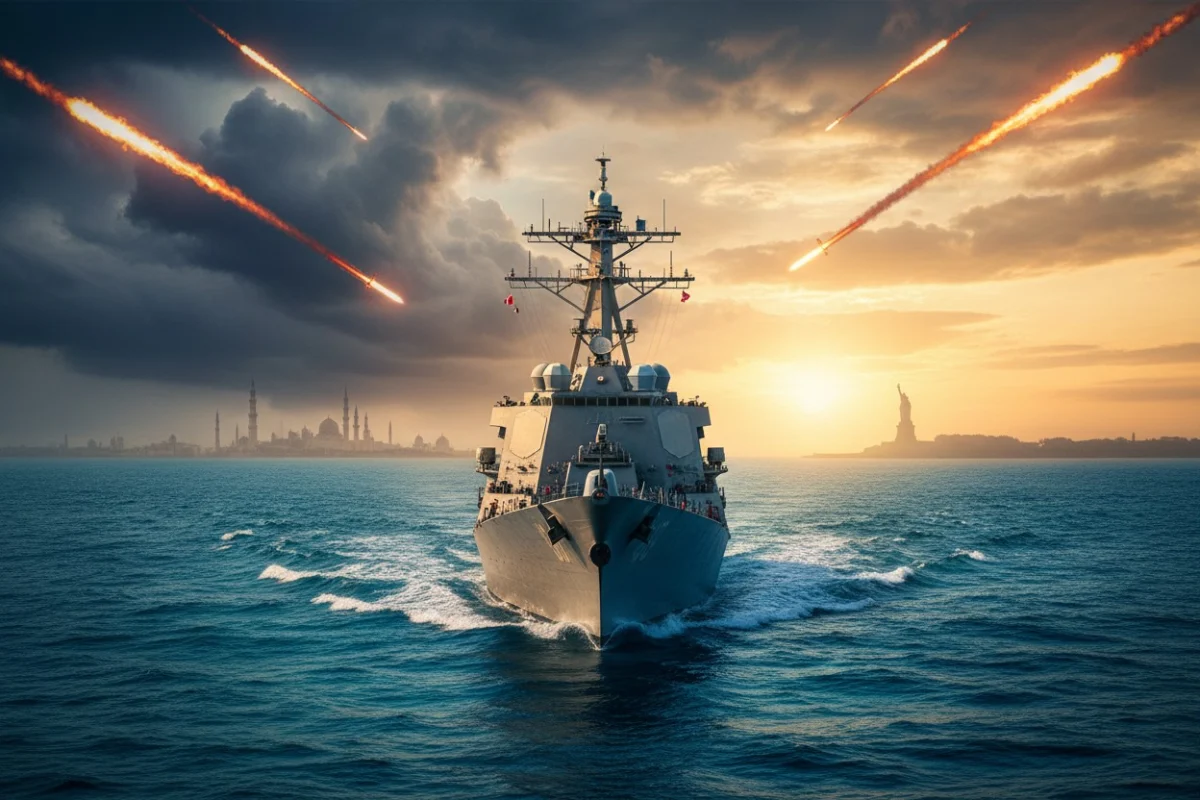
The United States military faces a critical strategic inflection point as the high-intensity, five-month-long conflict between the U.S. and Iran reaches a state of precarious volatility. According to a report published on August 1, General Alexus Grynkewich, commander of U.S. European Command (EUCOM), has issued a stark, formal warning to the Department of Defense: the current naval assets at his disposal are insufficient to sustain the ongoing mission of protecting Israel from Iranian ballistic missile threats while simultaneously maintaining the security of the U.S. homeland.
This notification, delivered in writing to senior Pentagon officials, represents a profound escalation in the debate over American military posture. Grynkewich explicitly stated that without the immediate deployment of an additional Navy destroyer to his area of responsibility, he would be forced to make an untenable choice between shielding key strategic allies and protecting the domestic borders of the United States.
The Calculus of Conflict: A Chronology of Escalation
The current tension is the result of a protracted, near-daily exchange of fire that resumed following the collapse of high-level peace talks between Washington and Tehran. While a tentative, open-ended ceasefire, extended by President Donald Trump on April 21 at the behest of Pakistani leadership, remains technically in place, it is increasingly fragile.
The conflict, which has seen periods of relative calm punctuated by sudden, violent spikes, has drawn in major global powers. On July 26, the United States paused offensive operations for the second consecutive day, a move reciprocated by Tehran. However, historical analyses—such as those articulated by William L. Ury in Beyond the Hotline—suggest that crises of this nature possess a dangerous momentum, where both superpowers find themselves pulled deeper into a conflict that neither party initially intended to escalate.
The current atmosphere is further complicated by rumors of a proposed U.S. naval blockade of Iranian ports within the Strait of Hormuz. Beijing has already issued a stern condemnation, with the Chinese Foreign Ministry labeling such an action as "irresponsible and dangerous," warning that it would shatter the fragile ceasefire and destabilize one of the world’s most critical maritime corridors.
Dual Missions and the Burden of Defense
EUCOM’s mandate is arguably one of the most demanding in the global military architecture. The command is responsible for operations in the Mediterranean, where destroyers have been consistently deployed to intercept ballistic missiles and drone swarms launched by Iranian proxies, including Houthi militants in Yemen.
The operational tempo has been relentless. In December 2024, the USS Stockdale and USS O’Kane were forced to engage in active combat, repelling waves of missile and drone attacks targeting U.S.-flagged merchant vessels in the Gulf of Aden. These engagements are no longer peripheral; they are central to the mission. According to Pentagon assessments, U.S. naval forces have shouldered the vast majority of the defensive burden, utilizing American interceptor munitions at a rate that far outpaces Israeli air defense consumption.
The strategic challenge is compounded by the command’s secondary, yet vital, responsibility: deterring potential Russian incursions into NATO territory. With Russia maintaining a credible ballistic missile threat directed at the U.S. mainland, Grynkewich’s command is essentially tasked with balancing two theaters of war that are geographically and tactically distinct, yet both critical to national security.
The Logistics of Attrition: Destroyer Availability
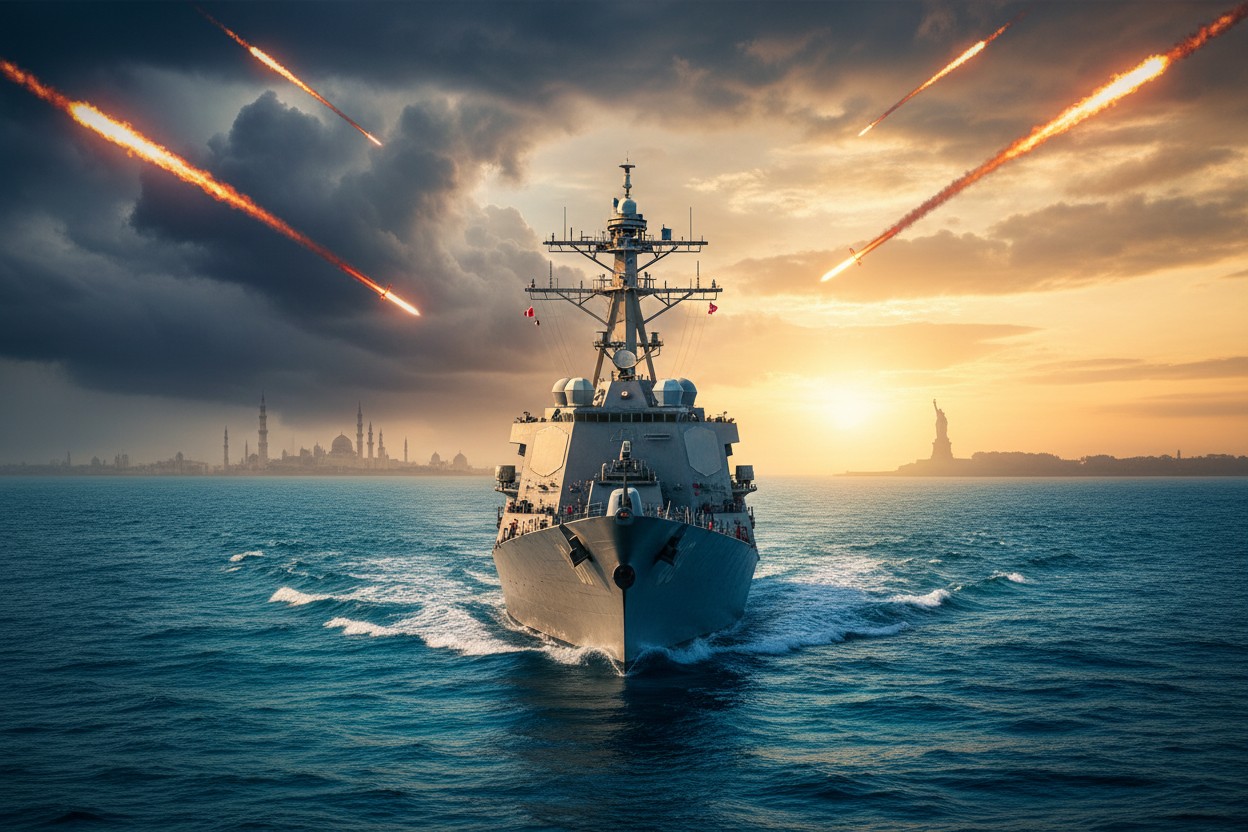
At the heart of the crisis is the physical availability of the fleet. The Navy currently maintains five destroyers deployed from Rota, Spain, with a sixth vessel expected to join the rotation later this year. However, the relentless pace of the war has decimated maintenance schedules, with ships spending more time at sea and less time in drydock, leading to a cumulative degradation of material readiness.
As of July 31, the distribution of naval power was as follows:
- Mediterranean: The USS Paul Ignatius and USS Roosevelt.
- Rota, Spain: The USS Arleigh Burke, USS Bulkeley, and USS Oscar Austin.
- Arabian Sea: A massive strike group presence including the aircraft carriers USS George H.W. Bush and USS Abraham Lincoln, supported by a flotilla of at least 15 additional warships.
- Red Sea: The USS Gonzalez continues to monitor regional activity.
Despite this visible armada, military officials acknowledge that the sheer geographic spread required to cover both the Eastern Mediterranean and the Persian Gulf has left the force stretched to its breaking point. The Pentagon has withheld specific details regarding the current state of ship availability, citing operational security, but the message from the field remains clear: the math of modern naval warfare is increasingly failing to support the current political objectives.
Political Backlash and Fiscal Realities
The conflict is becoming an increasingly toxic political issue in Washington. While the House of Representatives recently passed the fiscal 2027 National Defense Authorization Act (NDAA)—a $1.15 trillion package that includes $750 million specifically for security cooperation with Israel—the vote was narrow, passing 216 to 212.
The fiscal commitment has faced intense scrutiny. Senator Bernie Sanders has led calls to strip Section 219 from the bill, a provision designed to formalize the United States-Israel Defense Technology Cooperation Initiative. Critics, particularly within the Republican party, are expressing alarm that the duration of the conflict is now beginning to manifest in the domestic economy. Concerns over rising prices for fuel, food, and consumer goods are weighing heavily on lawmakers, many of whom fear that the "war tax" will be a deciding factor in the upcoming midterm elections.
Expert Perspectives: The Readiness Toll
The warning from General Grynkewich is being viewed by defense analysts as a wake-up call regarding the limitations of the "all-domain" military strategy. Tom Karako, director of the Missile Defense Project at the Center for Strategic and International Studies (CSIS), argues that the current operational tempo is fundamentally unsustainable.
"Being on a wartime footing is going to take a toll in terms of readiness and munitions inventory levels," Karako said. "The Pentagon has been operating under the assumption that it can project power everywhere at once. Now, the question is: What is the strategy? We are seeing the physical limits of our hardware and our logistics chains."
Karako’s assessment is echoed by retired military planners who note that the exhaustion of expensive interceptor missiles—often costing millions per unit—is not just a financial drain, but a strategic vulnerability. Replacing these stockpiles takes years of industrial lead time, meaning the U.S. is not only running out of ships; it is running out of the very tools required to stop incoming ballistic threats.
Implications for Global Security
The implications of Grynkewich’s notification are far-reaching. If the Department of Defense fails to provide the requested assets, the U.S. may be forced to recalibrate its security umbrella over the Middle East, potentially leaving Israel more vulnerable or forcing the U.S. to rely on a more reactive, rather than proactive, defense strategy.
Conversely, should the Pentagon divert resources from other theaters to reinforce the Mediterranean, the security gap left behind—particularly regarding the Russian threat to the NATO eastern flank—could invite opportunistic aggression elsewhere.
As of this writing, the Pentagon has declined to offer a formal response to the General’s notification, and the Israeli Embassy remains silent on the developments. What is certain is that the administration is now faced with a "trilemma": continue the current level of support and risk the degradation of the domestic naval defense; escalate the conflict to force a conclusion, potentially triggering a wider regional war; or negotiate a de-escalation that may be perceived as a strategic retreat.
For the sailors, commanders, and policymakers involved, the next few weeks will be critical. As the conflict drags into its sixth month, the line between military necessity and political reality is blurring, and the U.S. military finds itself navigating a landscape where every strategic move carries the risk of unforeseen—and potentially catastrophic—consequences. The warning from EUCOM serves as a somber reminder that in the theater of modern conflict, there are no infinite resources, and every commitment comes with a cost.