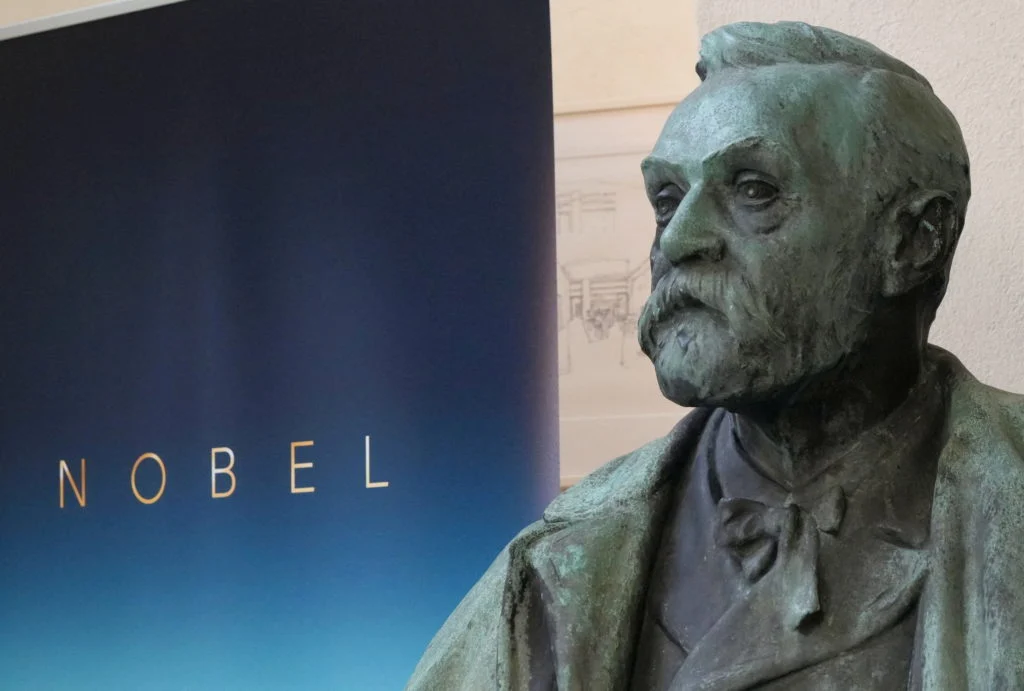
STOCKHOLM — The global scientific community is holding its collective breath as the Karolinska Institute prepares to unveil the recipient of the 2026 Nobel Prize in Physiology or Medicine. As the first of the prestigious Nobel honors to be bestowed each year, this announcement serves as the unofficial curtain-raiser for a week of global recognition for human achievement, setting a tone of intellectual rigor and transformative discovery.
The announcement is scheduled to take place on Monday, October 5, 2026, at 5:15 a.m. EDT (11:15 a.m. CEST). The world will look to Stockholm, where the Nobel Committee will name the laureates whose groundbreaking research has fundamentally altered our understanding of biological life and medical intervention.
Main Facts: The Anatomy of an Announcement
The Nobel Prize in Physiology or Medicine remains arguably the most consequential accolade in the life sciences. Awarded since 1901, it honors individuals who have conferred the "greatest benefit to humankind" in the fields of medicine and biology.
This year’s ceremony follows a high-profile precedent. In 2025, the committee recognized Mary E. Brunkow, Fred Ramsdell, and Dr. Shimon Sakaguchi for their seminal work on the mechanisms of immune system regulation. Their research provided critical insights into how the body distinguishes "self" from "non-self," effectively preventing the body from attacking its own tissues—a discovery that paved the way for modern therapies targeting autoimmune disorders.
As the 2026 committee gathers, speculation is rampant. Observers suggest that the fields of synthetic biology, mRNA-based therapeutic platforms, and the mapping of the human proteome are strong candidates for this year’s selection. Regardless of the specific field, the criteria remain stringent: the discovery must be original, evidence-based, and possess a clear trajectory toward saving lives or improving human health.
A Chronology of Scientific Excellence
The road to the Nobel podium is rarely a short one. The Nobel Committee famously prioritizes discoveries that have stood the test of time, often waiting decades to ensure that a breakthrough has yielded reproducible, life-altering results.
- 1901: Emil von Behring receives the first-ever Nobel Prize in Physiology or Medicine for his work on serum therapy, particularly its application against diphtheria.
- 1953: The discovery of the double-helix structure of DNA begins to shift the paradigm of medical research, eventually leading to a cluster of Nobel Prizes in the following decades.
- 2020–2022: The rapid development of COVID-19 vaccines brought mRNA technology to the forefront, resulting in a Nobel Prize for Katalin Karikó and Drew Weissman in 2023, marking a rare "fast-track" recognition by the committee due to the immediate global impact of their work.
- 2025: The recognition of Brunkow, Ramsdell, and Sakaguchi for their work on immune suppression solidified the importance of regulatory T-cells in maintaining systemic homeostasis.
- 2026: The scientific community awaits the next chapter, with betting markets and academic forums buzzing with predictions regarding breakthroughs in gene editing and neuro-regeneration.
Supporting Data: Why Medicine Matters
The significance of this prize is reflected not just in prestige, but in the evolution of healthcare expenditures and research focus. According to data from the World Health Organization (WHO) and the National Institutes of Health (NIH), Nobel-recognized discoveries frequently become the bedrock of the pharmaceutical industry.
For instance, the adoption of monoclonal antibody technology—which stemmed from research recognized by the Nobel Committee—now accounts for a significant portion of the global oncology market. Projections indicate that the global biologics market will reach $600 billion by 2030, a growth trajectory directly influenced by the foundational research honored by the Karolinska Institute.
Furthermore, the "Nobel Effect" is tangible. Research published in Nature suggests that scientists who receive a Nobel Prize see a significant increase in follow-on funding and collaborative opportunities, which in turn accelerates the pace of innovation in their respective departments. This creates a virtuous cycle where the recognition of past work acts as a catalyst for future breakthroughs.
Official Responses and Institutional Weight
The Nobel Committee is known for its secrecy. Members are sworn to non-disclosure for 50 years, ensuring that the selection process remains insulated from political or corporate influence.
"The task of the committee is to identify the singular moment when a concept transitioned from a hypothesis to a cornerstone of medicine," says a representative of the Nobel Foundation. "We are not looking for the most popular research, but for the work that has fundamentally altered the trajectory of human health."
While official responses remain guarded until the morning of the announcement, the international medical community is already positioning itself for the reveal. Leading medical journals, including The Lancet and The New England Journal of Medicine, have prepared extensive commentary, ensuring that once the names are called, the clinical implications of the discovery are immediately accessible to physicians and researchers worldwide.
The Broader Implications for Global Health
The announcement of the Nobel Prize is more than a ceremony; it is a signal of the current state of scientific maturity. In an era defined by rapid technological change, the prize serves as a "north star," guiding researchers toward the most fertile areas of inquiry.
Addressing Autoimmune Challenges
Following the 2025 win, the medical field has seen a surge in interest regarding autoimmune therapies. The implications of this are vast; as global populations age, the prevalence of conditions like rheumatoid arthritis, multiple sclerosis, and lupus has necessitated a deeper understanding of the regulatory mechanisms the 2025 laureates uncovered.
The Future of Preventive Medicine
If the 2026 prize focuses on, for example, the use of AI in protein folding or the development of personalized genomic medicine, the impact will be felt in every hospital globally. The ability to predict the onset of disease through genetic profiling is no longer science fiction; it is becoming a clinical reality, and the Nobel Committee’s selection will likely act as a final seal of approval for these emerging technologies.
The Socio-Economic Impact
A Nobel Prize often translates into tangible public policy shifts. When the committee highlights a specific medical issue, governments often realign their national health budgets to mirror those priorities. This has historically been true in the fight against malaria, tuberculosis, and HIV/AIDS, where Nobel-recognized discoveries led to international funding mandates that saved millions of lives.
Conclusion: The World Watches
As we approach October 5, 2026, the atmosphere in Stockholm and beyond is one of profound anticipation. The Nobel Prize remains the ultimate validation of intellectual persistence. Whether the prize goes to an individual working in a small laboratory or a collaborative team spanning multiple continents, the outcome will reinforce the idea that human ingenuity is our most potent tool in the fight against disease.
The live coverage, beginning at 5:15 a.m. EDT, is more than a broadcast—it is a celebration of the human spirit’s capacity to solve the unsolvable. In a world often fractured by political and social discord, the Nobel Prize serves as a reminder of the unifying power of scientific progress.
We invite our readers to join us in following the announcement live, as we witness the next evolution of medical history. As history has shown, the work recognized on Monday morning will likely be the subject of medical textbooks and clinical practice for decades to come.
For those interested in the history of the prize or wishing to view the archives of previous laureates, please visit the official Nobel Prize website. Stay tuned to our health channel for a full breakdown of the 2026 laureates, their research, and what their discovery means for the future of medicine.