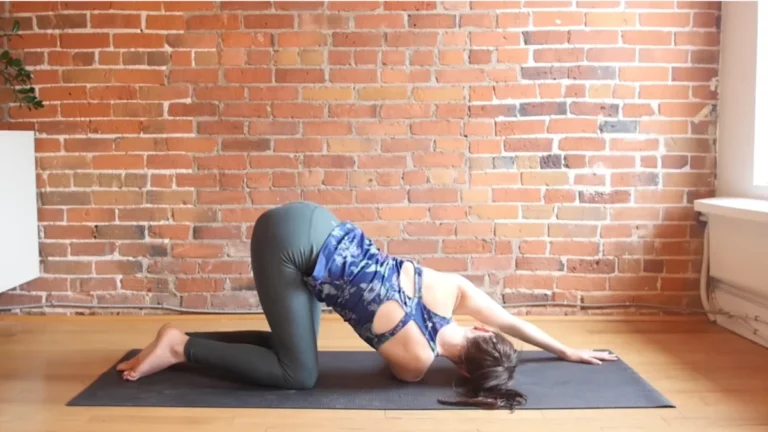












We have all heard the age-old parental refrain: "If everyone else jumped off a cliff, would you do it too?" It is a rhetorical classic designed to instill independent thinking and discourage the herd mentality. But in the digital age, where social proof—measured in millions of views and algorithmic recommendations—often dictates our daily habits, the "cliff" isn’t necessarily a dangerous leap; sometimes, it is a 15-minute yoga flow.
Currently, the YouTube wellness sphere is dominated by a single, staggering statistic: Mady Morrison’s "15-Minute Full-Body Stretch" has surpassed 103 million views. In a landscape saturated with fitness content, this level of sustained popularity is not merely a quirk of the algorithm; it represents a cultural shift in how we approach at-home movement. But does the content live up to the massive digital footprint? We decided to step onto the mat and find out.
Main Facts: A Digital Wellness Powerhouse
The premise of the video is deceptively simple: 15 minutes of guided stretching designed to improve mobility, alleviate physical tension, and foster a consistent habit of movement. Since its release, the video has become a staple for both yoga novices and seasoned practitioners.
Unlike high-intensity interval training (HIIT) videos that dominate the fitness charts, Morrison’s flow offers a low-barrier entry point to wellness. Its popularity is rooted in accessibility. It requires no equipment, demands no prior knowledge of Sanskrit terminology, and fits into even the most chaotic workday schedule. The "103 million views" figure serves as a proxy for a growing desire for accessible, non-intimidating health interventions in an increasingly sedentary world.
The Chronology of a Viral Flow
To understand why this specific video captured the global zeitgeist, we must look at the timeline of digital fitness.
Early Adoption: Initially, the video served as a quiet favorite for the home-fitness community, gaining organic traction through search queries related to "morning stretches" and "back pain relief."
The Pandemic Catalyst: During the global lockdowns of 2020 and 2021, the necessity for home-based movement skyrocketed. Morrison’s video became a refuge for those working from home, providing a much-needed mental and physical "reset" between Zoom calls.
Sustained Growth: Unlike viral trends that burn out in weeks, this video has seen linear, sustained growth. As users share the video on social media and incorporate it into their daily routines, the "social proof" loop reinforces its status as a foundational piece of digital fitness content.
Today, it remains a top-tier result for nearly every yoga-related search, cementing its place as the "standard" for entry-level stretching.
Supporting Data: Why Numbers Matter in Wellness
Why does one video succeed while thousands of others languish in obscurity? Data suggests that user retention is driven by three specific design choices in Morrison’s workflow:
- Cognitive Ease: The use of onscreen previews of upcoming poses removes the "fear of the unknown" for beginners. When a user knows exactly what is coming next, they are less likely to click away.
- The Rest-to-Work Ratio: By incorporating a 10-second rest period between poses, the flow mimics the structure of modern exercise physiology rather than the continuous, often exhausting, flow of traditional vinyasa.
- The "Silence" Factor: By opting for a music-only soundscape, the video transcends language barriers. It is a truly global product that requires no translation to be effective.
The Professional Perspective: Pros and Cons
While the view count is impressive, we must evaluate the practice through a clinical and technical lens. Yoga, when practiced incorrectly, carries a risk of injury. Here is our breakdown of the experience.
The Strengths
- A Thoughtful Warm-up: The inclusion of dedicated wrist stretches at the start of the practice is a sophisticated touch. In an era where "tech neck" and "mouse wrist" are common occupational hazards, this sequence provides immediate, functional relief.
- Low Pressure: The absence of a "guru" or intense vocal instruction allows the practitioner to cultivate their own internal focus. For many, the quiet is the primary draw.
- Pacing: The consistent rhythm creates a predictable environment, which is essential for building a habit. When the body knows what to expect, the nervous system shifts from "fight or flight" to "rest and digest."
The Limitations
- The Lack of Cueing: The absence of verbal instruction is a double-edged sword. While it keeps the vibe "chill," it leaves beginners vulnerable to misalignment. Without cues on how to engage the core or protect the lumbar spine in poses like Adho Mukha Svanasana (Downward-Facing Dog), the risk of repetitive strain exists.
- Absence of Variations: The video assumes a "one-size-fits-all" anatomy. It does not account for those with tighter hamstrings, limited hip mobility, or injuries.
- The Missing Savasana: In traditional yoga, the final resting pose (Savasana) is where the nervous system integrates the work done during the practice. By omitting this, the video functions more as a "stretch" than a complete "yoga session."
Implications: The Future of At-Home Yoga
The success of this video signals a broader trend: the "democratization of movement." We are moving away from the need for high-end studio memberships and toward a model of self-guided, micro-wellness.
However, the implications for the future are twofold. First, this trend highlights the need for better digital literacy regarding body mechanics. As people move away from in-person instruction, there is a responsibility for content creators to provide accessible, safe modifications. Second, it proves that "less is more." The public is clearly gravitating toward shorter, more manageable sessions that prioritize consistency over intensity.
Recommendations for the Practitioner
If you are planning to join the 103 million viewers, approach the "cliff" with the right gear:
- BYO-Props: Have yoga blocks or a sturdy stack of books on standby. Do not be afraid to modify the pose to fit your body, rather than forcing your body to fit the pose.
- Listen to Your Biology: If a pose feels sharp or painful, stop. The silence of the video should not be interpreted as a mandate to push through discomfort.
- Add Your Own Savasana: If you find yourself energized but ungrounded at the 15-minute mark, take an additional three minutes of silence. Your body will thank you for the integration time.
Conclusion
Is Mady Morrison’s "15-Minute Full-Body Stretch" a cliff worth jumping off? In the context of the modern, sedentary lifestyle, the answer is a resounding yes. While it lacks the personalized guidance of a live instructor and the comprehensive nature of a full-length studio class, it succeeds in its primary objective: it gets people moving.
By removing the friction of a commute to a studio, the cost of a membership, and the intimidation factor of complex sequences, Morrison has created a gateway to wellness that millions have found sustainable. It may not be the entirety of the yoga tradition, but it is an excellent place to start—provided you listen to your body, use your props, and remember that even in the world of viral hits, the most important instructor is the one inside you.