






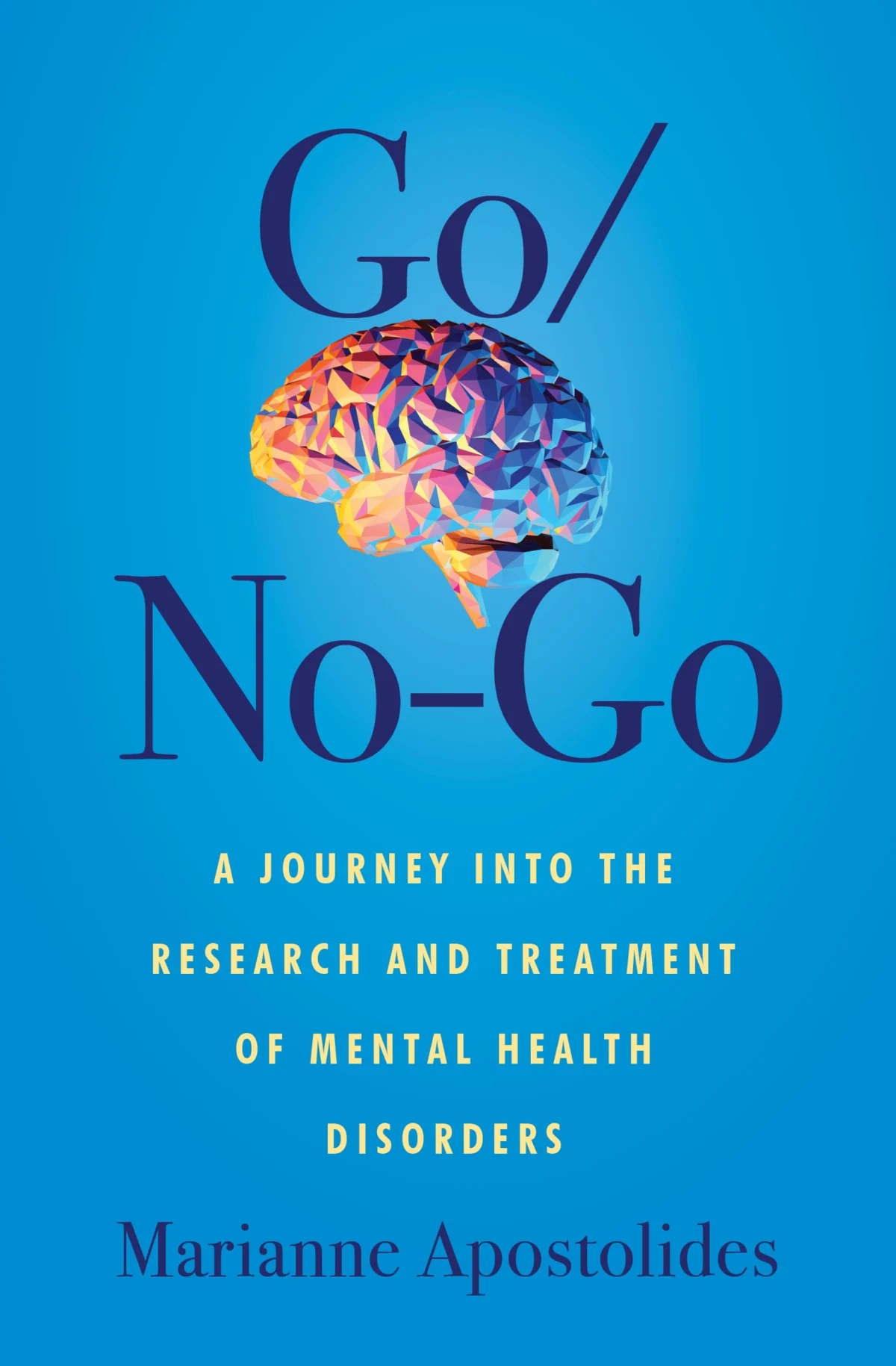
In her latest investigative work, Go/No-Go, award-winning author Marianne Apostolides explores the chilling discrepancy between the high-tech promises of computational psychiatry and the dehumanizing reality of clinical research, arguing that the field has reached a critical impasse.
The landscape of modern psychiatry is currently defined by a high-stakes race toward "precision medicine." Billions of dollars in public and private funding are funneled into neuroimaging, deep brain stimulation (DBS), and artificial intelligence, all under the premise that mental distress can be "solved" by cracking the algorithmic code of the human brain. However, according to Marianne Apostolides, an acclaimed author and two-time recipient of the Chalmers Arts Fellowship, this tech-heavy trajectory may be leading the medical community into a "dead end."
In her new book, Go/No-Go: A Journey Into the Research and Treatment of Mental Health Disorders, Apostolides pivots from her usual realm of fiction and memoir to provide a rigorous, investigative look at the state of neuroscience. Her findings suggest a field increasingly untethered from the subjective human experience, relying on metaphors of "malfunctioning circuitry" that fail to account for the complexities of trauma, identity, and social environment.
Main Facts: The Computational Turn in Psychiatry
The core of Apostolides’ investigation centers on the rise of "computational psychiatry"—a framework that treats the brain as a biological computer. This paradigm suggests that mental health disorders, from depression to anorexia, are essentially "suboptimal" processing errors in the brain’s decision-making algorithms.
Key elements of this contemporary approach include:
- Neuromodulation: The use of electrical currents (via implants or transcranial magnetic stimulation) to "reset" neural circuits.
- Digital Phenotyping: The harvesting of smartphone data—GPS location, sleep patterns, and typing speed—to predict psychiatric relapses.
- Biomarker Identification: The search for specific neural signatures in fMRI scans that can supposedly diagnose a patient more accurately than a clinical interview.
Apostolides argues that while these tools are technologically impressive, they often rely on "risible" experimental designs. She highlights the "Go/No-Go" test—from which her book takes its title—a laboratory task used to measure inhibitory control. By observing how a subject responds to rapid-fire stimuli, researchers claim to identify "biotypes" of mental illness. Yet, as Apostolides points out, these laboratory conditions rarely mirror the messy, emotional reality of human life.
Chronology: From Personal Crisis to Scientific Critique
The genesis of Go/No-Go was not a planned academic inquiry but a personal "creative and emotional crisis" that began in 2022.
The Pandemic Catalyst
During the COVID-19 lockdowns, Apostolides found herself struggling with a severe recurrence of an eating disorder she had grappled with for decades. At the time, she was attempting to write a science fiction novel, but the pervasive anxiety of the pandemic made the act of imaginative creation impossible.
"I was so inside my anxiety, following the news in three-minute increments… that I just could not settle enough to write fiction," Apostolides explains. Turning to her primary tool for survival—writing—she began investigating new treatments for eating disorders, hoping to find a scientific "fix" for the "beast" she had been trying to ride since her twenties.
The Shift to Journalism
What began as a series of straightforward articles on new treatments rapidly evolved. As Apostolides dug deeper into the primary research papers cited by neuroscientists, she noticed a disturbing trend. The findings portrayed in press releases and public-facing statements often bore little resemblance to the actual data in the studies.
Over the course of nine months in 2022 and 2023, she transitioned from a seeker of treatment to a critic of the system. She began interviewing world-renowned neuroscientists, including Dr. Helen Mayberg, a pioneer in deep brain stimulation, and Alik Widge, a researcher focused on neuromodulation.
The Realization of a "Dead End"
By late 2023, the project had transformed into a comprehensive critique of the National Institute of Mental Health (NIMH) funding model. Apostolides realized that the "transdiagnostic approach"—which looks for common neural malfunctions across different diagnoses—was being used to justify treatments that ignored the patient’s personal history and agency.
Supporting Data: The Legacy of the "Thirsty Monkey"
To understand how psychiatry arrived at this computational crossroads, Apostolides points to a seminal 1997 study published in the journal Science. Conducted by Wolfram Schultz, P. Read Montague, and Peter Dayan, the study involved monitoring dopamine neurons in a monkey as it performed tasks for a reward of sweet liquid.

The "Pac-Man" Model
The researchers derived an algorithm from the monkey’s neural activity, eventually creating a rudimentary computational model—an orb that Apostolides likens to a "Pac-Man-like creature." The study concluded that the brain operates as a computational organ governed by reward-prediction errors.
This single study laid the groundwork for billions of dollars in grants. It birthed the concept of "computational psychiatry," which suggests that by understanding the "algorithm" of a "thirsty monkey," we can understand the "algorithm" of a human being struggling with PTSD or addiction.
The Reproducibility Crisis
Apostolides supports her critique with data regarding the reliability of fMRI (functional Magnetic Resonance Imaging). Recent meta-analyses have suggested that many older fMRI studies—which form the basis for current "biomarkers"—were based on sample sizes too small to be statistically significant.
Furthermore, she notes that computational models designed to predict suicidality or alcohol relapse often fail when applied to new groups of people. "The model cannot predict what happens in a sample different from the one used to develop it," she notes. "Yet somehow excuses are made… It is bewildering how incapable the scientific community can be of self-reflection."
Official Responses: The Scientists’ Perspective
Despite her sharp critiques, Apostolides maintains a generous dialogue with the researchers she interviewed. Her book includes perspectives from the "frontiers" of the field, showcasing a genuine, if perhaps misguided, desire to help.
- Dr. Helen Mayberg: A leading figure in DBS, Mayberg describes her work as helping patients "re-tune" their brains. She acknowledges that patients often use metaphors to describe the "light" turning back on after stimulation. Mayberg’s approach is rooted in the belief that if the biological "engine" is broken, no amount of talk therapy can fix the car until the mechanics are addressed.
- Alik Widge: Widge uses the metaphor of a "hand on a bicycle." He views neuromodulation not as a way to control the patient, but as a way to provide a "boost" to their own inhibitory control, helping them make better decisions.
- The NIMH Stance: While not a direct interview, the book references the admission by former NIMH Director Tom Insel, who famously stated that while the institute spent $20 billion on brain-based research, it had not "moved the needle" on reducing suicide rates or hospitalizations.
Apostolides notes that these scientists often have to abandon their technical jargon and retreat into metaphor—comparing the brain to a "handbrake" or a "circuit board"—to explain their work. This, she argues, proves that even at the highest levels of science, we are still just "telling stories."
Implications: The Dehumanization of Care
The most harrowing sections of Go/No-Go involve the description of modern clinical trials. Apostolides details the "multi-item buffet" or "laboratory meal," where individuals with eating disorders are placed in MRI scanners and shown images of high-calorie foods or pictures of their own bodies. In some instances, participants are placed in a room with 11,000 calories of food and told to "let themselves go" while researchers watch through a one-way mirror.
The Loss of Agency
Apostolides argues that these experiments are not only "risible" but "repulsive" and "dehumanizing." By treating the patient as a "black box" of data, the system strips away their agency. "With so many of these neuroscience treatments, we are asked to cede our agency to the scientist, the pill, or the transcranial magnetic stimulation," she warns.
The Political and Economic Stakes
The implications are also financial. As public health budgets face scrutiny and dismantling, the interventions that survive are often those that can be "scaled up"—such as AI chatbots or digital surveillance tools. These are profitable and marketable, but they lack the "human-to-human relationship" that Apostolides identifies as the "ground zero" of healing.
A Call for a New Paradigm
Apostolides concludes that the field must move away from the "thirsty monkey" model and toward a research agenda that prioritizes social determinants of health—such as housing, community, and trauma-informed care.
"This is a frightening time," she admits, referencing the shifting political landscape and the potential dismantling of traditional scientific institutions. "But it is also a time of tremendous flux… an opportunity to reset the research agenda and refocus mental health research on returning agency to the person."
Ultimately, Go/No-Go serves as a warning: if we continue to view the mind as merely a series of algorithms to be hacked, we risk losing the very thing that makes us human—our ability to tell our own stories, in our own words, within the context of a community that listens.