









The operating room (OR), long considered the bastion of human intuition and manual dexterity, is undergoing a profound digital transformation. Medtronic, the global leader in medical technology, has officially breached a new frontier in clinical practice with the launch of its "Touch Surgery Aide" computing platform. This advanced system marks a pivotal shift in the surgical landscape, as it is the first to integrate real-time artificial intelligence (AI) directly into the surgical field, backed by landmark Food and Drug Administration (FDA) clearance.
While AI has become ubiquitous in diagnostic fields like radiology and pathology, its implementation in the high-stakes, dynamic environment of live surgery has remained elusive—until now. Medtronic’s latest move aims to close what executives describe as a "glaring gap" in technological support for the world’s most skilled professionals.
Main Facts: Bringing Intelligence to the Surgical Field
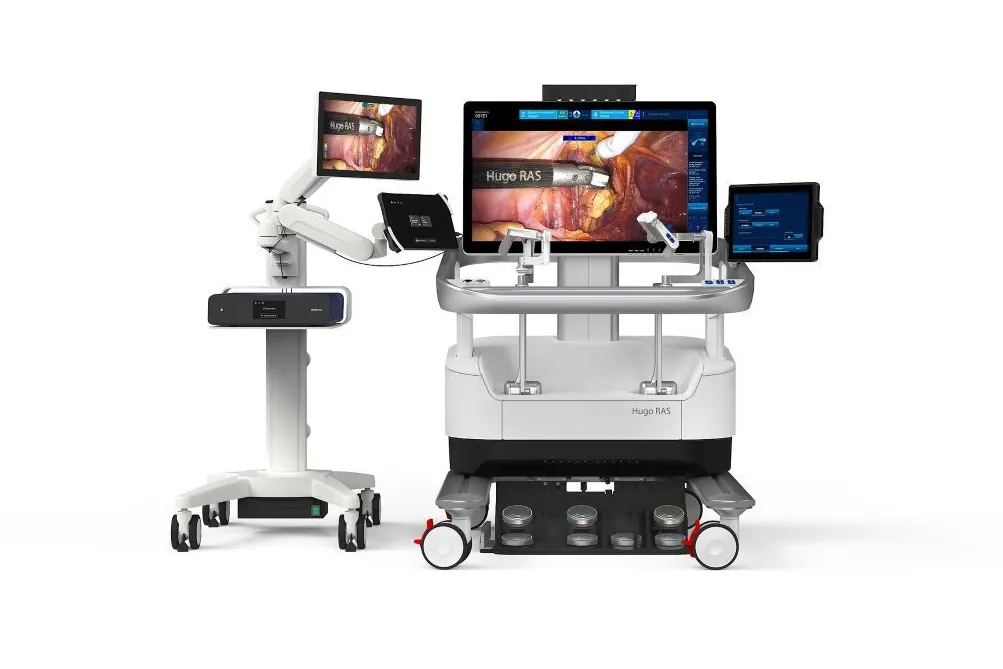
The Touch Surgery Aide platform serves as the foundational hardware and software infrastructure necessary to bring AI to the point of care. Designed to work in tandem with Medtronic’s Hugo™ soft tissue robotic surgery system, the platform runs multiple AI models simultaneously on live video feeds.
The first FDA-cleared algorithm to run on this platform is the "Instrument Exit Point" (IEP). The function of this tool is deceptively simple yet clinically significant: it tracks the surgical instruments being used within the robotic system. If an instrument leaves the surgeon’s field of view—often obscured by internal anatomy or complex maneuvers—the system provides a visual indicator on the monitor showing exactly where the instrument exited.
Think of it as a "blind spot" detection system for surgeons. In the middle of a complex, life-saving procedure, the ability to instantly relocate a tool saves precious seconds and reduces the cognitive load on the surgeon, who must constantly navigate the 3D, ever-changing environment of a patient’s interior.
Chronology: A Trajectory Toward Digital Integration
Medtronic’s journey toward this milestone has been methodical, rooted in years of infrastructure development rather than a rush to market.
- Foundation (Pre-2020): Medtronic began building the "Touch Surgery" ecosystem, focusing on case review, automated benchmarking, and global connectivity. This ecosystem has already been deployed in over 1,500 operating rooms worldwide, creating a baseline for surgical data collection.
- System Expansion: The company invested heavily in the Hugo surgical robot, aiming to create a hardware platform capable of supporting high-compute tasks.
- The Infrastructure Push: Recognizing that most modern hospitals lack the high-performance computing power required to run AI models locally in the OR, Medtronic developed "Aide." The platform is designed to provide the necessary computing "muscle" to process video data in real-time.
- Regulatory Milestone: Following rigorous testing and validation to meet safety and efficacy standards, Medtronic secured FDA clearance for the IEP algorithm, marking a significant regulatory precedent for surgical AI as a medical device.
- Public Unveiling: The technology was recently demonstrated at the Society of Robotic Surgery conference in Florida, signaling a shift from internal development to commercial roll-out.
Supporting Data: Addressing the "Infrastructure Deficit"
One of the most compelling arguments for Medtronic’s latest initiative is the current state of surgical infrastructure. George Murgatroyd, Vice President and General Manager of Digital Technologies at Medtronic, highlights a stark irony: "Today, surgeons likely have more AI assistance in the car when they drive home from a case than they have in the operating room while they operate."
This "infrastructure deficit" is a primary barrier to medical innovation. Hospitals are often constrained by legacy systems, limited bandwidth, and insufficient local processing power. Medtronic’s Aide platform is intended to be a "bridge," providing the hardware required to handle massive, low-latency data streams.
The company’s approach to building these algorithms is equally data-intensive. Medtronic leverages a vast, representative dataset gathered from global surgical collaborations. By utilizing a diverse range of cases, the company aims to minimize algorithmic bias—a critical requirement for any AI intended for universal clinical application. The development process strictly adheres to Medtronic’s internal AI ethics standards, ensuring that data privacy and patient safety remain paramount.

Official Responses and Perspectives
The transition to AI-assisted surgery is not without its skeptics, particularly regarding the role of "advice" in the OR. Addressing these concerns, Murgatroyd clarifies that the current iteration of the technology is strictly for visual assistance.
"It’s not an advisory algorithm, and we don’t make claims there," Murgatroyd explained in a recent interview. "We are at the very beginning of this journey. We see a stepwise progression: starting with visual assistance, moving into real decision support, eventually leading to guidance, and potentially, in the long term, semi-automation."
The regulatory pathway for this technology is complex. Because the AI interacts with the surgeon during a procedure, it is classified as a medical device. Murgatroyd emphasizes that this is a necessary safeguard: "No patient would want surgeons to have unregulated, untested AI running while they are being operated on." By seeking FDA clearance, Medtronic is establishing a "gold standard" for how surgical AI should be vetted, documented, and deployed.
Implications: The Future of the Operating Room
The launch of the Touch Surgery Aide platform is more than just a product release; it is a declaration of intent for the future of medicine.
1. The Open Platform Vision
Perhaps the most significant long-term implication is Medtronic’s intention to make the Touch Surgery platform an "open" ecosystem. The company expects to host third-party applications from startups, academic institutions, and other medtech players. This "app store" model for the operating room could catalyze a wave of innovation, allowing specialized developers to contribute algorithms that address specific surgical challenges, from suturing assistance to real-time tissue characterization.
2. Reducing Unwarranted Variation
Surgery, despite its reliance on science, remains an art form characterized by "unwarranted variation." Different surgeons may approach the same procedure differently, often with varying outcomes. By providing standardized, data-driven visual guidance, Medtronic hopes to narrow the gap in clinical quality, ensuring that the standard of care is consistently high, regardless of the hospital’s location or the surgeon’s years of experience.
3. The Shift to Cognitive Support
As the technology matures, the OR will likely transition from a place of purely manual intervention to a "collaborative intelligence" environment. In this future, AI systems will run in the background, monitoring for errors, predicting anatomical challenges, and providing alerts for potential complications before they become critical. As Murgatroyd noted, "We really do see a future where, in the background during cases, AI is running to support surgeons when they need it, and they don’t always know when they need it."
Conclusion: A New Standard of Care
Medtronic’s foray into real-time surgical AI represents a fundamental shift in the surgical paradigm. By tackling both the hardware infrastructure problem through the Aide platform and the clinical utility problem through the IEP algorithm, the company is laying the groundwork for a more efficient, safer, and more connected operating room.
While we are only at the start of this journey, the implications for patient outcomes and surgeon support are immense. By moving from "manual-only" to "AI-enhanced" workflows, the medical community is stepping into an era where technology acts as an extension of the surgeon’s intent, ultimately leading to a future where every patient receives the benefits of the world’s most advanced collective surgical knowledge, delivered in real-time, right at the point of care.