











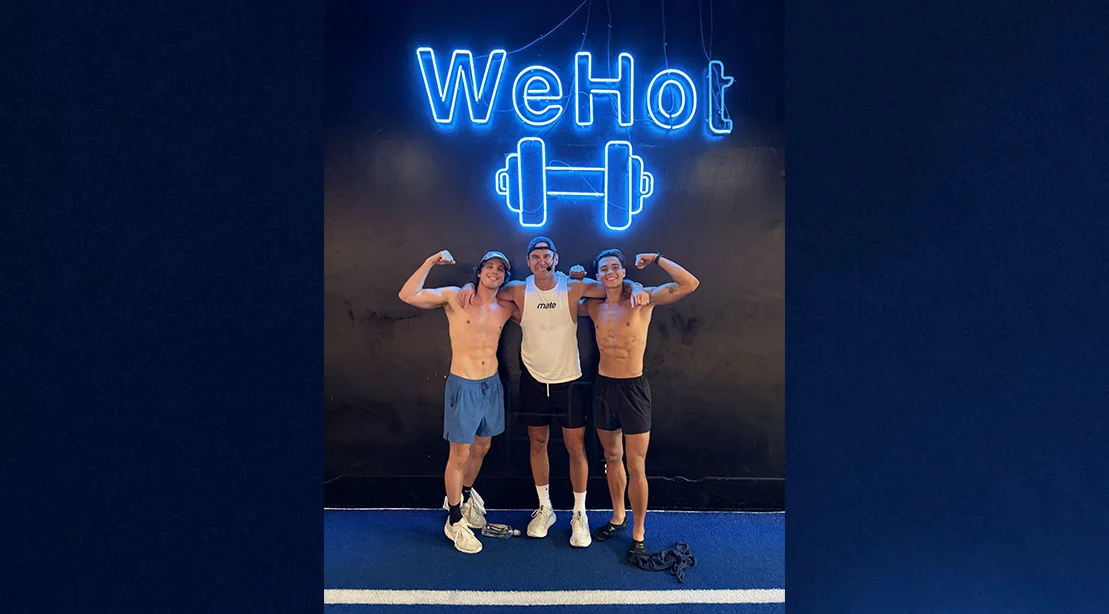
For many actors in Hollywood, the “pre-production transformation” has become synonymous with vanity. It is the era of the six-month bulk, the grueling caloric deficit to reveal shredded obliques, and the hyper-fixation on mirror-muscle aesthetics. However, for Lukas Gage, preparing for his latest role in the highly anticipated Prison Break reboot has taken a radically different trajectory. Gage isn’t chasing a “penitentiary physique” defined by muscle mass; he is chasing the elusive, high-performance goal of durability.
In his portrayal of Jackson, a high-stakes congressional candidate, Gage found himself facing a physical demand that required more than just looking the part. The role demanded the stamina of a marathon runner, the recovery capacity of a professional athlete, and the mental fortitude to withstand the punishing realities of modern television production—overnight shoots, back-to-back takes, and the relentless, sweltering heat of a West Virginia summer.
The Shift: Prioritizing Capacity Over Character Looks
Gage’s approach to physical preparation has evolved alongside his diverse career. Having previously leaned into specific skill-based training—such as the combat choreography required for Road House or the technical precision of a golf swing for Fargo—Gage recognized that Prison Break required a shift in philosophy.
“Jackson is someone who is constantly operating under pressure,” Gage explains. “There is a real physicality to the role. He is running for Congress and constantly trying to keep up with the demands of a campaign. I didn’t need to look like a bodybuilder; I needed to look like a man who could sustain high-level activity for sixteen hours a day.”
By focusing on endurance rather than aesthetics, Gage has adopted a mindset that prioritizes long-term capability. He spent the months leading up to the shoot building a foundation that would ensure he wouldn’t burn out when the production schedule turned grueling. For Gage, fitness has become a professional tool—a way to ensure that his performance remains consistent, whether it’s the first take at dawn or the twentieth take at three in the morning.
A Strategic Training Chronology
To achieve this level of physical readiness, Gage partnered with Training Mate, an Australian-inspired group fitness concept that emphasizes community, high-intensity interval training (HIIT), and functional movement. This partnership has become the bedrock of his routine, providing the structure he craves amidst the chaos of his filming schedule.
The Five-Day Split
Gage’s training regimen is meticulously balanced to prevent injury while maximizing output. His weekly cycle typically breaks down as follows:
- Days 1 & 3 (HIIT Focus): These sessions at Training Mate utilize circuits that force the body to transition rapidly between different energy systems. By combining rowing, jumping, and functional movements, Gage keeps his heart rate elevated, mimicking the unpredictable bursts of energy required on set.
- Days 2 & 4 (Strength & Stability): Working with the team at Dogpound, these personal training sessions focus on functional strength. The goal here isn’t muscle hypertrophy, but rather structural integrity—building the posterior chain and core stability necessary to handle the repetitive physical stresses of acting.
- Day 5 (Active Recovery/Endurance): This day is dedicated to low-impact, steady-state cardio, such as swimming, cycling, or distance running. This provides the aerobic base required for long production days without the joint-jarring impact of heavier lifting.
Gage admits that mobility work is an area he continues to refine. While he recognizes its importance, fitting it into a packed shooting schedule remains a challenge he is actively working to overcome.
The Psychology of Consistency: The 20-Minute Rule
One of the most significant hurdles for any actor is the volatility of a production schedule. When call times shift or overnight shoots obliterate sleep patterns, the traditional “one-hour gym session” becomes a luxury that often disappears.
Gage has developed a “20-Minute Consistency Rule” to navigate these obstacles. “I’ve learned to be flexible,” he says. “Some days that means a full workout, and other days it means 20 focused minutes and calling it a win. Consistency matters more than perfection.”
This philosophy is crucial for maintaining mental health in an industry defined by uncertainty. By viewing exercise as a non-negotiable anchor, Gage finds a sense of control that acting roles rarely provide. “Acting comes with a lot of uncertainty, and having something that challenges me physically helps me stay grounded and focused,” he notes. “It gets me out of my head and into my body.”
When he cannot make it to the gym, Gage finds micro-opportunities to move: walking to hit 10,000 steps, or performing bodyweight mobility drills in his trailer. This micro-dosing of fitness prevents the “all-or-nothing” mentality that often leads to burnout.
Nutrition and Recovery: The Reality of the Modern Actor
While training provides the stimulus, recovery is where the adaptation happens. Gage views sleep as the most critical pillar of his health, followed closely by hydration and intentional nutrition.
“Sleep is probably the most important thing,” Gage emphasizes. “Recovery lets me push harder on my ‘on’ days.” His nutritional strategy is equally practical. Rather than adhering to restrictive, unsustainable diets, he focuses on high-protein intake to support muscle repair. However, he is quick to acknowledge the importance of balance, admitting that even the most disciplined actors need a reprieve. “I tried to cut out all processed foods, but I still have fun,” he says. “I need In-N-Out once a week.”
This balanced approach underscores his evolving definition of fitness. It is no longer about the “temporary fix” for a specific project; it is about sustaining the machine for the long haul.
Implications: The Future of Actor Fitness
The industry is slowly moving away from the era of “extreme transformations” toward a more sustainable, functional approach to physical readiness. Gage’s experience on Prison Break serves as a blueprint for this transition. By treating his body as an instrument that needs to be durable rather than just decorative, he has set a standard for how actors can navigate the physical pressures of their careers.
His advice for those struggling to find their own rhythm is as grounded as his training: “Consistency beats intensity. Just get your ass to the gym, class, hike, or whatever—and keep showing up, even when it’s inconvenient.”
As Prison Break prepares for its return, viewers may not notice the hours of HIIT circuits or the mobility work in a trailer. They will, however, see the results of that labor: an actor who is physically present, capable of navigating the complex choreography of his role, and—most importantly—resilient enough to weather the storm of a high-pressure production.
Lukas Gage has proven that true fitness is not found in the mirror, but in the capacity to handle the unexpected, the endurance to finish the day strong, and the discipline to prioritize one’s own well-being in a world that rarely allows for it. In doing so, he has redefined what it means to be an action-ready actor in the modern age.