The global food system stands at a precarious crossroads. For decades, the industrialization of agriculture has prioritized caloric volume and livestock efficiency, often at the expense of ecological stability and public health. Now, a sweeping new analysis published in the journal Nature suggests that a fundamental transition toward healthier diets, optimized farming practices, and a drastic reduction in food waste could rewrite the map of global land use by 2050.
Led by researchers from the London School of Hygiene & Tropical Medicine (LSHTM) and Cornell University, in collaboration with 10 international modeling teams, the study provides a sobering, data-driven vision of a future that is simultaneously more sustainable and economically disruptive.
The Core Transformation: A Shift from Hooves to Harvests
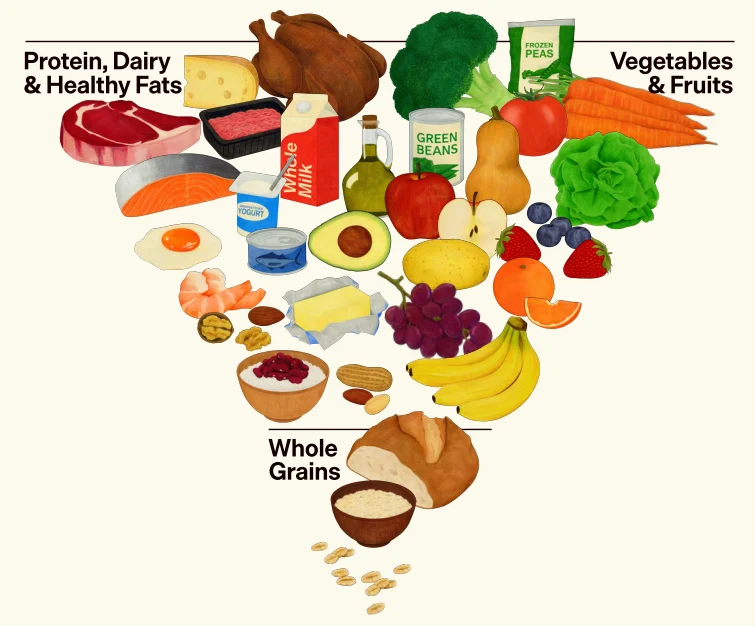
At the heart of this proposed transformation is the adoption of dietary guidelines similar to those championed by the 2025 EAT-Lancet Commission. The model projects that if the global population shifts toward a diet rich in plant-based nutrition, the physical footprint of agriculture could shrink by 6% compared to current trends.
This transition is not merely incremental; it represents a tectonic shift in value. By 2050, the total value of global livestock production is projected to plummet by 42%—a staggering loss of $630 billion compared to 2020 levels.
The Decline of Ruminants
The most dramatic impact will be felt in the ruminant sector. Beef cattle, sheep, and goats, which require significant land and water resources, are projected to see their global value drop by 70%, or $274 billion. This shift would translate to roughly 400 million fewer ruminant animals worldwide, effectively curbing the methane emissions and deforestation associated with grazing and feed production.
The Rise of Plant-Based Systems
As the livestock sector contracts, the botanical sector is poised for a massive expansion. The combined global value of vegetables, fruits, nuts, and legumes—the latter including pulses such as lentils, chickpeas, and peas—is forecast to rise by 57%, amounting to an $890 billion surge. These crops, which serve as highly efficient sources of protein and fiber, require a fraction of the land and environmental resources currently demanded by industrial animal agriculture.
Chronology of a Systemic Shift
While the 2050 horizon serves as the primary target for these models, the path toward such a transformation is a multi-decade process requiring immediate intervention:
- 2020 (The Baseline): The year used for current systemic comparisons, representing the pre-transformation status quo of high livestock reliance and rising land-use emissions.
- 2025 (The EAT-Lancet Catalyst): The timeframe for the latest Commission report, providing the dietary blueprint for the study. This period marks the beginning of necessary policy advocacy and awareness campaigns.
- 2025–2040 (The Transition Phase): A critical window where agricultural infrastructure must begin to pivot. This era requires the diversification of crops and the provision of economic safety nets for livestock farmers facing market contraction.
- 2050 (The Target Date): The projected culmination of the shift. By this time, the model expects a stabilized, more efficient food system with significantly lower greenhouse gas emissions and improved global health outcomes.
Supporting Data: Costs, Carbon, and Calories
The impetus for this transformation is not merely environmental; it is a response to a global food system that researchers describe as "hidden-cost heavy."
The "Hidden Cost" Burden
Earlier research has estimated that the global food system generates between $10 trillion and $20 trillion in hidden costs every year. These costs—which include the staggering expense of treating diet-related diseases, environmental remediation, and lost economic productivity—are not captured at the grocery store checkout. The current model suggests that by aligning food production with healthier dietary standards, we could avert 15 million premature deaths annually.
Environmental Dividends
One of the most promising findings involves the reduction of net-CO2 emissions linked to land-use change. Clearing forests for grazing or draining wetlands for monoculture crops releases massive quantities of stored carbon. By 2050, if these dietary shifts occur, agriculture-related net emissions could be 85% lower than in 2020. This assumes a halt in the conversion of wildlands into farmland, effectively allowing for potential reforestation and carbon sequestration.
Official Responses and Expert Perspectives
The researchers behind the study are quick to emphasize that their work is a "foresight model"—a tool for navigation rather than a crystal ball for inevitable events.
Dr. Matt Gibson, the study’s lead author, underscores the urgency of the situation. "Transforming food systems would deliver enormous potential benefits to our health and the environment, but, as our results make clear, they would also lead to fundamental changes to global agriculture," he stated. Dr. Gibson warns that the scale of this change requires governments to confront the powerful entities currently profiting from the status quo.
"Rather than using these results as an excuse for inaction, it’s critical that governments rise to the challenge," he added. "The current system fails both those who produce our food and those who should be nourished by it."
Daniel Mason-D’Croz, a co-author from Cornell University, frames the data as a guide for policymakers. "We should consider these scenarios not as a forecast of what will happen, but as a useful early guide of where challenges and opportunities may arise," Mason-D’Croz explained. He argues that waiting until 2050 is not an option; the "foresight" provided by this study must inform the agricultural policies enacted today to ensure a "just" transition.
Regional Disparities: A Global Patchwork of Impact
The transition will not be uniform. Because local economies, climates, and cultural food preferences differ, the economic impacts will be highly localized.
- The United States: The model predicts a 21% decrease in total agricultural value ($76 billion). However, this aggregate figure masks a bifurcated reality: livestock value is expected to plummet by 73%, while crop production value could surge by 20% as the US transitions to a plant-forward market.
- Europe: Facing a significant decline, Europe could see its total agricultural value fall by 35% ($190 billion), with livestock being the primary victim of the sector’s contraction.
- India: Conversely, India may see a robust increase in its agricultural sector. The model predicts a 46% rise in total value ($198 billion), driven by a massive 65% increase in crop production. Interestingly, India’s livestock sector is expected to see only a modest 8% decline, reflecting different consumption patterns and production systems compared to Western nations.
Implications: The Human Cost of Progress
The most significant caveat to the study is the assumption of a "costless" consumer shift. The model assumes that humans will willingly change their dietary habits to align with health guidelines. In reality, food is deeply tied to culture, tradition, income, and accessibility.
The Barrier of Reality
Healthy, sustainable food is not universally affordable. In many regions, the cheapest calories are ultra-processed, animal-based, or high-sugar items. If policymakers focus only on the supply side—encouraging farmers to grow legumes instead of raising cattle—without addressing the economic and cultural barriers to healthy eating, the transition will likely fail or leave vulnerable populations behind.
The Risk of Economic Disruption
The researchers conclude with a stark warning: without careful planning, the benefits of this transition—cleaner air, lower healthcare costs, and more efficient land use—could be overshadowed by severe economic shocks to communities that rely on livestock.
The path forward requires a "just transition" framework. Governments must facilitate a shift where farmers are incentivized to pivot, rather than being forced out of business. This could include subsidies for crop diversification, investment in agricultural technology, and social safety nets for rural communities.
Ultimately, the study serves as a call to action. The global food system is not a static machine; it is a dynamic, evolving network that can be reshaped by policy and preference. By using foresight modeling to anticipate the disruptions of tomorrow, the global community has a rare opportunity to build a food system that nourishes the planet as much as it nourishes its people.