







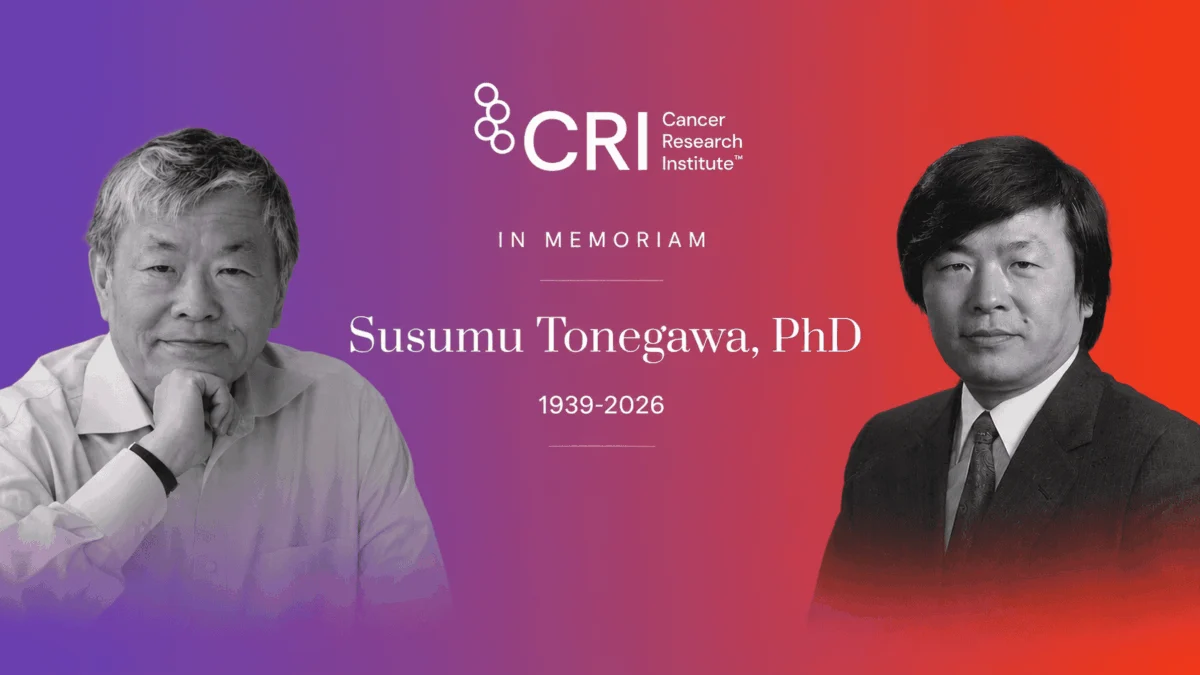
The scientific community is in mourning following the passing of Dr. Susumu Tonegawa, a titan of molecular biology whose intellectual curiosity spanned the breadth of human physiology, from the intricate defenses of the immune system to the enigmatic neural pathways of memory. Dr. Tonegawa, a Nobel laureate and a long-serving member of the Cancer Research Institute’s (CRI) Scientific Advisory Council, died on July 11, 2026, at the age of 86.
His death marks the end of a career that did more than just expand the boundaries of biology; it fundamentally redefined how we perceive the body’s capacity for self-defense and cognitive adaptation. By decoding the genetic mechanisms of the immune system, Dr. Tonegawa provided the "missing link" that allowed researchers to understand how a finite genome could produce a near-infinite array of antibodies. His work did not merely earn him the 1987 Nobel Prize in Physiology or Medicine; it laid the very bedrock upon which modern immunotherapy—and the current fight against cancer—is built.
A Life of Unrelenting Inquiry: A Chronology
Born in 1939 in Nagoya, Japan, Susumu Tonegawa’s early life was marked by the post-war reconstruction of Japan, a period of profound social and intellectual change. He earned his bachelor’s degree in chemistry from Kyoto University in 1963 before moving to the United States to pursue his PhD at the University of California, San Diego, where he began his lifelong fascination with the mechanics of genetic expression.
Following his doctoral studies, Dr. Tonegawa moved to the Basel Institute for Immunology in Switzerland in 1971. It was there, amidst an environment that prioritized high-risk, high-reward inquiry, that he conducted his most transformative experiments.
- 1976: Dr. Tonegawa published his seminal paper, providing the first concrete evidence that somatic cells rearrange their DNA to generate antibody diversity. This challenged the "central dogma" of genetics, which posited that an organism’s DNA was fixed and immutable throughout its life.
- 1981: He joined the faculty of the Massachusetts Institute of Technology (MIT), where he would spend the remainder of his professional career, eventually leading the Picower Institute for Learning and Memory.
- 1987: He was awarded the Nobel Prize in Physiology or Medicine, an honor bestowed upon him for a discovery that solved one of the most perplexing mysteries in immunology: how the immune system generates millions of different antibodies from a limited number of genes.
- 2000s–2026: In the latter half of his career, Dr. Tonegawa pivoted toward neuroscience, applying the same molecular rigor that had served him in immunology to the study of the brain. He famously pioneered optogenetic methods to manipulate memory traces, or "engrams," in the hippocampus.
The Genetic Breakthrough: Solving the "Antibody Mystery"
To understand the scale of Dr. Tonegawa’s contribution, one must look at the state of immunology in the early 1970s. The prevailing view was that the immune system, in its vast complexity, required a vast number of genes—one for every single type of antibody the body could produce. This theory suggested that humans would need thousands, perhaps millions, of genes dedicated solely to antibody production.
Dr. Tonegawa proved the opposite. Using sophisticated molecular biology techniques—specifically Southern blotting and restriction enzyme analysis—he demonstrated that immune cells (specifically B-lymphocytes) undergo a process of genetic recombination as they mature. He discovered that the DNA in these cells is "shuffled" and "spliced" together like a deck of cards to create entirely new, functional gene sequences.
This mechanism, known as V(D)J recombination, allows a small pool of genetic components to be combined in thousands of different ways, resulting in the massive diversity of the antibody repertoire. It was a revelation that turned the field of genetics on its head: the DNA in our immune cells is not a static blueprint, but a dynamic, evolving archive.
Supporting Data: From Molecular Mechanics to Cancer Immunotherapy
The implications of Dr. Tonegawa’s work extend far beyond the textbook definition of immunity. By revealing the mechanism behind antibody diversity, he provided the foundational logic for modern immunology.
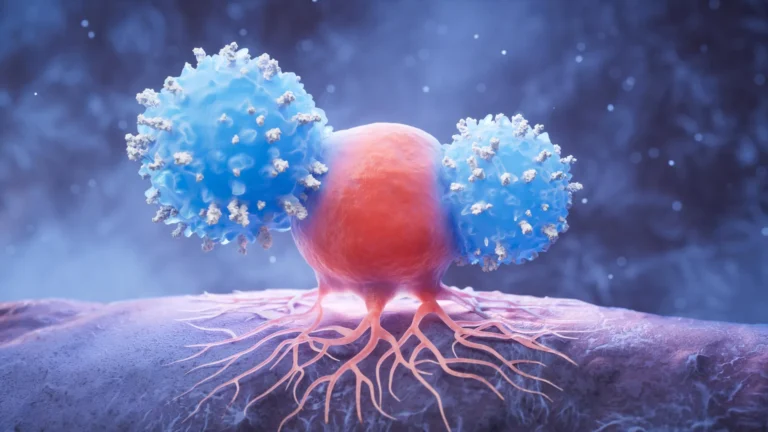
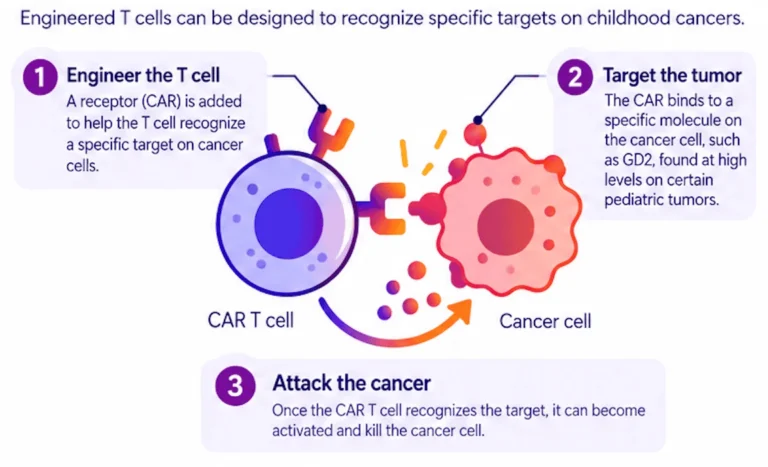
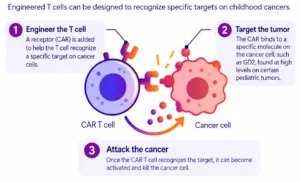
Current advances in cancer immunotherapy, such as Chimeric Antigen Receptor (CAR) T-cell therapy and the development of monoclonal antibodies, rely on the principles first articulated by Dr. Tonegawa. When we engineer T-cells to recognize a patient’s specific cancer markers, we are effectively utilizing the same modular genetic machinery that Dr. Tonegawa identified decades ago.
His research proved that the immune system is not a rigid entity but a highly adaptable, learning system. This concept is the cornerstone of immunotherapy: if we can guide the immune system to recognize the unique genetic "signature" of a tumor, we can unlock the body’s innate ability to eliminate cancer. Today, thousands of patients are alive because of treatments that trace their intellectual lineage back to the labs of the Basel Institute.
Official Responses and Reflections
The loss of Dr. Tonegawa is being felt across the global scientific community. His influence was not limited to his published findings; it was deeply embedded in his role as a mentor and a steady hand within the Cancer Research Institute.
"The history of cancer immunotherapy rests on a handful of discoveries that fundamentally changed how we think about the immune system," said Dr. Alicia Zhou, CEO of the Cancer Research Institute. "Dr. Tonegawa’s discovery of the genetic mechanism that creates antibody diversity is one of them. His work revealed the remarkable adaptability of the immune system and forever changed how scientists study immunity, disease, and cancer."
Dr. Zhou continued, "We were honored to benefit from his wisdom as a member of our Scientific Advisory Council. His curiosity, rigor, and willingness to challenge conventional thinking exemplified the spirit of discovery that has driven CRI’s mission for more than 70 years. His legacy will continue to inspire generations of scientists working to improve the lives of patients."
Colleagues remember him not just as a brilliant mind, but as a man of profound humility who believed that the greatest scientific leaps required the courage to be wrong. In his later years, he spoke often on the nature of creativity, emphasizing that true innovation requires an environment where failure is not a stigma, but a necessary step toward the truth.
Implications: A Legacy of Perpetual Inquiry
The impact of Dr. Tonegawa’s life is perhaps best understood through the two disciplines he mastered. In immunology, he solved the mystery of how we survive in a world teeming with pathogens. In neuroscience, he attempted to solve the mystery of how we learn from that world, mapping the physical pathways of memory in the brain.
His shift to neuroscience was not a departure from his past, but a continuation of his search for "diversity" and "adaptability." Just as the immune system adapts its genetic code to meet environmental threats, the brain adapts its neural circuits to store information. Dr. Tonegawa’s ability to draw parallels between these two complex systems was a hallmark of his genius.
For the researchers at the Cancer Research Institute, Dr. Tonegawa leaves behind a roadmap for the future. His work challenged the scientific community to look beyond the obvious, to question established dogma, and to never settle for a "good enough" understanding of biological processes.
As the medical community continues to push the frontiers of CAR-T therapy, checkpoint inhibitors, and cancer vaccines, the presence of Susumu Tonegawa will be felt in every successful clinical trial and every breakthrough in the laboratory. He taught the world that the immune system is a master of combinatorial logic, a lesson that is now saving lives across the globe.
In a final message to the scientific community, Dr. Tonegawa often emphasized the importance of "open-mindedness and collaboration." As we look back on his 86 years, we do not merely see the awards or the accolades; we see a man who looked at the complexity of human life and saw a system waiting to be understood.
The Cancer Research Institute, along with the millions of patients who benefit from his discoveries, extends its deepest condolences to his family, friends, and the countless students he mentored. While Dr. Tonegawa may be gone, the genetic mechanisms he uncovered—and the hope they offer to those fighting cancer—remain as vibrant and resilient as the immune systems he spent his life studying. His work is not merely history; it is a living, breathing part of the future of medicine.