








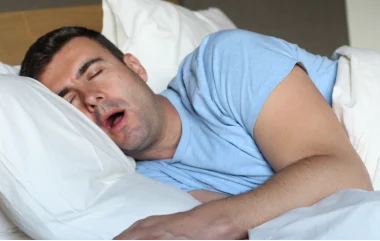
For millions of people worldwide, the night is not a time of restoration, but a battleground. Between the persistent, thunderous snoring that keeps partners awake and the overwhelming fatigue that plagues one’s waking hours, sleep disorders have become a silent public health crisis. At the center of this challenge is obstructive sleep apnea (OSA)—a condition where the airway collapses repeatedly during the night, causing brief, often unnoticed interruptions in breathing.
But how does one distinguish between "heavy snoring" and a medical condition that could lead to heart disease, stroke, or cognitive decline? The answer often begins with a deceptively simple eight-point screening tool known as the STOP-BANG questionnaire.
The Main Facts: What is the STOP-BANG Questionnaire?
The STOP-BANG questionnaire is a clinical screening tool designed to identify individuals at high risk for obstructive sleep apnea. It is not a diagnostic test; it cannot tell you definitively if you have sleep apnea. Instead, it serves as a "first-pass" filter, helping patients and physicians determine whether the symptoms reported are serious enough to warrant a formal, clinical sleep study.
The acronym "STOP-BANG" represents a collection of physiological markers and symptomatic observations:
- S (Snoring): Do you snore loudly?
- T (Tired): Do you often feel tired, fatigued, or sleepy during the daytime?
- O (Observed): Has anyone observed you stop breathing or choking/gasping during your sleep?
- P (Pressure): Do you have or are you being treated for high blood pressure?
- B (BMI): Is your body mass index (BMI) greater than 35 kg/m²?
- A (Age): Are you older than 50 years?
- N (Neck circumference): Is your neck circumference greater than 40 cm (16 inches)?
- G (Gender): Are you male?
Each "yes" response awards one point. A score of 0 to 2 indicates a low risk, while a score of 3 or higher signifies an increased risk for OSA. The utility of the tool lies in its accessibility; it requires no specialized medical equipment and can be completed in under two minutes.
Chronology: The Evolution of Sleep Screening
The journey toward modern sleep apnea screening began in the late 20th century as sleep medicine transitioned from a fringe specialty to a critical pillar of cardiology and pulmonology. As obesity rates climbed globally, so did the prevalence of OSA, prompting researchers to seek a standardized way to triage patients.
In 2008, Dr. Frances Chung and her colleagues at the University Health Network (UHN) introduced the STOP-BANG questionnaire. Before its inception, doctors relied on longer, more complex surveys like the Berlin Questionnaire or the Epworth Sleepiness Scale. While effective, these were often cumbersome to administer in busy surgical or primary care settings.
Dr. Chung’s team designed the STOP-BANG to be highly sensitive, specifically for the surgical population—a group at high risk for breathing complications during anesthesia. Over the following decade, the questionnaire evolved from a niche pre-operative tool into a global standard. It has since been validated in thousands of clinical trials and translated into dozens of languages, becoming a staple in primary care offices worldwide.
Supporting Data: Why Accuracy Matters
The clinical validity of the STOP-BANG questionnaire is rooted in its high sensitivity for moderate to severe OSA. Because untreated sleep apnea is linked to systemic inflammation, hypertension, and insulin resistance, early detection is vital.
According to research published in journals such as Anesthesiology, the STOP-BANG tool shows significant accuracy in predicting sleep apnea across various demographics. When a patient scores 3 or higher, the probability of having moderate-to-severe OSA is significantly elevated. However, researchers emphasize that the tool’s primary value is "ruling out" rather than "ruling in." A low score provides a high degree of confidence that a patient does not have severe apnea, which helps healthcare systems avoid the high costs and wait times associated with unnecessary sleep lab testing.
Conversely, the data also reveals the limitations of the tool. Because it relies partly on subjective reporting (like snoring and daytime fatigue), it can be prone to "recall bias." Patients may not know if they stop breathing, and partners may sleep through the sound of gasping. This is why the tool is considered a "first step" rather than a final word.
Official Responses and Clinical Guidelines
The American Academy of Sleep Medicine (AASM) and other professional bodies have long recognized the need for effective screening. The official consensus among experts is clear: the STOP-BANG questionnaire is an educational and clinical aid, but it is not a substitute for a polysomnography (in-lab sleep study) or a home sleep apnea test (HSAT).
Dr. Katherine Moawad, a specialist in the field, notes that the simplicity of the test is both its greatest strength and its greatest danger. "The danger is that patients may use it to self-diagnose," she explains. "If they score a zero, they might assume they are perfectly healthy and ignore symptoms that require professional intervention. If they score high, they might feel anxious, when in reality, they simply need a structured evaluation by a sleep medicine physician."
The AASM stresses that any patient who suspects they have a sleep disorder should be evaluated by a certified sleep center. Accredited centers provide the rigorous oversight required to diagnose complex cases, distinguishing between OSA (caused by airway obstruction) and Central Sleep Apnea (caused by the brain failing to send the right signals to breathe).
The Implications: Why You Should Care
Why is it so important to screen for sleep apnea? The implications of ignoring the "STOP" signs are significant.
Cardiovascular Health
Sleep apnea is a major independent risk factor for hypertension. During an apnea event, oxygen levels in the blood drop, triggering the sympathetic nervous system—the "fight or flight" response. This causes blood pressure to spike throughout the night, preventing the heart from getting the rest it needs. Over years, this strain contributes to heart failure, atrial fibrillation, and stroke.
Metabolic Health
There is a profound connection between sleep apnea and Type 2 diabetes. The disruption of sleep cycles affects the body’s ability to process glucose and manage hunger hormones. Studies show that patients with severe OSA often struggle with weight loss because their sleep-deprived bodies are essentially "stressed" and prone to storing fat.
Cognitive Performance
Daytime fatigue is more than just feeling sleepy during a meeting. Chronic sleep deprivation caused by micro-arousals (brief awakenings triggered by the lack of air) leads to impaired memory, reduced executive function, and a significant increase in the risk of motor vehicle accidents.
Next Steps: Taking Action
If you or a loved one has completed the STOP-BANG questionnaire and found a score of 3 or higher, it is not a reason for panic—it is a reason for action.
- Document Your Symptoms: Keep a "sleep diary" for two weeks. Note how often you wake up, whether you feel refreshed in the morning, and if you experience morning headaches.
- Consult Your Primary Care Physician: Take your score to your doctor. A primary care physician can evaluate your medical history and refer you to a sleep specialist if necessary.
- Seek Accredited Care: Ensure that any sleep testing you undergo is ordered through an AASM-accredited facility. These facilities maintain high standards for testing equipment and data interpretation.
- Explore Treatment Options: If you are diagnosed, treatments have evolved far beyond the bulky machines of the past. Today, there are smaller, quieter CPAP (Continuous Positive Airway Pressure) machines, oral appliances, and even positional therapy options that can restore your quality of life.
Conclusion
The STOP-BANG questionnaire acts as a window into the health of your sleep. By acknowledging the risks and taking the proactive step of screening, you are prioritizing the most fundamental pillar of human health: the ability to rest.
Sleep apnea is a highly treatable condition, but it remains a "hidden" epidemic because so many people mistake its symptoms for the normal stresses of modern life. Whether you are snoring loudly or simply feeling the weight of chronic fatigue, the journey to a better night’s sleep—and a longer, healthier life—begins with an honest look at your symptoms. Do not let the silence of the night mask the urgency of your health; speak to a professional, take the test, and reclaim your sleep.
Disclaimer: This article is provided for educational purposes only. The STOP-BANG questionnaire is owned by Dr. Frances Chung and UHN. For clinical use or to take an interactive version of the test, visit www.stopbang.ca.