





In the world of public health policy, few directives have sparked as much enduring controversy as the U.S. Food and Drug Administration’s (FDA) 2004 decision to issue a "black box" warning on antidepressants. The warning, the agency’s most serious alert, notified the public that Selective Serotonin Reuptake Inhibitors (SSRIs) and other antidepressants were associated with an increased risk of suicidal thinking and behavior in children and adolescents.
For twenty years, a dominant narrative has persisted in medical journals and mainstream media: that this warning was a catastrophic mistake. The argument posits that the "black box" scared doctors away from prescribing life-saving medication, leading to an "unintended consequence" of rising youth suicide rates due to untreated depression.
However, a growing body of evidence, bolstered by recent stinging rebukes from former FDA medical officers, suggests that this narrative may be built on a foundation of statistical "sleight of hand" and a dismissal of raw data. This report explores the history of the controversy, the data that contradicts the mainstream narrative, and the ethical implications of a scientific community that appears resistant to evidence of drug-induced harm.
1. Main Facts: The Core of the Contention
The debate hinges on two diametrically opposed interpretations of public health data.
The Mainstream Narrative: This view, championed by high-profile psychiatrists and pharmaceutical industry consultants, claims that the 2004 warning caused a sharp decline in antidepressant prescriptions. They argue this "treatment gap" left vulnerable youth unprotected, resulting in thousands of "excess deaths" that could have been prevented by medication.

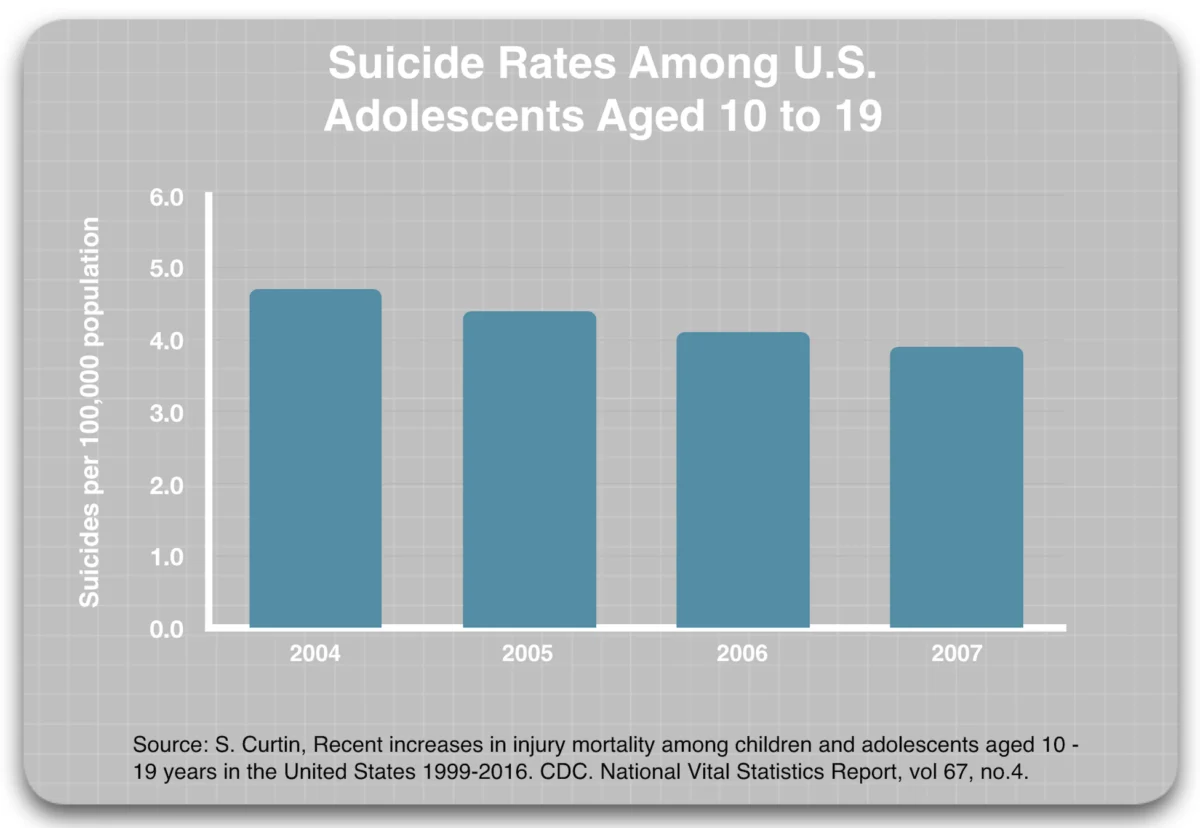
The Data-Driven Critique: Critics of this narrative, including former FDA officials and independent researchers, point to a different correlation. They note that during the initial years following the warning (2005–2007), when prescribing actually dipped, youth suicide rates also declined. Conversely, they highlight that as prescribing rates began to climb to record highs after 2008, youth suicide rates rose in tandem.
At the heart of the recent flare-up is an article published in the Spring 2024 issue of Regulation, a policy magazine from the CATO Institute. Written by psychiatrist Arif Khan, the piece claimed the warning led to the "excess deaths of 2,365 children and 3,593 young adults." This claim was subsequently dismantled by three former FDA medical officers—Marc Stone, Andrew Mosholder, and Tarek Hammad—who labeled Khan’s findings "factually inaccurate" and based on "invalid" methodology.
2. Chronology of a Controversy: 2004–2024
The timeline of this debate reveals a persistent effort to overturn the FDA’s safety warning, often using the same contested datasets.
2004: The Warning is Born
Following a series of clinical trials, the FDA conducted a meta-analysis of pediatric data. They found that the risk of suicidal ideation or behavior was approximately 1.95 times higher (nearly double) for children on antidepressants compared to those on a placebo. This statistically significant finding necessitated the black box warning.
2007: The "Gibbons Sleight of Hand"
The first major pushback came from Robert Gibbons, Director of the Center for Health Statistics at the University of Chicago. In the American Journal of Psychiatry, Gibbons claimed a close correlation between declining SSRI use and rising suicide rates. However, critics quickly noticed a chronological mismatch: Gibbons matched the suicide increase of 2003–2004 with the prescribing decline of 2004–2005. In reality, the suicides occurred before the warning-induced drop in prescriptions.

2012–2018: Media Amplification
Despite the errors in his 2007 paper, Gibbons continued to publish similar claims. In 2012, he asserted in the Archives of General Psychiatry that there was "no evidence" of increased suicide risk. Major outlets like NPR echoed these findings. In 2018, STAT News published an opinion piece by professors Stephen Soumerai and Ross Koppel, using trend lines to suggest a "smoking gun" link between the warning and rising suicides.
2024: The Stone-Khan Confrontation
The controversy reached a boiling point this year when Arif Khan’s CATO Institute article was met with a formal rebuttal. Stone, Mosholder, and Hammad (the former FDA officers) revealed that they had actually provided Khan with a critique of his errors before he published, which he reportedly ignored.
3. Supporting Data: Analyzing the "Natural Experiment"
To understand why critics call the mainstream narrative "bad science," one must look at the specific years following the 2004 warning, which served as a "natural experiment" in public health.
The 2005–2007 Window
If the theory that "less medication equals more suicide" were true, the years immediately following the warning should have seen a spike in deaths. The data shows the opposite:
- Prescribing: Youth antidepressant prescriptions declined by approximately 20% between 2005 and 2007.
- Suicide Rates: During this same period, suicide rates for girls aged 10–14 dropped by 46%, and for girls aged 15–19, they dropped by 30%. For boys, the declines were 29% and 13%, respectively.
The Post-2008 Surge
Starting in 2008, the "dampening" effect of the black box warning seemingly wore off. Prescribing rates for youth began to climb steadily, returning to 2004 levels by 2011 and soaring far beyond them in the decade that followed.

- The Correlation: As the volume of antidepressants in the youth population reached all-time highs, the suicide rate for both boys and girls continued a steady, tragic rise until at least 2017.
The RCT Evidence
The original Randomized Controlled Trial (RCT) data remains a cornerstone of the FDA’s defense. A meta-analysis of 372 double-blind RCTs involving nearly 100,000 participants found that for those under age 25, the risk of a suicide attempt was 2.3 times higher in the antidepressant group than the placebo group. This suggests that the "harm" is not in the warning, but in the drug’s physiological effect on the developing brain.
4. Official Responses and the Rebuttal
The response from Marc Stone and his colleagues in the Summer 2024 issue of Regulation is perhaps the most significant institutional pushback in the history of this debate.
The Stinging Rebuke
Stone and his team argued that Khan’s article was "inconsistent with trial evidence, prescribing data, [and] timing patterns." They highlighted that the methodology used by Khan—and by Gibbons before him—had been repeatedly debunked in peer-reviewed literature. Specifically, they noted that Khan failed to cite any of the published work that contradicted his conclusions, despite having been directed to it.
The Conflict of Interest
A significant factor in the official response is the highlighting of financial ties. Robert Whitaker, writing for Mad in America, noted that Robert Gibbons—the architect of the original 2007 study—served as an expert witness for Wyeth and Pfizer Pharmaceuticals in litigation regarding antidepressants and suicide. This raises questions about whether the "unintended consequences" narrative was a grassroots scientific concern or a calculated PR strategy to protect drug sales.
The Journal Gatekeeping
Critics have also pointed to the role of medical journals in suppressing dissent. When Mickey Nardo, a psychoanalyst and blogger, submitted a detailed critique of Gibbons’ 2012 papers to the Archives of General Psychiatry, the journal refused to print it. Instead, they buried it as an online-only "Reader’s Reply," ensuring it would not be indexed in PubMed or become part of the official scientific record.

5. Implications: The "Triumph of Bad Science"
The persistence of the narrative that the black box warning "caused" suicides has profound implications for public health and the ethics of medical reporting.
The Ethics of "Excess Deaths"
Arif Khan and his colleagues used the term "excess deaths" to blame the FDA for suicides. However, Stone and Mosholder argue that if the correlation between increased prescribing and increased suicide holds true, the responsibility for those deaths lies with the researchers who encouraged doctors to ignore the safety warning. By framing the warning as a danger, these publications may have emboldened a prescribing culture that led to the very deaths they claim to deplore.
The Role of AI and Search Engines
The reach of this narrative is now being amplified by Artificial Intelligence. As noted in the source material, asking a modern AI whether the black box warning led to more suicides often results in a "Yes," citing the very studies that have been debunked. This creates a feedback loop where flawed science becomes an "accepted truth" through the sheer volume of its repetition.
A Call for Journalistic Accountability
The controversy underscores a failure of the mainstream media to perform due diligence. When outlets like STAT or the Chicago Tribune report on "rising suicides" following a safety warning, they often fail to look at the raw data or the chronological alignment of the events.
Conclusion
The "Black Box" controversy is more than a debate over a label; it is a case study in how a convenient narrative can override inconvenient data. While the psychiatric establishment continues to argue that the warning hindered care, the historical record suggests that the warning was a necessary response to a real danger. As prescribing rates for youth continue to reach new heights, the correlation with rising suicide rates remains a haunting challenge to the "treatment gap" theory. The defense of the black box warning by former FDA medical officers serves as a rare, authoritative reminder that in science, the facts must eventually come before the narrative.