







In the rapidly evolving landscape of sleep medicine, the accurate identification of sleep-disordered breathing (SDB) remains a cornerstone of clinical practice. Among the various tools available to clinicians, respiratory effort belts serve as the vital link in translating thoracic and abdominal wall motion into actionable diagnostic data. By providing essential context for airflow and oxygen saturation measurements, these devices are indispensable for distinguishing between obstructive, central, and mixed apnea events.
As sleep labs navigate the transition between traditional in-lab polysomnography (PSG) and the increasing reliance on home sleep testing (HST), the selection of respiratory effort technology has become a strategic decision. This guide explores the current market landscape, examining the diverse range of effort belts—from fully disposable systems to high-durability reusable components—designed to meet the varied demands of modern clinical workflows.
Main Facts: The Technology Behind the Signal
Respiratory effort belts are essentially transducers that measure the expansion and contraction of the chest and abdomen during respiration. Historically, Respiratory Inductive Plethysmography (RIP) has served as the gold standard, offering a reliable way to quantify the effort associated with breathing. In recent years, however, piezoelectric technology, specifically Polyvinylidene Fluoride (PVDF) sensors, has gained significant traction for its ability to provide high-fidelity signals while remaining cost-effective for single-use applications.

Key Technological Distinctions
- RIP (Respiratory Inductive Plethysmography): This technology uses conductive coils to measure changes in cross-sectional area. It is widely regarded for its accuracy and is the preferred method for many high-acuity in-lab PSG environments.
- PVDF (Polyvinylidene Fluoride): These sensors generate an electrical charge in response to physical deformation. They are prized for their extreme sensitivity and are often used in disposable configurations, reducing the need for sterilization between patients.
The choice between these technologies often depends on the lab’s specific volume, the patient demographic, and the desired balance between patient comfort and device longevity.
Chronology: The Evolution of Patient-Centric Monitoring
The development of respiratory effort monitoring has followed a trajectory from bulky, complex interfaces to sleek, ergonomic, and often patient-intuitive designs.
- The Early Era: Early PSG utilized cumbersome elastic bands that were difficult to calibrate and prone to slippage, often leading to signal artifacts that necessitated repeat studies.
- The Rise of Standardization: As sleep medicine matured, the American Academy of Sleep Medicine (AASM) established strict guidelines for signal quality. This forced manufacturers to refine belt materials and connection interfaces.
- The Disposable Revolution: With the advent of home sleep testing, the need for cost-effective, "throw-away" technology became paramount. Manufacturers like BRAEBON, Dymedix, and Natus responded by introducing pre-sized, disposable belts that could be shipped to a patient’s home, used once, and discarded, thereby eliminating cross-contamination risks and sterilization labor.
- The Modern Hybrid Era: Today, we see a convergence where labs utilize a mix of "cut-to-fit" designs for hard-to-fit patients and "pre-sized" belts for rapid application, maximizing efficiency without sacrificing clinical accuracy.
Comparative Analysis of Market-Leading Solutions
To assist sleep labs in making informed procurement decisions, we have analyzed several prominent solutions currently dominating the market.
BRAEBON Medical Corp: The 5574 Disposable RIP Belt
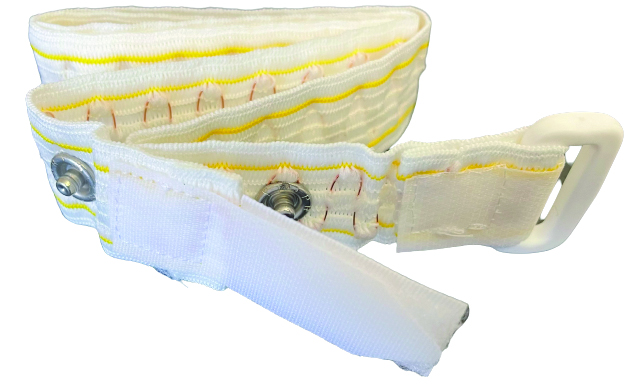
BRAEBON remains a staple in the industry, offering a robust RIP-based solution that integrates seamlessly with virtually any PSG or HST system. Its strength lies in its versatility across pediatric and adult populations, utilizing a simple buckle adjustment that facilitates a secure fit.
Cadwell: Disposable RIP System
Designed with the high-volume lab in mind, the Cadwell system is optimized for its own Easy III and ApneaTrak platforms. The focus here is on speed; the belts are pre-sized, allowing technologists to apply them rapidly, which is critical in an in-lab setting where patient preparation time is a premium commodity.
Dymedix Diagnostics: PerfectFit 3D and FastTrack
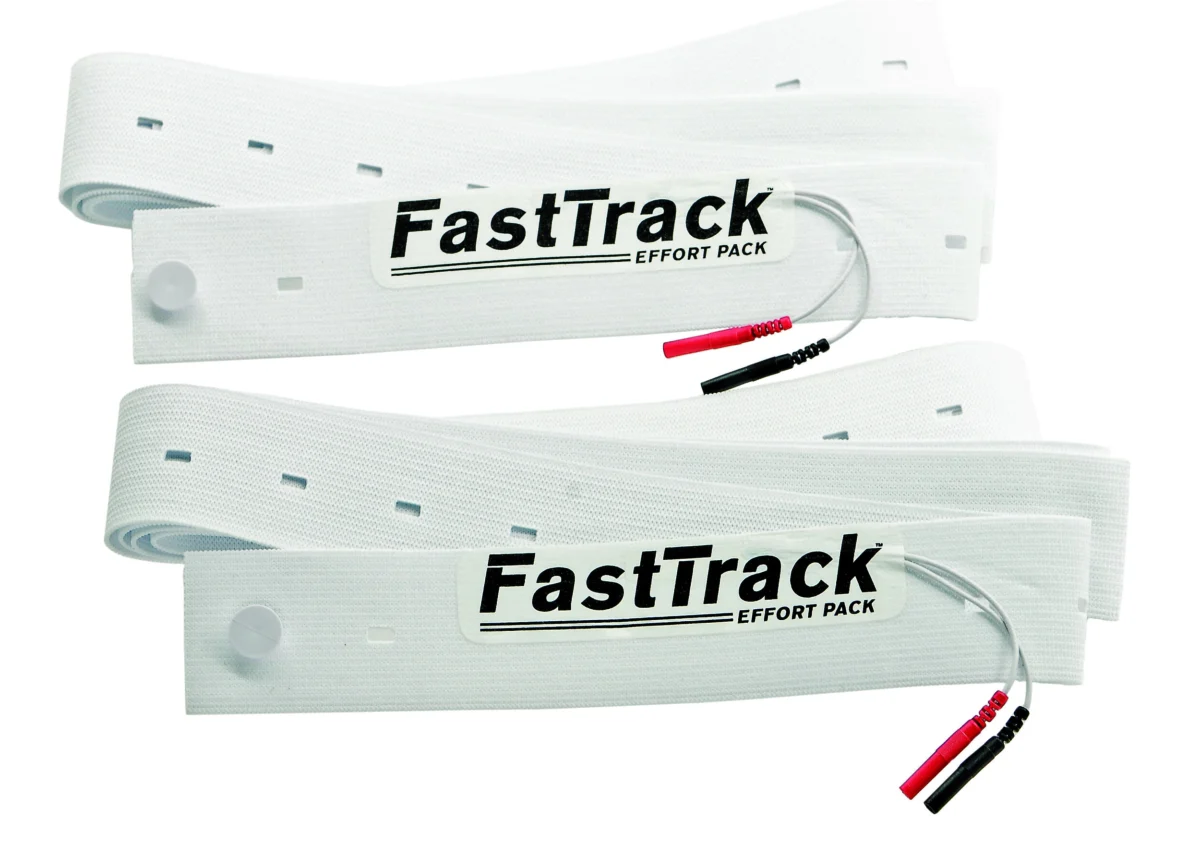
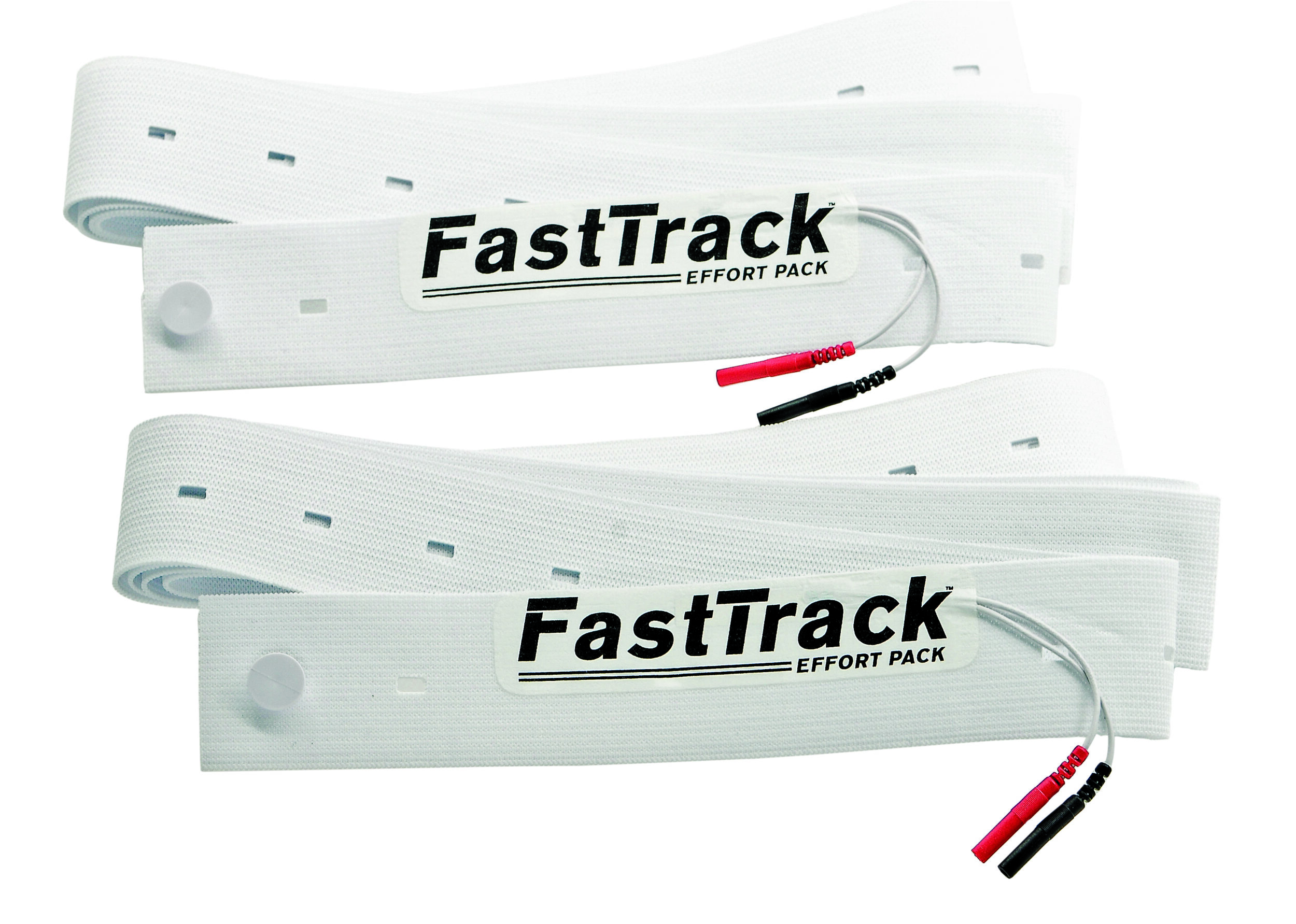
Dymedix has carved a niche in PVDF technology. The PerfectFit 3D belts are notable for their “cut-to-size” flexibility, making them a favorite for labs that frequently encounter patients outside of standard sizing charts. The FastTrack Effort Pack offers a "plug-and-play" experience that is entirely disposable, significantly reducing the administrative burden of inventory management and cleaning.

Natus Medical: XactTrace
Natus provides one of the most comprehensive portfolios in the industry. Their XactTrace line offers three distinct options: reusable, pre-sized disposable, and cut-to-fit disposable. This "one-stop-shop" approach allows a facility to standardize their workflow across different testing modalities—from NICU environments to home-based adult testing.
Neurotronics LLC: NiteLynx
For facilities looking to manage costs through bulk procurement, the NiteLynx PVDF belt roll is an industry standout. By providing a 50-yard roll of material, labs can produce approximately 40 individual belts. This approach is highly efficient for high-volume centers that prefer a "custom-fit-on-the-fly" methodology.
Nox Medical: Nox RIP Belts
The Nox system is unique for its patented dual-belt approach. By monitoring both thoracic and abdominal motion with high-fidelity sensors, the system provides a flow signal that is notably insensitive to mouth breathing, a common source of error in HST data.

SLP SleepSense: Reusable vs. Semi-Reusable
SleepSense offers a tiered approach. Their Reusable Inductive Belt (9010 series) is built for longevity and is backed by a one-year warranty, ideal for clinics with low turnover. Conversely, their Semi-Reusable line provides a cost-effective middle ground, lasting roughly 70 uses and featuring velcro tabs that allow for rapid adjustment, balancing durability with patient comfort.
Supporting Data: Operational Considerations
When evaluating these options, lab managers must look beyond the initial purchase price. The "Total Cost of Ownership" (TCO) is defined by:
- Application Time: Pre-sized belts save minutes per patient, which adds up to hours of saved labor annually.
- Compatibility: Does the belt interface directly with your existing headbox? If an adapter is required, signal degradation or "noise" becomes a significant risk.
- Patient Compliance: In the home setting, if a belt is too complex to apply, the patient may not secure it correctly, leading to a failed study and the need for a re-test.
The following table summarizes the technical specifications provided by manufacturers:
(Table content summarized: Dymedix and Neurotronics favor PVDF, while Natus, Nox, and SleepSense lean heavily into RIP. Sizing ranges from pediatric/infant—28cm—to adult XXL—up to 200cm.)
Official Responses and Clinical Implications
According to clinical feedback from sleep technologists, the most critical factor in choosing a belt is signal stability. Artifacts—often caused by loose belts or poor sensor placement—are the primary cause of manual scoring delays.
"The shift toward cut-to-fit systems has been a game-changer for our lab," notes one lead technologist. "We no longer have to worry about the belt sliding off a patient with a unique body habitus. It provides a consistent signal throughout the night, regardless of patient movement."

The Implications for Future Practice
As the industry moves toward more sophisticated AI-driven auto-scoring, the quality of the raw data provided by these belts becomes even more critical. AI algorithms are highly sensitive to "noise" in the effort channel. Consequently, the industry is seeing a move toward higher-quality, more stable, and easier-to-apply sensors.
Furthermore, the expansion of pediatric sleep diagnostics is driving the need for smaller, more sensitive belts. Manufacturers like Dymedix and Natus have responded by refining their pediatric-specific offerings to ensure that even the smallest respiratory effort changes are captured with high precision.
Conclusion: Selecting the Right Technology for Your Lab
Selecting the appropriate respiratory effort belt is a balance between fiscal responsibility and clinical performance.

- For high-volume, low-margin labs: The disposable, roll-based systems (like Neurotronics) or the "FastTrack" disposable packs (Dymedix) offer the most significant operational savings.
- For specialized research or complex clinical labs: Reusable RIP systems (SleepSense or Natus) provide the high-fidelity data required for complex sleep-disordered breathing cases, where minute changes in effort need to be meticulously recorded.
Clinicians are encouraged to request samples from manufacturers before committing to a bulk purchase. Testing the belt’s ease of application, the durability of its connection, and its integration with current PSG software is the only way to ensure the chosen product will enhance, rather than hinder, the lab’s workflow.
As sleep medicine continues to evolve, the humble respiratory effort belt remains the bedrock upon which accurate diagnosis is built. By keeping pace with these technological advancements, labs can ensure that they are not only meeting the needs of their patients but are also optimizing their operational efficiency in an increasingly competitive healthcare environment.
Disclaimer: Information in this guide is based on data submitted by respiratory effort belt marketers. Sleep Review strives for accuracy in all data but cannot be held responsible for claims made by marketers. Pricing and availability are subject to change. Please contact manufacturers directly to request technical documentation and current compatibility certifications.