









The release of the 2025–2030 Dietary Guidelines for Americans (DGAs) this week was met with both anticipation and skepticism. Framed by a new, consumer-friendly tagline—"eat real food"—the document aims to provide a blueprint for public health in an era of rising metabolic disease. However, the rollout has been marred by controversy, largely due to a visual "New Food Pyramid" that appears to contradict the very scientific principles the text claims to uphold. While the guidelines take a commendable stance against ultra-processed foods and added sugars, critics argue that the messaging surrounding saturated fats and protein quality is muddled, potentially undermining long-term cardiovascular health.
The Evolution of Federal Nutrition Policy
Every five years, the U.S. Departments of Agriculture (USDA) and Health and Human Services (HHS) issue the DGAs. These guidelines are not merely suggestions; they dictate the menus for school lunches, military rations, and federal nutrition assistance programs, effectively shaping the American food landscape.
The process typically begins with an independent Dietary Guidelines Advisory Committee—a panel of experts who synthesize the latest nutrition science. This committee’s report is intended to be the bedrock of the final policy. However, the 2025–2030 cycle deviated sharply from historical norms. The administration opted to reject key components of the committee’s findings, commissioning a "supplemental scientific analysis" via a federal contracting process instead. This move has drawn fire from public health experts who argue that the lack of transparency in the selection of these supplemental reviewers, some of whom have documented financial ties to the beef and dairy industries, compromises the integrity of the final output.
A Visual Paradox: The New Pyramid
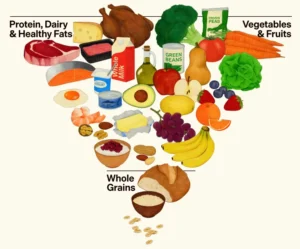
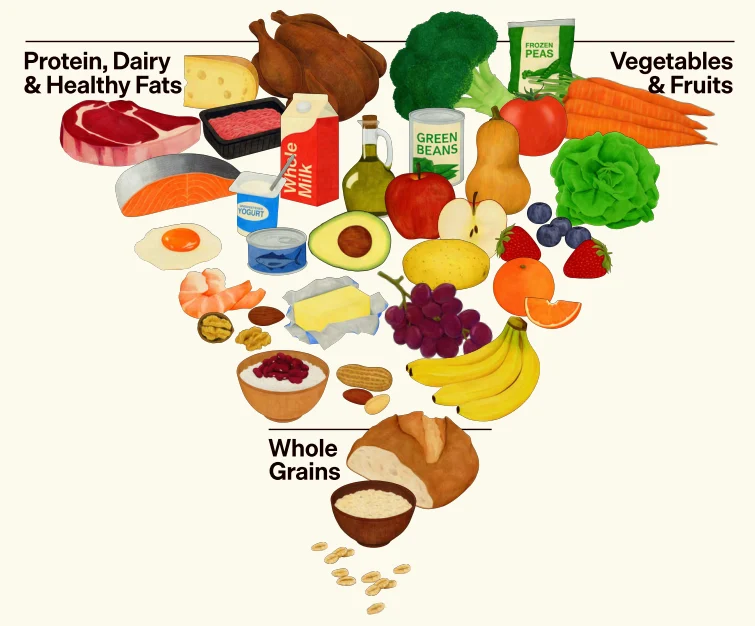
The most striking element of the 2025–2030 rollout is the return of a pyramid graphic, this time inverted. While the guidelines maintain the longstanding recommendation that saturated fat should account for no more than 10% of total daily caloric intake, the visual representation tells a different story.
The pyramid prominently features steak, full-fat milk, cheese, and butter—foods high in saturated fat—in positions of visual dominance. This creates an immediate cognitive dissonance for the average consumer. Dr. Frank Hu, chair of the Department of Nutrition at the Harvard T.H. Chan School of Public Health, warns that these mixed messages are dangerous. "The visual prominence of saturated-fat-rich foods may lead to consumer confusion, potentially resulting in higher intake of LDL cholesterol and an increased risk of cardiovascular disease," Dr. Hu notes.
Decoding the "Highly Processed" Categorization
For the first time, the DGAs explicitly target "highly processed" foods. This is a significant shift in federal policy, moving beyond simple caloric counting to address the quality and physical state of food. The guidelines advocate for a shift away from refined carbohydrates—such as white bread and snack foods—in favor of whole, fiber-rich grains.
However, the definition of "highly processed" remains somewhat nebulous. While the text is clear on discouraging sugar-sweetened beverages and packaged snacks, the nuances of food processing are vast. The document encourages the consumption of "unsweetened" yogurt and whole grains, yet the lack of a clear, actionable definition for the average shopper makes implementation difficult. The guidelines correctly identify the enemy—the ultra-processed, nutrient-poor calorie—but they struggle to provide the granular detail necessary for a consumer to navigate the average grocery store aisle.
The Sugar Threshold: A Drastic Pivot
Perhaps the most stringent change in this edition is the position on added sugars. The guidelines state clearly that "no amount of added sugars or non-nutritive sweeteners is recommended or considered part of a healthy or nutritious diet."
This represents a departure from previous iterations that allowed for a 10% calorie cap. For a 2,000-calorie diet, that old limit was 50 grams; the new guidance effectively moves toward a zero-tolerance policy. Furthermore, the guidelines now recommend that children avoid added sugars entirely until age 10, a substantial increase from the previous age-two cutoff. While the public health goal is laudable, the guidelines fail to provide a roadmap for how individuals can realistically achieve this in a food environment saturated with hidden sweeteners.
Saturated Fat Math: The Arithmetic of Risk
To understand why the "New Food Pyramid" is so concerning to cardiologists, one must look at the math. A standard 2,000-calorie diet allows for roughly 22 grams of saturated fat.
If a consumer follows the DGAs’ recommendation of three daily servings of dairy—specifically choosing the "full-fat" options highlighted in the pyramid—the math breaks down quickly:
- One 8-oz cup of whole milk: 5 grams of saturated fat
- ¾ cup of full-fat Greek yogurt: 6 grams
- 1 ounce of cheddar cheese: 6 grams
These three items alone account for 17 grams of saturated fat. Adding a single tablespoon of butter (7 grams) or beef tallow (6 grams)—both of which are suggested as cooking fats in the guidelines—pushes the consumer over the 22-gram limit before they have even accounted for their protein source at dinner. This arithmetic demonstrates that the visual recommendations are fundamentally incompatible with the nutritional limits the text purports to set.
Protein Quantity vs. Protein Quality
The 2025–2030 DGAs have significantly raised the recommended protein intake, suggesting 1.2 to 1.6 grams per kilogram of body weight. This is a 50–100% increase over previous minimum requirements. While protein is essential, the guidelines fail to distinguish between the "protein package"—the fats, fiber, and micronutrients that accompany the protein source.
Dr. Hu emphasizes that not all protein is created equal. "Evidence continues to suggest that plant-based proteins and fish are associated with more favorable health outcomes than diets high in red meat," he explains. By raising the protein bar without prioritizing the source of that protein, the guidelines may inadvertently encourage an increase in red meat consumption, further exacerbating the saturated fat issue mentioned above.
Environmental and Socioeconomic Blind Spots
A glaring omission in the 2025–2030 guidelines is the lack of consideration for environmental sustainability and socioeconomic barriers. Food systems are major drivers of environmental change, and conversely, the ability to access "real food" is heavily dictated by one’s zip code and income level. By ignoring these systemic factors, the DGAs remain an abstract, idealized set of rules that may be inaccessible to large swaths of the population, particularly those living in food deserts or facing economic hardship.
Official Responses and Internal Tensions
The process behind these guidelines has been described by insiders as "relitigation." Deirdre Tobias, an assistant professor at the Harvard T.H. Chan School of Public Health who served on the 2025–2030 Advisory Committee, has expressed deep concerns regarding the lack of transparency.
"The reviews themselves, as well as their overall presentation and integration, deviate significantly from the rigorous process that the HHS developed," Tobias noted in a recent Q&A. The move to bypass the committee’s original findings in favor of a supplemental report by outside contractors has left the scientific community questioning the motive behind the final document. When scientific rigor is sacrificed for political or industry-influenced messaging, public trust is the first casualty.
Implications for Public Health
Historically, Americans have struggled to adhere to dietary guidelines, and this latest edition, with its contradictory imagery and ambiguous advice, is unlikely to reverse that trend. The guidelines are now shorter and more "consumer-friendly" in their digital presentation, yet they may be more confusing than ever.
The implication for the average American is clear: federal guidelines should be treated as a starting point, not a definitive health manual. For those seeking to optimize their health, experts recommend looking toward evidence-based alternatives like the "Healthy Eating Plate," which emphasizes plant-based fats, fiber-rich grains, and high-quality protein sources.
As the 2025–2030 cycle progresses, the burden of interpretation will fall on healthcare providers and registered dietitians. In an era where nutrition misinformation is rampant, the failure of the federal government to provide a clear, science-backed, and consistent message represents a missed opportunity to stem the tide of the nation’s chronic disease epidemic. Whether these guidelines will be revised to better reflect the scientific consensus or left to stand as a testament to political interference remains to be seen. For now, the consumer is left to navigate a crowded, often misleading, marketplace of dietary advice.