






In the high-stakes environment of an intensive care unit, pulse oximetry is a cornerstone of patient monitoring. These small, ubiquitous devices, which clip onto a patient’s finger to measure the oxygen saturation of arterial blood (SpO2), are intended to be the first line of defense against respiratory failure. However, a growing body of evidence has exposed a systemic flaw: traditional pulse oximeters are significantly less accurate for patients with darker skin tones.
This technology gap, which has led to delayed care and worse clinical outcomes for Black and other minority patients, may finally have a solution. Researchers at Tufts University have unveiled "ChromaSense," a prototype wearable device that utilizes advanced reflective light technology to provide accurate oxygen saturation readings, fundamentally decoupling patient health metrics from skin pigmentation.
The Core Innovation: Beyond the Finger Clip
For decades, standard pulse oximeters have operated on the principle of transillumination—sending light through a digit, such as a finger or earlobe, and measuring how much is absorbed by oxygenated versus deoxygenated blood. Because melanin, the pigment responsible for skin color, also absorbs and scatters light, traditional sensors often struggle to differentiate between the signal of the blood and the "noise" created by the skin’s pigmentation.
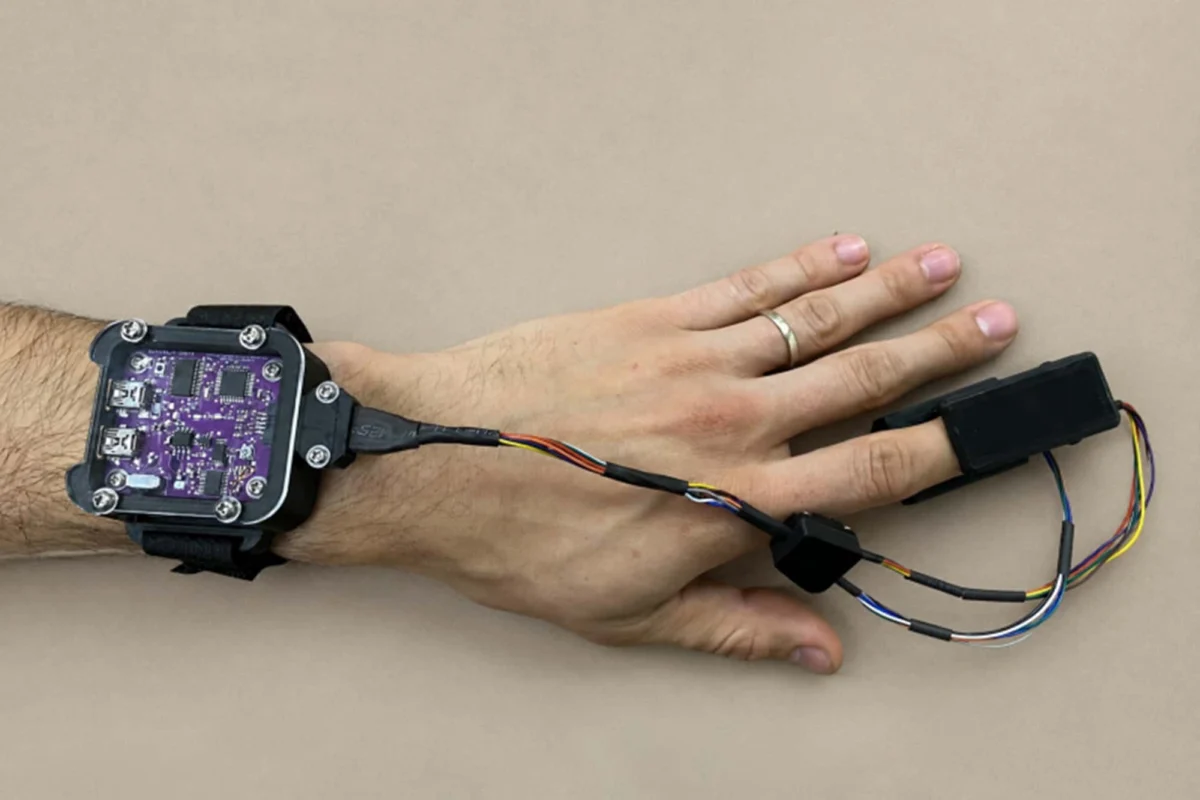
The ChromaSense system, developed in the lab of Valencia Koomson, an associate professor of electrical and computer engineering at Tufts, abandons the traditional finger-clip design in favor of a wrist-worn wearable. Instead of relying on light transmission through the finger, ChromaSense employs reflective photoplethysmography (PPG).
The device operates in a two-stage process. First, it performs a rapid scan to assess the user’s specific skin reflectance profile. Once the unique optical characteristics of the wearer’s skin are identified, the system dynamically adjusts the intensity of the light emitted and the signal-processing algorithms used to interpret the reflected data. By "calibrating" for the individual’s skin tone in real-time, the device eliminates the bias that has historically plagued pulse oximetry.
Chronology: A Decade of Disparities to a Scientific Breakthrough
The push for equitable medical devices gained national attention in 2020, but the roots of the issue go back much further.
- 1970s–1990s: The normalization of pulse oximetry in clinical settings occurs, largely based on datasets that failed to adequately represent diverse populations.
- 2020: A landmark study published in the New England Journal of Medicine (NEJM) provides definitive evidence of racial bias. The study revealed that Black patients were three times more likely than white patients to suffer from "occult hypoxemia"—a state of dangerously low oxygen levels that went undetected by standard oximeters.
- 2021–2023: Increased scrutiny from the FDA leads to public hearings on the accuracy of pulse oximeters. Industry leaders face pressure to re-evaluate how devices are calibrated and tested.
- 2024: Valencia Koomson and her team at Tufts University publish their findings in the journal Review of Scientific Instruments. Their study demonstrates that the ChromaSense prototype successfully mitigates these historical inaccuracies, meeting FDA performance standards across diverse demographics.
Supporting Data: Validating the "Reflective" Approach
To ensure the device’s efficacy, the research team partnered with the Hypoxia Research Laboratory at the University of California, San Francisco. In a controlled study, researchers recruited healthy volunteers representing a wide range of backgrounds, including Black, Asian, Hispanic, white, and multiethnic individuals.
The participants were subjected to controlled hypoxia—a process where oxygen levels in the blood are systematically lowered—across a range of 70% to 100% saturation. The performance of the ChromaSense prototype was then compared against a reference oximeter that measured arterial blood gases directly from the source.
The results were striking: the ChromaSense measurement accuracy was within 2.87% of the reference device. Crucially, the researchers reported no observable tone-dependent bias, even as oxygen levels reached critical lows. By utilizing PPG to track microvascular blood volume changes with every heartbeat, the device successfully isolated the signal of arterial oxygenation from the interference of melanin-heavy skin.
Official Perspectives: The Role of Representative Data
The development of ChromaSense is not just a triumph of hardware engineering; it is a lesson in the necessity of inclusive data science. According to Professor Koomson, the failure of existing technology is as much a failure of software training as it is of hardware design.
"If you train a model that converts light signals to blood oxygen, pulse, or pressure and you don’t ensure that the dataset that you’re training with is diverse enough in terms of age, race, and gender, it can affect the performance or accuracy of the model," Koomson explained in a recent press release.
She notes that a model might appear to have a high overall accuracy rate, but when the data is "broken down into specific groups," the performance gap becomes glaring. By prioritizing diverse training sets—including the use of data from over 2,300 ICU patients—the team ensured that the machine-learning algorithms powering ChromaSense were optimized for all human biology, not just a subset.
Implications: A New Era for Wearable Medicine
The implications of the ChromaSense technology extend far beyond the hospital room. As healthcare moves toward continuous monitoring and remote patient management, the ability to rely on wearable sensors for life-critical data is paramount.
1. Reducing Clinical Delays
Occult hypoxemia is a silent killer. When a patient’s oxygen saturation is lower than the monitor suggests, clinicians may delay the administration of supplemental oxygen, intubation, or transfer to the ICU. By providing an accurate, unbiased reading, ChromaSense has the potential to shave hours or even days off the time it takes to provide life-saving intervention.
2. The Future of Multi-Parameter Monitoring
The research team is not stopping at oxygen saturation. They are currently working to integrate blood pressure monitoring into the same wrist-worn platform. Using the same PPG waveforms, the team has already reported up to 90% accuracy for systolic and diastolic blood pressure readings across diverse populations. This move toward "all-in-one" monitoring could revolutionize how we manage chronic conditions like hypertension and heart disease in underserved communities.
3. Regulatory and Industry Shifts
The success of the Tufts study is likely to influence upcoming FDA guidance regarding pulse oximetry. The medical device industry is now under significant pressure to move away from legacy designs that have been "grandfathered" into the market despite their known limitations. ChromaSense serves as a proof-of-concept for the next generation of medical hardware: devices that are "equity-by-design."
Conclusion: The Path Forward
The ChromaSense project stands as a testament to the importance of diversity in medical research. By acknowledging the biological and optical realities of all skin tones, researchers have successfully addressed a flaw that has harmed patients for decades.
As the prototype moves toward potential commercialization, it challenges the medical technology industry to raise its standards. In the future, the standard of care should not be dictated by how well a device reads a specific patient profile, but by its universal reliability. With the integration of machine learning and reflective light technology, the era of biased pulse oximetry may finally be drawing to a close, paving the way for a more equitable future in digital health.