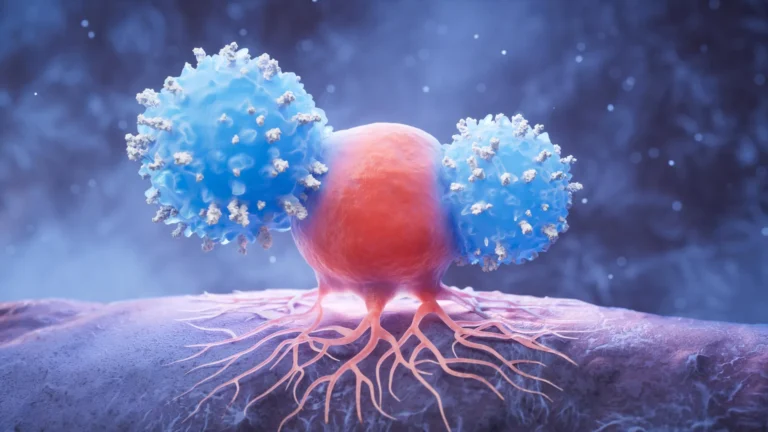
In a groundbreaking study that shifts our understanding of the body’s innate defense mechanisms, researchers at Nagoya University have uncovered a critical role for an evolutionarily ancient protein in the fight against cancer. The study, published in Nature Communications, reveals that complement protein C3—a staple of the immune system dating back to sponges and jellyfish—acts as a powerful gatekeeper within the tumor microenvironment.
Crucially, the research demonstrates that the efficacy of cancer immunotherapy is not dictated by the C3 circulating in the bloodstream, but rather by the C3 produced locally by cancer-associated fibroblasts within the tumor tissue itself. This discovery provides a potential roadmap for overcoming treatment resistance in patients who previously had little hope for recovery.
The Main Facts: A New Frontier in Oncology
Immunotherapy has transformed the oncology landscape by training the body’s own immune system to recognize and eliminate malignant cells. However, for a significant portion of patients, these treatments remain stubbornly ineffective. The research team at Nagoya University, led by Assistant Professor Yuki Miyai, sought to understand why.
Their findings center on the "tumor microenvironment"—a complex ecosystem of cells, blood vessels, and signaling molecules that surround a tumor. The team discovered that when cancer-associated fibroblasts (CAFs) within this environment produce C3, the protein undergoes a cleavage process to form a fragment known as iC3b. This fragment acts as a biological shield, effectively preventing immunosuppressive myeloid cells from infiltrating the tumor. By keeping these "traitor" cells out, the immune system is granted a clear path to identify and destroy the cancer.
Perhaps most significantly, the team proved that systemic C3—the kind produced by the liver and transported through the blood—has virtually no impact on this specific immune response. This decoupling of systemic and local immunity suggests that future cancer treatments must focus on the "soil" (the tumor microenvironment) rather than just the "seed" (the cancer cells).
Chronology: From Evolutionary Biology to Clinical Application
The journey to this discovery began with a shift in perspective. Historically, C3 has been viewed primarily as a liver-derived systemic protein responsible for flagging pathogens for destruction. However, the Nagoya University team hypothesized that the local expression of C3 in tissues might serve an understudied, localized function.
- Initial Hypothesis: The team posited that fibroblasts, which are abundant in the tumor stroma, were not merely structural scaffolding but active participants in the immune battle.
- Mouse Model Development: To test this, researchers developed a sophisticated mouse model capable of distinguishing between liver-derived systemic C3 and locally produced C3. By selectively knocking out C3 production in specific tissues, they created a controlled environment to measure the impact of each source on immunotherapy efficacy.
- The "Aha!" Moment: When the team reduced liver-produced C3 by 90%, immunotherapy (specifically anti-PD-1 antibodies) remained highly effective. However, when they suppressed the production of C3 by fibroblasts within the tumor, the efficacy of the immunotherapy plummeted, despite systemic levels remaining relatively stable.
- Therapeutic Validation: Following these results, the team attempted to mimic the function of iC3b using a pharmacological approach in mice that were previously resistant to immunotherapy. The result was a marked increase in survival rates and the successful sensitization of previously "cold" tumors to treatment.
- Human Translation: Finally, the researchers analyzed human lung cancer tissue samples, finding a direct correlation between high local C3 levels and positive responses to immunotherapy.
Supporting Data: The Evidence of Efficacy
The statistical findings from the study are compelling. In the experimental models, the researchers observed a stark difference in tumor progression based on the source of C3.
In mice where fibroblast-driven C3 production was inhibited, the efficacy of anti-PD-1 therapy was significantly compromised, even with only a 9% reduction in systemic C3. Conversely, when local production was preserved, the immunotherapy maintained its potency regardless of systemic levels.
The clinical data from human lung cancer patients further solidified these findings. Patients with high levels of C3 in their tumor microenvironment showed a 50% response rate to immunotherapy. Strikingly, among patients with low levels of local C3, the response rate was zero. This suggests that local C3 concentration could eventually serve as a vital biomarker to predict which patients are candidates for standard immunotherapy and which might require a different, more specialized approach.
Official Responses: Insights from the Lead Investigators
"Cancer tumors are surrounded by normal cells called fibroblasts. Until now, the role of complement C3 produced by these cancer-associated fibroblasts within tumor tissue was not known," said Yuki Miyai, the study’s lead author.
Miyai emphasized the mechanical precision of the process: "What determined the efficacy of the immunotherapy treatment was not the C3 in the blood, but the local C3 produced at the tumor site. When this C3 breaks down, it forms a fragment called iC3b that stops harmful myeloid cells from entering the tumor. As a result, immunotherapy is more likely to work."
The implications of this statement are profound. It suggests that the medical community has been looking at the wrong place for the wrong mechanism for decades. By focusing on the bloodstream, researchers were missing the "local checkpoint" established by these fibroblasts.
Implications: The Future of Personalized Medicine
The findings from Nagoya University have far-reaching implications for the future of cancer care. If local C3 production is the key to unlocking immune infiltration, then the next generation of cancer treatments may involve the localized stimulation of C3 or the direct administration of iC3b fragments to "prime" the tumor for immunotherapy.
1. New Diagnostic Tools
Clinicians may soon be able to perform biopsies that specifically measure the levels of C3 expression in the tumor stroma. This would allow for a more personalized approach, identifying "non-responders" before expensive and potentially toxic treatments are administered.
2. Overcoming Treatment Resistance
For patients with tumors that currently resist anti-PD-1 therapy, the ability to "force" the tumor microenvironment into a state that is receptive to the immune system is a game-changer. By mimicking the protective effects of C3, doctors may be able to turn "cold" tumors (those invisible to the immune system) into "hot" tumors (those highly susceptible to immunotherapy).
3. Broadening Biological Understanding
Beyond oncology, the team believes that the local regulation of C3 holds secrets to other biological processes. The same mechanisms could be critical in managing chronic inflammation and optimizing wound healing, where the balance of myeloid cell infiltration is equally vital.
The Path Forward: Next Steps in Research
While the current findings are promising, the researchers are already looking ahead. The next phase of their research will focus on the practical application of these findings. This includes:
- Timing and Delivery: Developing methods to increase C3 levels within the tumor without causing systemic side effects. The researchers are exploring targeted delivery systems that ensure the protein is only active within the tumor microenvironment.
- Refining Patient Selection: Further studies are required to confirm if these findings hold true across different types of cancer beyond lung cancer.
- Combination Therapies: Investigating whether combining C3-boosting treatments with existing chemotherapy or radiation regimens can produce a synergistic effect that further improves survival rates.
The discovery that an ancient, evolutionarily conserved molecule holds the key to modern immunotherapy is a testament to the complexity of the human body. As scientists continue to unravel the role of local immune signaling, we move closer to a future where cancer is not merely managed, but effectively outmaneuvered by the very systems designed to protect us. The work of Miyai and his colleagues at Nagoya University marks a pivotal step in that direction, turning the tide against one of humanity’s most persistent foes.