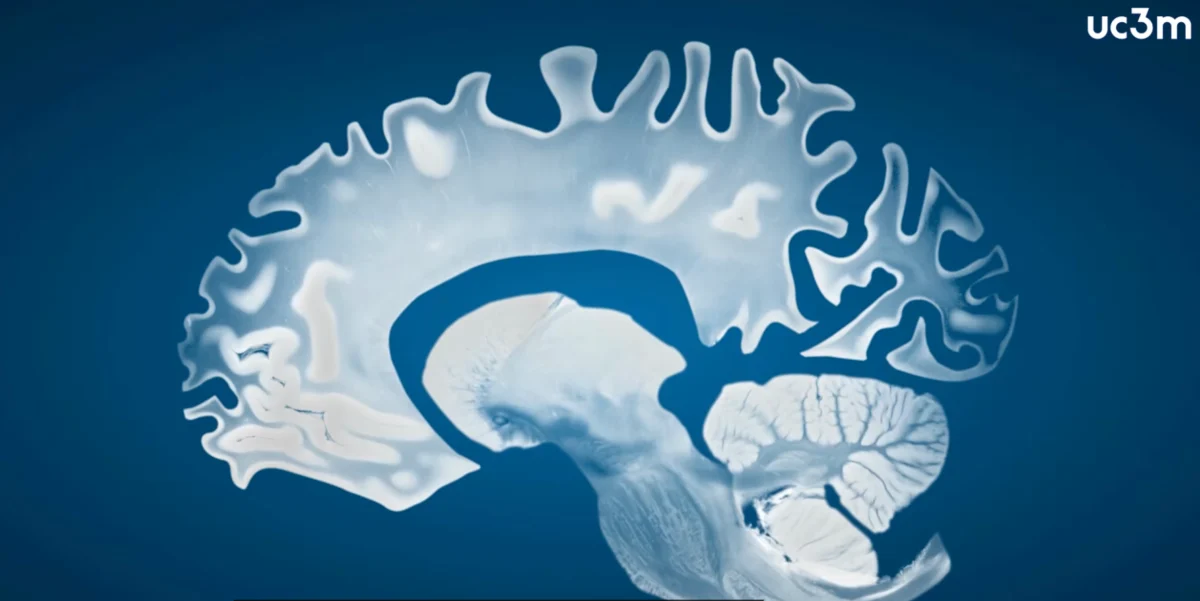
In the silent hours of the night, while the body rests, the human brain performs one of its most critical maintenance tasks: a complex, biological "housecleaning." During sleep, the brain clears out metabolic waste products, including the toxic beta-amyloid proteins that are hallmark indicators of Alzheimer’s disease. Now, a groundbreaking study from the Universidad Carlos III de Madrid (UC3M) and the Hospital Universitario Severo Ochoa has harnessed the power of artificial intelligence (AI) to turn these nocturnal hours into a diagnostic window, offering a potential paradigm shift in how we detect and treat neurodegenerative decline.
Published in the scientific journal GeroScience, this research introduces a noninvasive methodology that utilizes machine learning to analyze electrical brain activity during sleep. By identifying subtle neural alterations long before clinical symptoms appear, the team is paving the way for a future where Alzheimer’s can be caught, classified, and managed at its earliest, most treatable stages.
The Core Innovation: Machine Learning Meets Neurobiology
The central challenge in Alzheimer’s treatment has always been the "timing gap." By the time a patient experiences significant memory loss or cognitive impairment, the disease has already caused extensive, often irreversible, damage to the neural architecture. While current medical diagnostics, such as positron emission tomography (PET) scans or lumbar punctures, can detect the disease, they are often expensive, invasive, or accessible only in advanced stages.
The UC3M and Hospital Universitario Severo Ochoa team sought to circumvent these barriers. Their approach focuses on the bidirectional relationship between sleep and dementia. It is well-documented that Alzheimer’s alters sleep architecture—the natural rhythm of sleep stages—and that sleep disorders, conversely, accelerate the accumulation of neurotoxic proteins.
By using machine learning algorithms to interpret the electrical signals captured by scalp electrodes during sleep, the researchers have created a diagnostic tool that is not only highly accurate but also noninvasive and potentially scalable to the general population.
A Chronology of the Research: From Data to Discovery
The study represents a multi-year effort that bridged the gap between clinical neurology, pulmonology, and advanced computational engineering.
Phase 1: Data Integration
The research team constructed a comprehensive database by combining nocturnal electrical activity recordings (polysomnography data) with biochemical data derived from the cerebrospinal fluid of 100 participants. The cohort consisted of 42 patients diagnosed with mild to moderate Alzheimer’s disease and 58 cognitively healthy controls.
Phase 2: Algorithmic Training
Researchers utilized machine learning to process the raw electrical signals captured throughout the night. The AI was tasked with identifying "signatures"—specific patterns in electrical activity—that correlate with the known buildup of proteins in the brain.
Phase 3: Cross-Referencing Biomarkers
Once the AI successfully differentiated between the healthy and Alzheimer’s-affected groups, the team cross-referenced these electrical signatures with established cerebrospinal fluid (CSF) biomarkers. These included beta-amyloid, phosphorylated tau, total tau, and neurofilament light chain. This step was crucial, as it allowed the researchers to move beyond simple binary classification and begin mapping the biological heterogeneity of the disease.
Phase 4: Classification of Subgroups
The final phase of the study revealed that Alzheimer’s is not a monolithic condition. The algorithm successfully identified three distinct biological subgroups of patients. These profiles showed gradual, measurable differences in their biomarker levels, suggesting that the disease presents unique "biological signatures" even from its earliest onset.
Supporting Data: The Biological Evidence
The significance of the study lies in its ability to correlate noninvasive sleep data with invasive clinical biomarkers. The research team’s findings suggest that the electrical activity of neurons, when analyzed by AI, serves as a reliable proxy for the biochemical state of the brain.
- Accuracy: The AI-based model demonstrated high sensitivity and specificity in distinguishing between healthy individuals and those in the early stages of Alzheimer’s.
- Biomarker Correlation: The successful alignment of nocturnal wave patterns with levels of phosphorylated tau and beta-amyloid provides a robust validation of the methodology.
- Subgroup Stratification: The identification of three distinct patient subgroups is a major breakthrough. It implies that "Alzheimer’s disease" may eventually be treated as a collection of related conditions, each requiring a tailored therapeutic approach based on the patient’s specific biological signature.
Official Responses and Expert Perspectives
The research team emphasizes that this AI tool is not a replacement for medical expertise but a vital support system for clinicians.
Arrate Muñoz-Barrutia, PhD, a full professor in the Department of Neuroscience and Biomedical Sciences at UC3M, highlights the importance of sleep as a diagnostic medium: "Recording electrical activity during sleep provides us with a window into the biological processes taking place, which, over the years, can lead to forgetfulness and the characteristic symptoms of Alzheimer’s."
Anna Michela Gaeta, a specialist in pulmonology at Hospital Universitario Severo Ochoa, underscores the clinical necessity for such tools: "With our research, we seek a tool that enables early diagnosis of Alzheimer’s, one that is noninvasive, affordable, and capable of being extended to the majority of the population."
Lorena Gallego Viñarás, PhD, also of UC3M, clarifies the role of AI in the clinical setting: "The AI is not intended to replace medical tests, but rather to support early diagnosis by analyzing information in greater detail so treatments can be initiated sooner."
Implications for the Future of Healthcare
The implications of this study are profound, touching upon diagnostic accessibility, personalized medicine, and the broader integration of interdisciplinary science.
1. Democratizing Diagnostics
Currently, specialized dementia screening is often relegated to major medical centers. By potentially utilizing home-based sleep monitoring devices that feed data into AI models, healthcare systems could create a cost-effective, widespread screening pathway. This would allow for early intervention at a scale that is currently impossible with existing clinical infrastructure.
2. The Era of Personalized Medicine
The identification of biological subgroups is perhaps the most exciting outcome. If patients can be classified into specific subgroups, clinicians may be able to predict the trajectory of the disease more accurately and select drugs that are specifically effective for that patient’s biological profile. This is the cornerstone of precision medicine, moving away from "one-size-fits-all" treatments.
3. A Synergy of Disciplines
As Dr. Gaeta noted, the future of science in this field relies on the integration of disparate fields. The success of this study is a testament to the power of collaboration between engineers who understand data, and neurologists and pulmonologists who understand the human body. This interdisciplinary approach is essential for modern medicine, particularly as we face the rising global burden of neurodegenerative diseases.
4. Improving Quality of Life
Beyond simple diagnosis, this methodology offers a dual-pronged benefit: by identifying the disease early, patients can access drugs that are only effective in the early stages. Simultaneously, the focus on sleep architecture could allow clinicians to treat sleep disorders as a primary objective. Improving the quality of a patient’s sleep may itself help to slow the progression of cognitive decline, creating a positive feedback loop for brain health.
Conclusion
The work conducted by the researchers at UC3M and Hospital Universitario Severo Ochoa is a landmark step toward solving the "silent epidemic" of Alzheimer’s. By turning our nocturnal rest into a diagnostic tool, they have opened a new door into the inner workings of the aging brain. While further validation and large-scale clinical trials are required, the potential to detect, categorize, and treat Alzheimer’s long before it claims a patient’s identity represents a beacon of hope for millions of families worldwide.
As we look toward the future, the integration of artificial intelligence into clinical neurology appears not just as a convenience, but as an absolute necessity in the quest to defeat one of the most challenging health crises of the 21st century.