




Date: 1 August, 2026
On this World Lung Cancer Day, the global respiratory health community is issuing a unified, urgent call to action: while medical science has unlocked the ability to detect lung cancer at its most treatable stages, the promise of these innovations is currently shackled by profound global inequality. As experts gather to mark the occasion, the focus has shifted from the biology of the disease to the logistics of justice—specifically, ensuring that early detection is not a privilege reserved for the few, but a standard of care accessible to all.
I. Main Facts: The Global Burden of a Preventable Crisis
Lung cancer remains the preeminent malignancy in terms of mortality, maintaining a devastating grip on global public health. According to the latest comprehensive data from the World Health Organization, 2022 saw approximately 2.5 million new diagnoses worldwide. More harrowing is the mortality rate: 1.8 million lives were claimed by the disease in that same year, cementing its status as the leading cause of cancer-related death globally.
The fundamental tragedy of these statistics lies in the timing of diagnosis. In a vast majority of cases, patients present with advanced symptoms when the cancer has already metastasized, rendering curative interventions significantly less effective. The Forum of International Respiratory Societies (FIRS), a premier advocacy body representing the world’s leading respiratory health organizations, asserts that the current diagnostic landscape is heavily skewed toward late-stage identification.
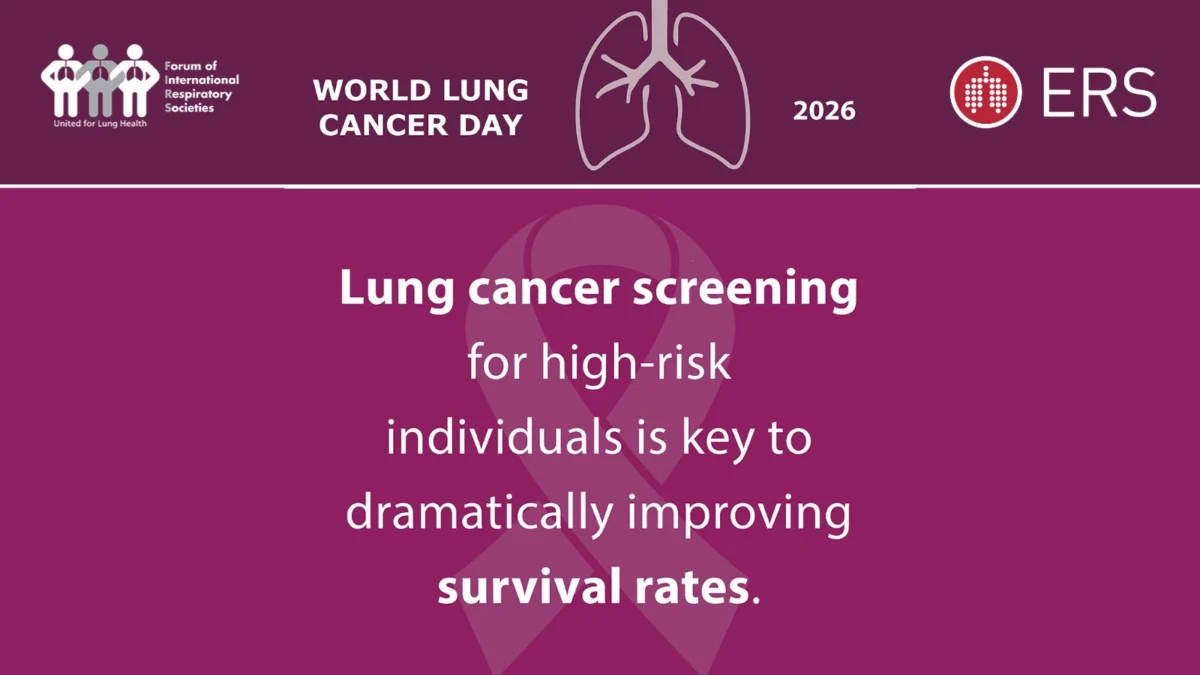
The primary weapon against this trajectory is low-dose computed tomography (LDCT) screening. Clinical evidence has consistently demonstrated that annual LDCT screening for high-risk populations—typically older adults with a significant history of tobacco use—can identify malignancies at an early stage. When detected early, survival rates skyrocket. Yet, the chasm between the existence of this technology and its actual deployment remains a defining challenge of modern oncology.
II. A Chronology of the Diagnostic Evolution
To understand why 2026 serves as such a critical turning point, one must look at the historical trajectory of lung cancer detection.
- The Early 2000s: The Stigma and the Shadow: For decades, lung cancer was widely perceived as a "smoker’s disease," a stigma that hampered both funding and public health awareness campaigns. Screening was largely opportunistic rather than systematic.
- 2011: The NELSON and NLST Breakthroughs: The landmark National Lung Screening Trial (NLST) in the United States and the subsequent NELSON trial in Europe provided the first definitive evidence that LDCT screening could reduce lung cancer mortality by roughly 20%. This shifted the medical consensus from "wait and see" to "screen and save."
- 2020–2023: The Pandemic Disruption: The COVID-19 pandemic caused a catastrophic decline in cancer screenings globally as healthcare systems pivoted toward respiratory infection management. This period resulted in a "diagnostic backlog" that many health systems are still struggling to clear in 2026.
- 2025: The Integration Era: The past year saw a surge in the integration of Artificial Intelligence (AI) into diagnostic radiology. AI-assisted LDCT scans have begun to reduce false-positive rates, making screening programs more cost-effective and palatable for national health budgets.
- August 1, 2026 (Today): The Global Respiratory Community, led by FIRS and the European Respiratory Society (ERS), has declared this day a "Day of Implementation." The focus has moved beyond proving that screening works toward the political and economic challenge of making it universal.
III. Supporting Data: The Economics and Epidemiology of Screening
The argument for expanding screening is not merely humanitarian; it is robustly economic. The fiscal burden of treating late-stage lung cancer—involving immunotherapy, complex surgery, and long-term palliative care—far outweighs the cost of a structured, annual LDCT screening program.
The High-Risk Demographic
Targeting "high-risk" individuals is the gold standard for resource allocation. While definitions vary by country, the clinical profile typically includes:
- Individuals aged 50 to 80 years.
- Those with a 20-pack-year smoking history (calculated as one pack a day for 20 years).
- Individuals who currently smoke or have quit within the last 15 years.
The Barrier Analysis
Despite these clear parameters, data indicates that less than 15% of eligible populations in many developed nations undergo regular screening. The barriers are multifaceted:
- Geographic Disparity: In rural or remote areas, the nearest facility capable of performing high-quality CT imaging may be hundreds of miles away.
- Health Literacy: Many individuals remain unaware that they qualify for screening, or they harbor a fear of the diagnosis, viewing lung cancer as a "death sentence" regardless of stage.
- Systemic Financial Obstacles: In countries without universal healthcare, the out-of-pocket costs for imaging and follow-up diagnostic procedures (such as biopsies) create an insurmountable hurdle for the working class.
- The "Stigma Tax": Because lung cancer is linked to lifestyle factors, some health systems have historically deprioritized screening programs compared to other forms of cancer, such as breast or colorectal cancer.
IV. Official Responses: A Call for Systemic Reform
FIRS, in coordination with the ERS and other global health entities, has issued a series of directives aimed at the policymakers of 2026. Their message is clear: the technology is ready; the political will is not.
Recommendations for Policymakers
- Centralized Screening Registries: Governments must establish national databases to track eligible individuals and send automated invitations for screening, similar to successful cervical or bowel cancer programs.
- Decentralization of Services: Utilizing mobile screening units—"Lung Buses"—equipped with portable CT scanners can bring diagnostic services to underserved rural and urban populations.
- Harmonization of Eligibility: Global health organizations are advocating for a standardized, evidence-based criteria set that removes the postcode lottery of screening access.
- Investment in "Smoking Cessation" Integration: FIRS emphasizes that screening should not be an isolated event but a "teachable moment." Every screening encounter should be paired with robust, evidence-based smoking cessation counseling.
"We have the tools to turn lung cancer from a fatal diagnosis into a manageable, and often curable, condition," stated a spokesperson for the FIRS advocacy committee. "To ignore this is a failure of public health infrastructure. We are calling on every ministry of health to view LDCT screening as an essential service, as vital as vaccinations or emergency care."
V. Implications: The Path Toward 2030
As we look toward the end of the decade, the implications of this World Lung Cancer Day are profound. If the global community succeeds in scaling up screening, the epidemiological profile of lung cancer could be fundamentally altered by 2030.
The Shift in Survival Rates
Increased early detection would shift the stage distribution of lung cancer diagnoses. Currently, most cases are found at Stage III or IV. A successful screening program aims to flip this ratio, ensuring that the majority of cases are caught at Stage I or II, where five-year survival rates exceed 70–90%, compared to less than 10% for late-stage diagnoses.
The Role of Technology
The next four years will likely be defined by the "democratization of diagnostics." As AI tools become more affordable and portable, the need for a highly specialized radiologist to be physically present at the site of screening will diminish. This will allow lower-middle-income countries to leapfrog older, centralized diagnostic models and implement community-based screening programs that were previously deemed logistically impossible.
Social Justice and Ethics
Finally, the push for equitable screening is a matter of fundamental health equity. For too long, the most vulnerable populations—often those with the least access to health information and the highest exposure to environmental carcinogens—have borne the brunt of lung cancer mortality. By framing screening as a human right rather than a medical luxury, the global respiratory community is attempting to rectify a long-standing disparity.
Conclusion
The message of 1 August 2026 is one of cautious optimism. The science of lung cancer has evolved rapidly, moving from a dark era of helplessness to a bright era of precision. However, the true measure of our progress will not be found in the sophistication of our scanners or the complexity of our new immunotherapies, but in our ability to reach the individual in the rural village or the marginalized urban center.
On this World Lung Cancer Day, the mandate is clear: the diagnostic divide must be bridged. The lives of millions depend on our collective capacity to transform potential into access, and awareness into life-saving action. The time for incremental change has passed; the era of universal, equitable lung cancer screening must begin today.