For generations, the "cool, dark, and quiet" bedroom has been the gold standard for restorative sleep. However, as global climate patterns shift and nighttime temperatures climb, the sanctuary of the bedroom is under siege. Beyond the physical discomfort of tossing and turning in the heat, we are witnessing a systemic erosion of public health. As the planet warms, researchers are discovering that the simple act of falling asleep is becoming an increasingly difficult, and sometimes impossible, task for millions of people.
The Physiological Battle: Why Cooling Matters
Sleep is not merely a period of inactivity; it is a complex physiological process that relies heavily on thermoregulation. Under normal conditions, the human body undergoes a rhythmic drop in core temperature as it prepares for rest. This cooling process is a critical signal to the brain that it is time to transition into sleep cycles.
When ambient temperatures remain high throughout the night, this biological thermostat is thrown into disarray. If the air surrounding you is too warm, your body struggles to shed the heat necessary to reach the deep, restorative stages of slumber. The result is a fragmented night characterized by frequent awakenings, increased wakefulness, and an inability to achieve the deep, slow-wave sleep required for physical and cognitive restoration. This isn’t just about feeling "hot"; it is about a fundamental disruption of the circadian drive.
A Global Analysis: The Mounting Toll of Heat
The scale of this issue is immense. A recent comprehensive analysis by Climate Central highlights a sobering reality: between 2020 and 2025, elevated nighttime temperatures cost the average person globally nearly 56 hours of sleep annually.
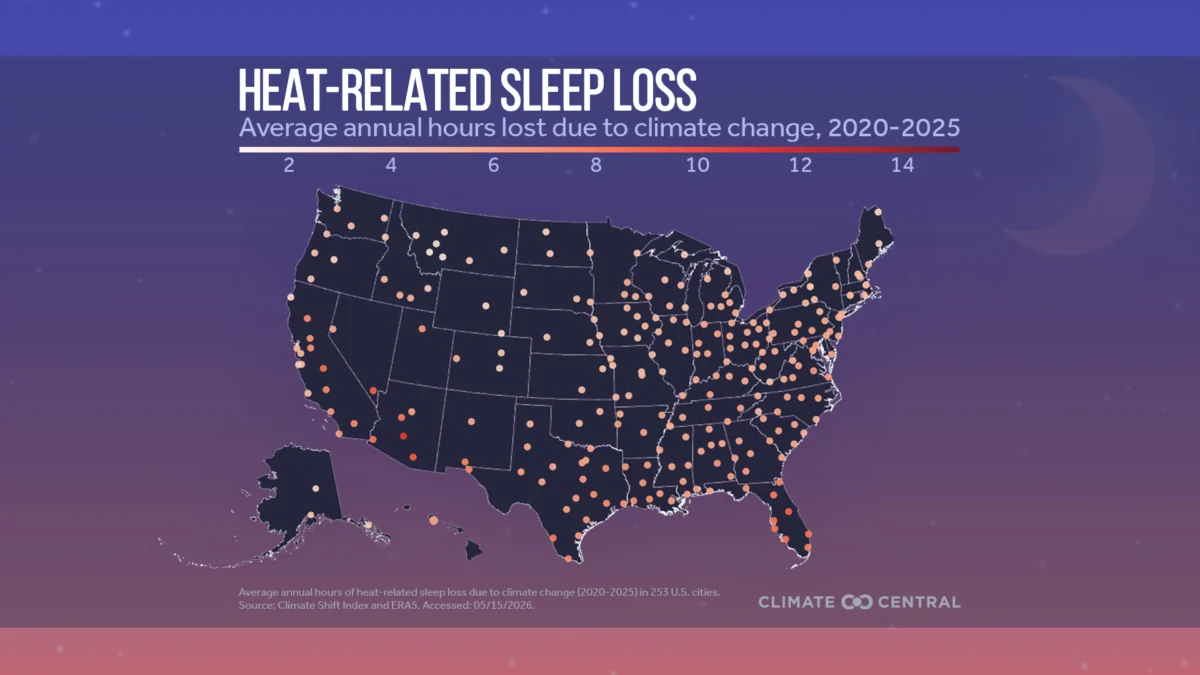
In the United States, the data is equally concerning. An examination of 253 U.S. cities revealed an average annual loss of 36 hours of sleep per person directly attributable to high nighttime temperatures. The impact is geographically uneven, with cities in Arizona, California, Florida, and Nevada reporting the most severe losses—ranging from seven to nine hours per year beyond the national average.
The trend lines are moving in the wrong direction. Across nearly every city analyzed, the amount of temperature-related sleep loss has at least doubled since the early 1970s. This suggests that the "climate penalty" on human rest is accelerating in lockstep with rising global carbon emissions.
Chronology of a Warming Night
To understand the severity of the trend, one must look at the historical trajectory of nocturnal heat:
- 1970s–1990s: Nighttime temperatures remained relatively stable, with urban heat islands being the primary concern for city dwellers. Sleep loss was largely considered a localized, sporadic issue.
- 2000s–2015: As global mean temperatures began a steady climb, researchers noted a slight but measurable increase in self-reported sleep disturbances during summer months.
- 2016–2020: Studies, including landmark research published in One Earth, began to correlate millions of sleep records with local weather data, confirming that warmer nights directly lead to later sleep onset and shorter sleep duration.
- 2020–2025: Climate Central reports quantify the "sleep debt" in hours, moving the conversation from anecdotal discomfort to a public health metric.
- 2026 and Beyond: Heat waves, such as the one experienced in the United Kingdom in June 2026, served as a flashpoint. During that event, a YouGov poll revealed that 65% of adults struggled to sleep, with nearly half reporting a loss of three or more hours per night. This event marked a turning point in public awareness regarding the intersection of climate change and sleep hygiene.
Supporting Data: The 86-Degree Threshold
The One Earth study, which analyzed over 7 million sleep records, provides the most robust evidence to date. The data suggests that there is no "acclimatization" period for sleep; human biology does not naturally adjust to hotter nights over time. Instead, our vulnerability to heat-induced sleep loss remains constant.
Key findings from the data include:

- The 14-Minute Penalty: On nights where temperatures exceed 86°F (30°C), sleep duration drops by an average of 14 minutes. While 14 minutes may seem negligible in isolation, it is cumulative. Over a month of such nights, the deficit totals over seven hours—essentially an entire night of lost sleep.
- The 77-Degree Barrier: Temperatures above 77°F (25°C) significantly increase the statistical likelihood that an individual will fail to achieve the recommended seven hours of sleep.
- The Vulnerability Gap: Those in already-hot regions, including parts of the Middle East, southern India, Southeast Asia, and West Africa, are experiencing disproportionate impacts. These regions are reaching the threshold of "survivable" sleep conditions, where the lack of cooling infrastructure turns a nightly routine into a health hazard.
Official Responses and Socioeconomic Implications
Public health officials and climate scientists are increasingly categorizing heat-related sleep loss as an equity issue. Climate Central notes that while air conditioning (AC) provides a buffer, it is not a universal solution.
Access to cooling technology is starkly divided by income, age, and geography. Even for those with access to AC, the rising cost of energy during heat waves creates a "cool or pay" dilemma for lower-income households. Furthermore, even with mechanical cooling, high-temperature nights place a strain on electrical grids, leading to rolling blackouts that render air conditioning units useless exactly when they are needed most.
The implications for public safety are profound. A study published in PLOS Medicine tracked students in Boston during a 2016 heat wave and found that those in non-air-conditioned buildings performed worse on tests of attention, processing speed, and working memory. The cognitive deficit observed in these students suggests that the "hangover" of a hot night isn’t just lethargy—it is a measurable decrease in productivity and mental acuity that lasts throughout the following day.
The Future: Strategies for Resilience
While individuals cannot control the global climate, managing the immediate bedroom environment is essential for mitigation. Experts recommend several strategies to combat the heat:
- Thermal Management: Use breathable, moisture-wicking bedding materials like cotton or bamboo.
- Strategic Ventilation: Use fans to move air, but ensure they are positioned to pull in cooler evening air once the outside temperature drops below the indoor temperature.
- Evening Routine: Limit caffeine and alcohol intake, as these substances interfere with the body’s natural cooling mechanisms. A tepid shower before bed can also help shed core body heat.
- Blackout Curtains: Keeping sunlight out of the bedroom during the day prevents the room from becoming a "heat trap" by the time you go to bed.
Conclusion: A Public Health Priority
The evidence is clear: the warming climate is effectively stealing our sleep. This is not a trivial complaint; it is a burgeoning public health crisis. Chronic sleep deprivation is linked to heart disease, metabolic disorders, weakened immune function, and mental health struggles. When heat makes sleep unattainable, it weakens our resilience to the very climate challenges we are trying to survive.
If you find that sleep disturbances are becoming chronic, it is essential to consult a healthcare provider. Ongoing issues with sleep should not be dismissed as a mere side effect of the weather. For those experiencing severe disruptions, reaching out to an AASM-accredited sleep center can provide access to specialized care.
As we look toward a future with warmer nights, we must treat healthy sleep as a pillar of climate adaptation. Protecting our rest is not just about comfort—it is a fundamental requirement for maintaining our health, our cognitive function, and our quality of life in a changing world.
Medical review by Dionne Morgan, MBBS, FCCP.