With the 2026 Mr. Olympia only 58 days away, the bodybuilding community has descended into its perennial frenzy of speculation. As the countdown clock ticks, the most common inquiry—repeated well over 450 times in the past week alone—remains: "Who is going to win?"
To those embedded in the industry, such questions are premature, bordering on trivial. With two months of prep remaining, current physique updates are often misleading, and declaring a winner based on early social media posts is akin to picking a racehorse before the gates have even opened. While personal loyalties might lean toward icons like Derek Lunsford, a true champion must be crowned based on the reality of the stage, not the popularity of the athlete.
However, looking beyond the "who" allows for a more substantive conversation about the "what." The 2026 Olympia is poised to be a watershed moment—a pivot point where the current structural trajectory of the sport faces a direct challenge from a returning aesthetic ideal.
The Chronology of the "Wedge" Phenomenon
To understand the impending shift, one must first look at the recent history of the Olympia stage. For several years, the sport has been dominated by what can only be described as the "Wedge Era."
Much like the 1970s automotive revolution, where manufacturers like British Leyland (with the iconic Triumph TR7) and Lamborghini (with the Countach) favored sharp, aggressive, geometric lines over traditional curves, bodybuilding saw a shift in its own design philosophy. The industry moved away from the classical, flowing "X-frame" toward a structure defined by extreme density, blocky midsections, and immense, top-to-bottom thickness.
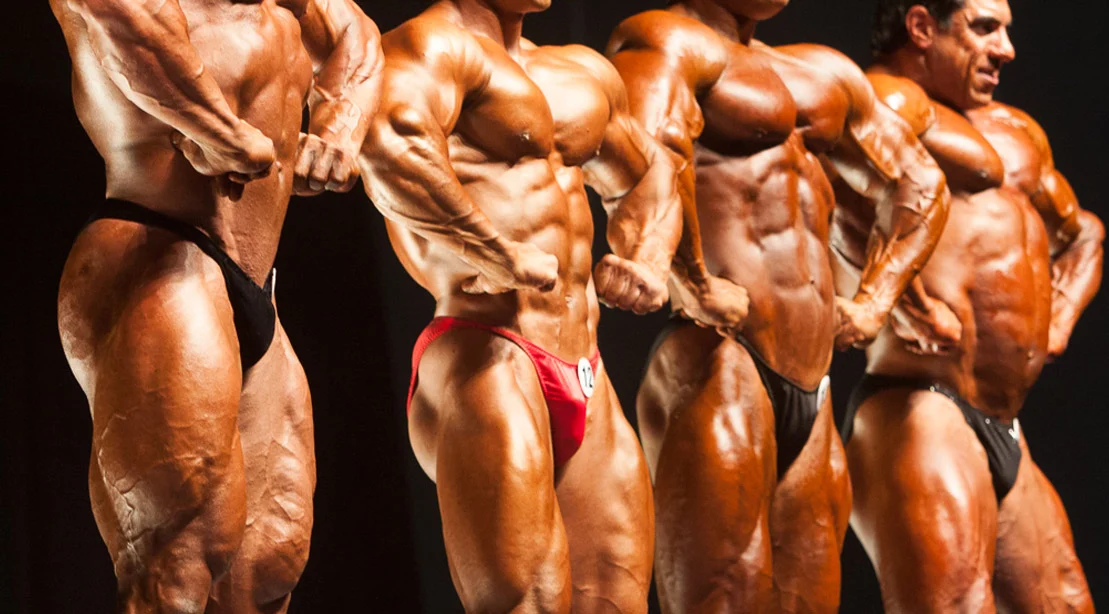
In recent years, the rivalry between Hadi Choopan and Derek Lunsford solidified this trend. Both men, characterized by their shorter stature, unparalleled density, and "fire hydrant" musculature, set a new benchmark for what judges rewarded. They were "wedges"—compact, aggressive, and undeniably muscular. Because they were so similar in build, the judging became a matter of splitting hairs between two identical silhouettes.
Supporting Data: The Anatomy of a Structural War
The 2026 Olympia presents a unique scenario: for the second consecutive year, we are seeing a direct comparison between two distinct architectural schools of thought.
The Wedge Physique
The "Wedge" is defined by:
- Density over Flow: Prioritizing muscle thickness and separation over skeletal proportions.
- Compactness: Lower-center-of-gravity physiques that emphasize raw, brute power.
- Impact: A visual "punch" that often relies on extreme conditioning and hardness.
The X-Frame Renaissance
Conversely, the "X-Frame" represents the traditional, idealized superhero silhouette:
- Proportional Dominance: Broad clavicles tapering into a tight waist, followed by sweeping, voluminous quads.
- Aesthetic Flow: A V-taper that creates the illusion of a larger-than-life hero rather than a blocky, dense machine.
- Symmetry: A balance that focuses on the harmony of muscle groups rather than just individual muscle density.
The emergence of Samson Dauda and the recent Arnold Classic victory of Andrew Jacked have served as the catalyst for this counter-movement. By bringing height, length, and a graceful structure back to the center of the stage, they have reminded both the fans and the judges that the "X-frame" is, and always has been, the most aesthetically pleasing silhouette in the sport.
Official Perspectives and the Judging Paradigm
While the IFBB Pro League has never officially declared a shift in judging criteria, the collective opinion of experts suggests that we are at a crossroads. When Andrew Jacked and Samson Dauda stand next to the reigning "wedges," the contrast is jarring.
The judges are no longer forced to choose between two identical, dense physiques. They are now presented with a choice: Do they continue to reward the hyper-dense, wedge-style conditioning that dominated the early 2020s, or do they pivot back to the classic, flowing proportions that define the "Superhero" look?
If the trend holds, we are witnessing the start of a paradigm shift. The "Wedge" had its run, and it pushed the limits of human conditioning, but the sport seems to be craving a return to the larger-than-life aesthetic that originally captivated the world.
The "Wild Card" Variable: Nick Walker
No discussion of the 2026 Olympia is complete without addressing Nick Walker. Walker serves as the "fulcrum" of the current bodybuilding landscape—a competitor who occupies the space between the Wedge and the X-frame.
Structurally, Walker does not possess the sweeping aesthetic of an Andrew Jacked, nor is he a traditional "wedge." Instead, he relies on a level of extreme conditioning that makes him an anomaly. If Walker hits his peak with his signature "anatomy chart" look—where every muscle fiber is visible through the skin—he becomes an absolute disruptor.
Walker thrives on chaos. If the frontrunners (Dauda, Jacked, Lunsford, Choopan) experience even a minor lapse in conditioning or peak, Walker is the man most likely to capitalize. He is the ultimate "wild card," capable of forcing the judges to abandon aesthetic preference in favor of sheer, undeniable physical intensity.
Implications for the Future of Bodybuilding
What does this mean for the sport in the long term? The 2026 Olympia will likely determine the "shape of things to come" for the next decade.
If Andrew Jacked or Samson Dauda takes the title, it will validate the return of the X-frame. It will send a signal to upcoming athletes that while mass and density are essential, they are secondary to the visual harmony of a perfectly proportioned physique. It effectively signals that the "wedge" era was a chapter in bodybuilding history, but not the final word.
However, if a "wedge" athlete retains the throne, it confirms that conditioning remains the ultimate currency of the sport. It proves that regardless of structural preferences, the man who brings the most gruesome, stage-ready hardness will always prevail.
The Final Verdict
From a purely aesthetic standpoint, the case for Andrew Jacked is compelling. When conditioning is equal, aesthetics should decide the war. If Jacked steps onto the Olympia stage at 100% capacity, he possesses the height, the structure, and the "heroic" look that historically defines a Mr. Olympia.
We are moving away from the era of the "five-foot-six human fire hydrant" and back toward the era of the "X-Men." The coming months will be a test of whether the judging panel agrees that bodybuilding has returned to its roots. The stage is set, the arguments are formed, and the clock is ticking. In 58 days, we will finally see if the future of the sport is as sharp as a wedge, or as vast as the X-frame.