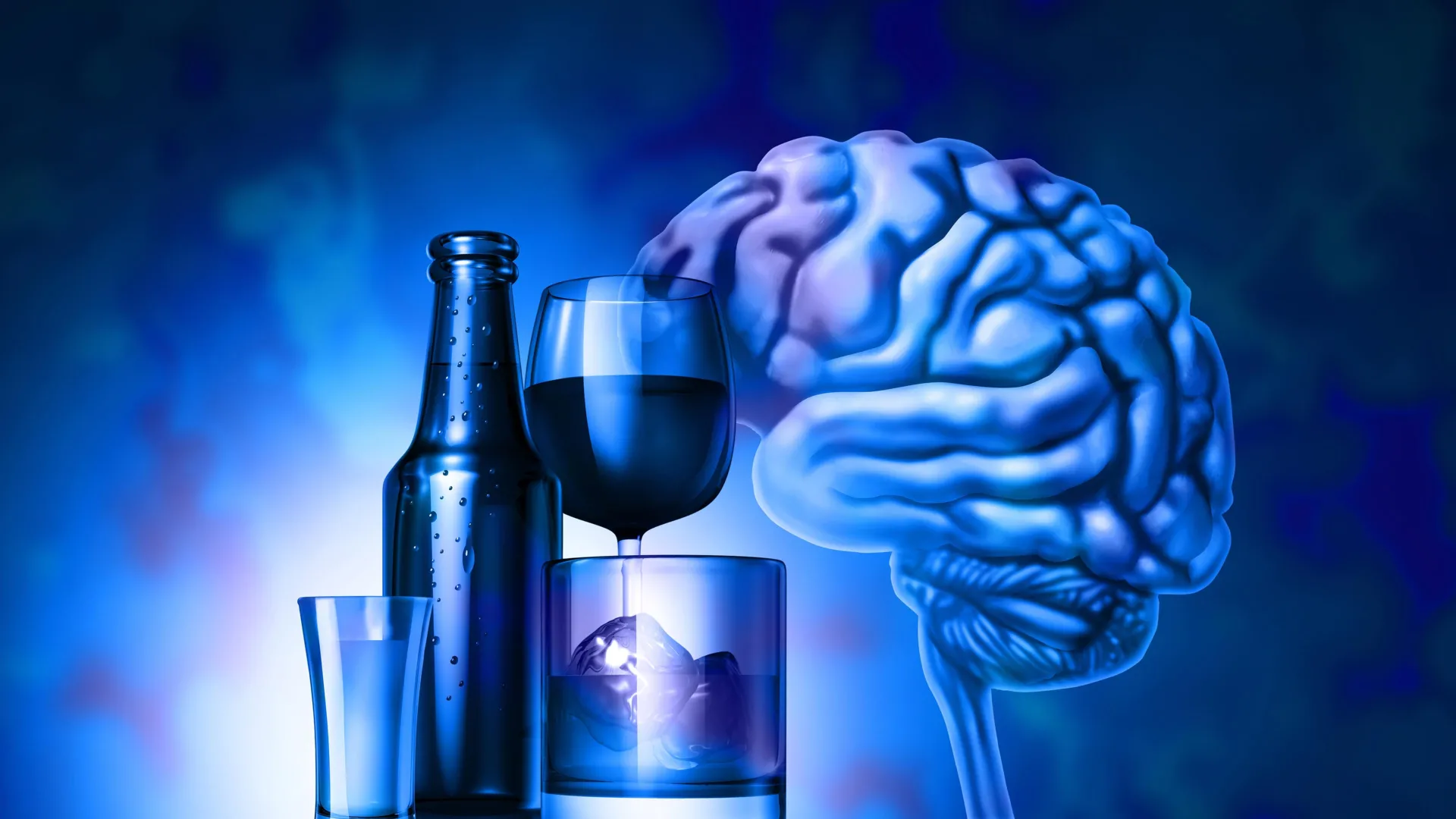
In the complex architecture of the human brain, the habits formed during early adulthood are often dismissed as fleeting phases. However, a groundbreaking study from the University of Massachusetts Amherst suggests that these formative years may leave an indelible mark on our neurological landscape. According to new research, using alcohol as a coping mechanism for stress during early adulthood can trigger permanent alterations in brain circuitry—changes that persist even after years of sobriety and only begin to manifest their most debilitating effects by middle age.
The study, published in the journal Alcohol Clinical and Experimental Research, challenges the conventional view that sobriety is a “reset button” for the brain. Instead, researchers found that the combination of stress and alcohol in early life creates a physiological legacy that reduces mental flexibility, increases the propensity for relapse, and accelerates cognitive decline, mirroring the patterns observed in the onset of dementia and Alzheimer’s disease.
The Cycle of Reinforcement: How Stress and Alcohol Collude
To understand the long-term impacts, one must first look at the self-perpetuating cycle between stress and alcohol consumption. It is a well-documented phenomenon that individuals frequently turn to alcohol as a pharmacological “buffer” against anxiety and environmental pressures. While alcohol may provide a temporary subjective sense of relief, it simultaneously erodes the brain’s intrinsic ability to manage stress autonomously.
As the brain habituates to the presence of alcohol, the threshold for natural stress management rises. Consequently, individuals find themselves requiring higher quantities of alcohol to achieve the same baseline of comfort—a classic hallmark of dependency. This biological adaptation is exacerbated by the behavioral consequences of heavy drinking: poor decision-making, strained relationships, and professional setbacks, all of which generate additional stress.
This toxic feedback loop creates a structural adaptation within the brain’s reward and stress-response centers. Over time, the neurological pathways that govern impulse control and stress regulation become blunted. Researchers at UMass Amherst sought to quantify exactly how this "neuro-adaptation" manifests over the lifespan, moving beyond the immediate behavioral symptoms to investigate the structural, long-term degradation of brain health.
Methodology: Studying the Locus Coeruleus
Led by Dr. Elena Vazey, an associate professor of biology at UMass Amherst, the research team utilized animal models—specifically mice—whose brain circuits regarding decision-making and stress response share striking similarities with those of humans. With funding support from the National Institute on Alcohol Abuse and Alcoholism (NIAAA), the team was able to observe how these subjects transitioned from early adulthood through middle age under varying conditions of alcohol exposure and stress.
The study focused heavily on the locus coeruleus (LC), a small but vital region in the brainstem. The LC is the brain’s primary source of norepinephrine, a neurotransmitter that facilitates alertness, arousal, and, crucially, adaptive decision-making. In a healthy brain, the LC serves as a dynamic sensor: it activates during stressful events to help the individual navigate challenges and then returns to a baseline state once the stressor has subsided.
However, the researchers discovered that in mice exposed to both alcohol and chronic stress during early adulthood, the LC lost its ability to regulate itself. The molecular machinery required to "switch off" the stress response became dysfunctional. As a result, the LC remained in a state of chronic, low-level disruption. This persistent state of activation rendered the subjects less capable of navigating shifting environments, a hallmark of reduced cognitive flexibility.
Key Findings: The Resilience Gap in Middle Age
The data revealed that the synergy between alcohol and stress is far more damaging than either factor in isolation. Even when the mice underwent long periods of complete abstinence—the equivalent of years for a human—the neurological scars remained.
Cognitive Flexibility vs. Raw Learning
One of the study’s most nuanced findings is that “learning ability” in a traditional sense was not necessarily impaired in the middle-aged mice. They could still learn simple tasks. However, when the parameters of the tasks changed, the mice with a history of stress-drinking failed to adjust.
This distinction is critical. In human terms, this explains why an individual might be able to function in a routine environment but collapses under the weight of a sudden life change, a new job, or a family crisis. The brain, damaged by the early-life combination of alcohol and stress, lacks the "cognitive plasticity" required to pivot.
The Relapse Trigger
The study also provided insight into the biology of relapse. Even after prolonged periods of sobriety, the mice with a history of stress-drinking were significantly more likely to return to alcohol consumption when presented with a new stressor. This suggests that the brain’s "memory" of alcohol as a stress-relieving tool is physically encoded in the damaged circuitry of the LC.
Oxidative Stress and Cellular Decay
Perhaps the most alarming discovery was the presence of high levels of oxidative stress within the LC. Oxidative stress is a form of cellular damage caused by an imbalance between free radicals and the body’s ability to neutralize them. This specific type of cellular decay is a known biomarker for neurodegenerative conditions like Alzheimer’s and dementia. Even after years of abstaining from alcohol, the LC in the test subjects showed almost no signs of self-repair, indicating that the damage was not merely functional, but structural and persistent.
Official Responses and Expert Perspective
Dr. Elena Vazey, the study’s senior author, emphasizes that these findings necessitate a paradigm shift in how we treat alcohol use disorders. "The brain can really struggle to recover from a history of chronic stress and drinking in early adulthood," Vazey noted in her summary of the research.
She argues that society often views sobriety as a matter of willpower, but this research suggests that the physical architecture of the brain has been fundamentally altered. "If we can figure out how alcohol and stress change the brain’s circuitry, then we can help figure out how best to help people," she added.
The implications for public health are profound. If the damage to the locus coeruleus is indeed a precursor to the cognitive decline seen in later life, current treatment strategies that focus solely on the cessation of drinking may be insufficient. Instead, medical interventions might need to address the underlying cellular damage—the oxidative stress and the failure of the brain’s self-regulatory mechanisms—to truly prevent long-term cognitive impairment.
Implications: A New Era for Treatment and Prevention
The UMass Amherst study provides a sobering look at the "hidden" cost of early-life habits. By identifying the locus coeruleus as a key site of long-term damage, the researchers have opened new doors for potential therapeutic targets.
1. Moving Beyond Behavioral Therapy
While Cognitive Behavioral Therapy (CBT) remains a gold standard for treating addiction, this research highlights its limitations. If the brain’s "wiring" is damaged, behavioral strategies may struggle to overcome the biological impulse to revert to old coping mechanisms. Future treatments may need to combine behavioral therapy with neuro-protective agents that can mitigate oxidative stress or restore the function of the LC’s molecular machinery.
2. Redefining "Recovery"
This study suggests that recovery from alcohol use disorder is not a static endpoint achieved by quitting. Rather, it is a long-term neurological process. Public health messaging should emphasize that the consequences of early-life drinking are not just social or professional, but deeply biological. Protecting the brain during the formative years of early adulthood is essential for maintaining cognitive vitality in middle and late life.
3. Early Warning Signs for Dementia
The link between stress-drinking and the cellular markers of Alzheimer’s disease is perhaps the most urgent takeaway. As we face a global aging population, identifying preventable risk factors for cognitive decline is paramount. This study suggests that clinicians should be asking patients about their history of stress-coping mechanisms in early adulthood as a standard part of assessing their long-term neurological risk.
Conclusion: Understanding the Brain’s Resilience
The findings from Dr. Vazey’s lab serve as a clarion call for both individuals and the medical community. The brain is not a static organ; it is a dynamic system that records the history of our stressors and our coping strategies. By acknowledging that heavy drinking during stressful periods in youth can leave a permanent, deleterious mark on our cognitive future, we are better equipped to develop more compassionate and effective strategies for intervention.
Willpower alone cannot fix a brain that has been structurally rewired by chronic stress and alcohol. However, by identifying the specific molecular and structural failures that lead to cognitive decline, science is moving closer to a future where we can treat the root causes of these long-term impacts, offering hope to those looking to reclaim their cognitive health long after the initial period of struggle has passed.