BUNIA, Congo — The race against time has become a race against a phantom. In the remote, conflict-scarred landscape of eastern Democratic Republic of the Congo (DRC), health officials are grappling with a harrowing reality: the most aggressive Ebola outbreak in history has been circulating undetected for months, leaving responders in a perpetual state of "chasing the virus."
New data released by the World Health Organization (WHO) this week confirms that the current outbreak, which was officially declared on May 15, actually began in February. This critical window of silence allowed the pathogen to establish a firm foothold, masquerading as common local ailments and exploiting the region’s already fragile health infrastructure.
The Chronology of a Silent Spread
The timeline of the current crisis highlights the fragility of surveillance in conflict-prone zones. While the official declaration arrived in mid-May, genetic sequencing—conducted under the expert guidance of Dr. Steve Ahuka, head of the virology department at Congo’s National Institute for Biomedical Research—indicates that the virus was already active in the community by late winter.
The delay was not a matter of negligence, but of misidentification. During those early months, medical personnel in eastern Congo—a region plagued by malaria, typhoid, and other endemic illnesses—treated early Ebola cases for those more common diseases. By the time the diagnostic pattern shifted toward Ebola, the virus had already moved through multiple transmission chains.
"We are chasing the virus, the virus is ahead of us," admitted Dr. Mohamed Yakub Janabi, the WHO regional director for Africa, during a press conference. This sentiment captures the frustration of a medical mission that finds itself constantly reacting to the trail of destruction rather than preventing it.
Supporting Data: The Scale of the Crisis
The statistics emerging from the DRC are staggering. As of the latest government figures, confirmed cases have surged to 4,200, with the death toll surpassing 1,900. These numbers are more than just data points; they represent an acceleration of mortality that surpasses even the 2014–2016 West Africa epidemic, which remains the deadliest in history with over 11,000 lives lost.
The current outbreak is characterized by a "doubling" effect. In several hotspots, the number of new cases is doubling at a rate that has left local clinics overwhelmed. Furthermore, health authorities report a deeply concerning trend: between 60% and 70% of new cases are being identified outside of known contact lists. This indicates that the virus is moving through the community in ways that trackers cannot anticipate, rendering traditional contact tracing—the bedrock of Ebola containment—less effective.
For comparison, the 2014–2016 West Africa outbreak took approximately eight months to reach 1,000 deaths. The current situation in the Congo is moving with a velocity that suggests the biological and social barriers are being breached with alarming ease.
The Unique Challenge of the Bundibugyo Strain
Adding to the complexity is the specific variant responsible for this outbreak. The Bundibugyo virus is a rare member of the Ebolavirus family, and significantly, it currently lacks the approved, standardized vaccines and treatments that proved life-saving in previous outbreaks involving the Zaire ebolavirus.
In the initial weeks of the outbreak, response teams were utilizing testing protocols calibrated for the more common Zaire strain. This scientific mismatch contributed to a "false sense of security" in the early diagnostic phase. By the time the Bundibugyo virus was identified, the window for rapid, early-stage containment had already begun to close.
Official Responses and Strategic Hurdles
The WHO, alongside the Congolese government and international partners, is attempting to pivot, but they are doing so under the most challenging conditions imaginable.
The Security Dilemma
The region remains a theater for ongoing rebel conflict. Health workers are not only navigating the virus but are also contending with threats from armed groups, strikes by unpaid local health staff, and a deep-seated distrust from communities that have been traumatized by decades of violence.
The Misinformation Crisis
Beyond the physical barriers, there is an ideological one. Pervasive misinformation claiming that Ebola is a hoax or a foreign conspiracy has led some community members to reject medical intervention. This suspicion is compounded by the fact that many families, fearing the stigma and the mandatory isolation associated with treatment centers, are avoiding medical facilities altogether. This trend is particularly dangerous for pregnant women and those with chronic conditions, who are now bypassing necessary care to avoid potential exposure at health centers.
Infrastructure Deficits
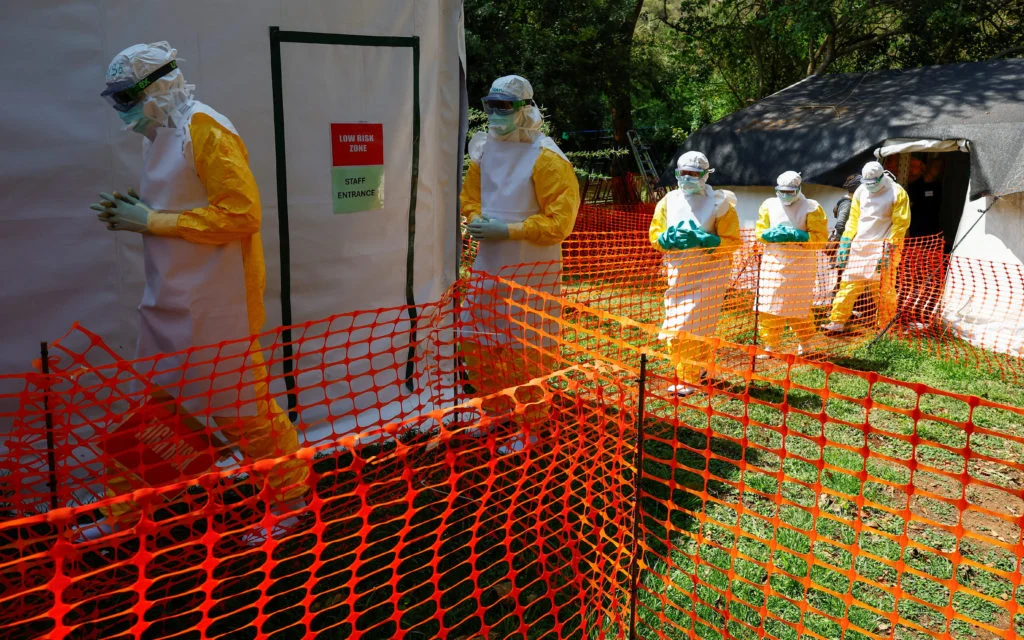
Logistics remain a nightmare. Health teams are traversing remote, unpaved roads where travel is slow and dangerous. Protective gear—the most basic tool for survival—has been reported in short supply. Furthermore, in areas where the population has been displaced by conflict, access to clean water is a luxury, making the WHO’s standard recommendation to "wash hands" a logistical impossibility for thousands.
Global Risk Assessment
Despite the local catastrophe, the WHO continues to categorize the global risk of spread as low. The rationale remains sound: Ebola is not an airborne virus. It requires direct contact with bodily fluids—such as blood, vomit, or semen—or contact with contaminated surfaces like bedding and clothing.
Because the virus does not travel via respiratory droplets, its potential for rapid international expansion is significantly lower than that of influenza or COVID-19. The agency notes that cases detected outside the affected region have thus far been identified and isolated with surgical precision, preventing the development of sustained transmission chains in other countries.
Implications: A Lesson in Surveillance
The failure to catch this outbreak in February mirrors the systemic flaws observed during the 2014 West Africa crisis, which was also declared months after the initial index case in December 2013. The recurring theme is a lack of "eyes on the ground" in the world’s most vulnerable regions.
The implications of this delay are profound. When an outbreak is caught late, the virus has already seeded itself in multiple locations, meaning that the response must be exponential rather than linear. Every day of delay in detection adds weeks to the response time and significantly increases the financial and human cost.
As the international community watches, the situation in the DRC serves as a stark reminder that in the fight against emerging pathogens, information is as vital as medicine. Without robust, early-warning surveillance systems that can distinguish between malaria and emerging hemorrhagic fevers, the world remains susceptible to these "silent" starts.
For now, the focus in Bunia and beyond remains on the grueling work of contact tracing, the expansion of treatment capacity, and the difficult task of building trust with communities that have long felt abandoned by the state. The virus may be ahead, but as WHO Director-General Tedros Adhanom Ghebreyesus noted after his visit to Kinshasa, the international response must now move faster than the disease itself if it is to bring this surge under control.
The road ahead is long, and the path to victory is narrow. With the virus finding new hosts in the shadows of the Congo’s forests, the global health community is once again reminded that in the era of global connectivity, a localized health failure is a shared burden. The race to contain the Bundibugyo strain is not just a regional necessity; it is a test of the world’s collective ability to detect and extinguish the sparks of a pandemic before they turn into a firestorm.