










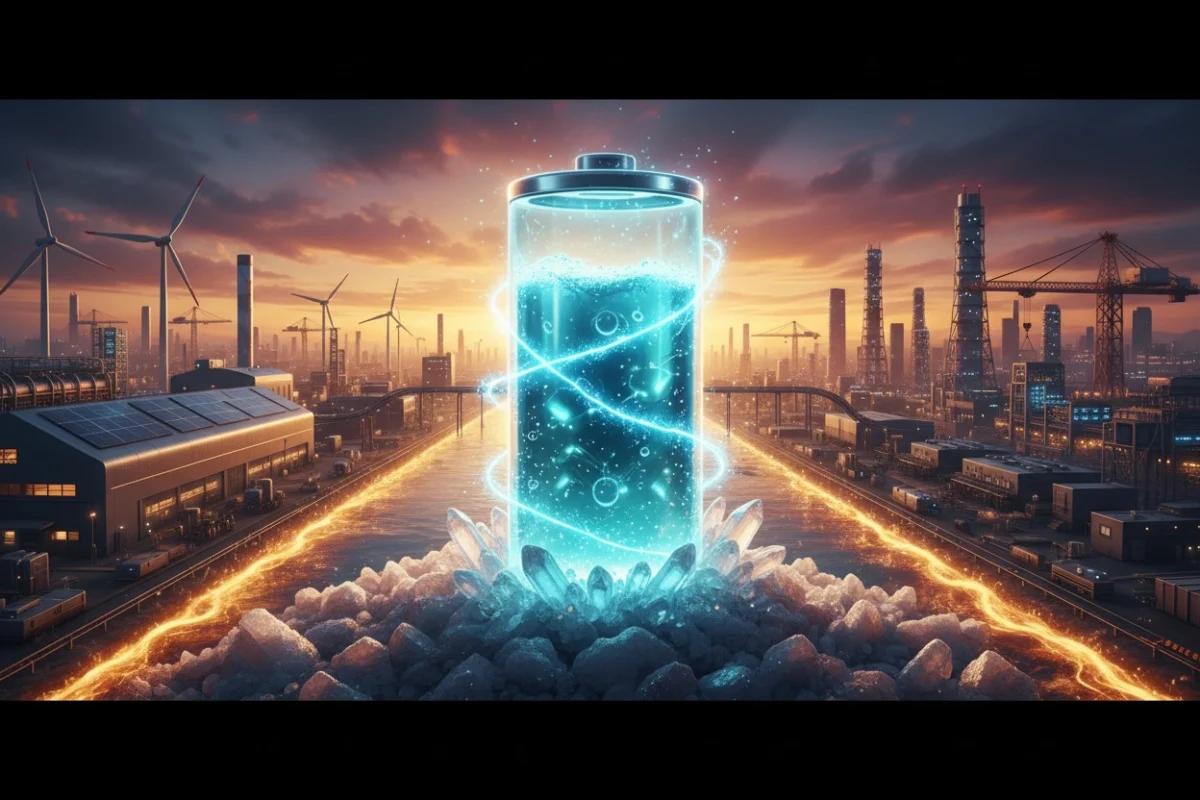
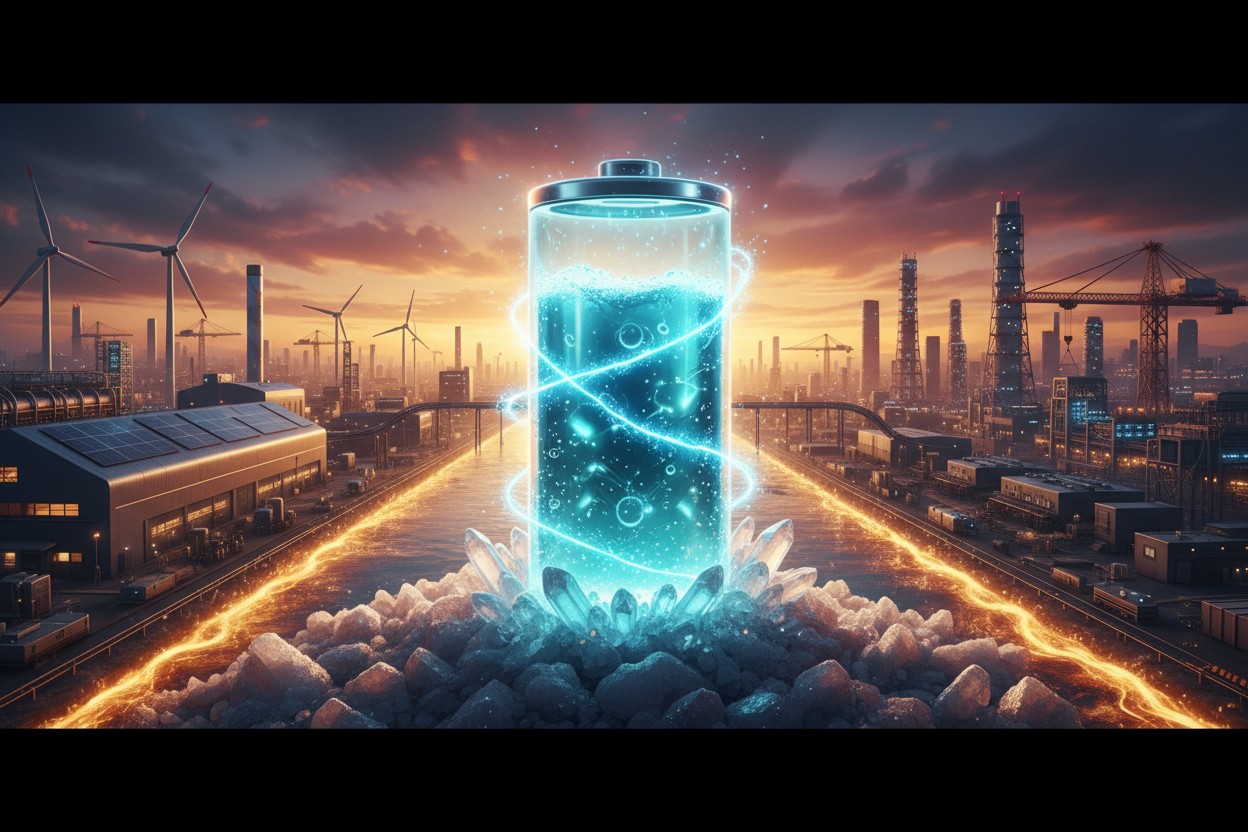
As the world accelerates its transition toward renewable energy, the "lithium bottleneck" has become a central concern for policymakers, grid operators, and automakers. In 2026, a viable alternative is moving from the laboratory to the factory floor: the sodium-ion battery. By utilizing one of the most abundant elements on Earth—common salt—this technology is carving out a vital niche in grid-scale energy storage, data center backup, and heavy-duty industrial applications, signaling a significant shift in the global energy landscape.
Main Facts: The Rise of an Abundant Alternative
At its core, the sodium-ion battery is an exercise in supply chain resilience. Unlike lithium-ion batteries, which rely on minerals prone to extreme price volatility and geographically concentrated mining operations, sodium-ion chemistry leverages materials that are ubiquitously available.
Industry reports from 2026 indicate that sodium-ion batteries are no longer speculative technology. They are being deployed primarily in stationary settings—such as utility-scale grid storage, renewable energy integration sites, and mission-critical data centers—where the physical weight of the battery is secondary to cost, safety, and cycle life. Because sodium is over 1,000 times more abundant than lithium, the economic argument for this technology is compelling. Manufacturers are finding that they can leverage existing lithium-ion production lines to manufacture sodium-ion cells, significantly reducing the capital expenditure required to scale production.
Beyond economics, the primary driver for adoption is safety. Sodium-ion systems exhibit a lower propensity for thermal runaway compared to traditional lithium-ion designs. This inherent stability translates into reduced cooling requirements and simplified safety management systems, which lowers the total cost of ownership for large-scale energy infrastructure.
Chronology: From Lab Bench to Industrial Scale
The trajectory of sodium-ion technology has seen a rapid acceleration over the past few years, moving from proof-of-concept to real-world implementation:
- 2023-2024: Research labs globally focus on stabilizing sodium-ion chemistries, with U.S. researchers achieving a 15% increase in energy density, closing the performance gap with entry-level lithium variants.
- Early 2025: Chinese manufacturers, led by giants like CATL and BYD, begin integrating sodium-ion cells into small-scale pilot projects, including specialized electric vehicles and local storage systems.
- July 2026: The American Battery Leadership Coalition is launched, bringing together U.S. companies like Peak Energy and Alsym Energy to lobby for federal support and supply chain sovereignty.
- July 2026: Hina Battery and Tonly Heavy Industries achieve a milestone by deploying the first sodium-ion-powered dump truck for Sanyou Mining, marking the technology’s entry into heavy industrial transport.
- Late 2026: Peak Energy prepares for the launch of its 183,000-square-foot facility in Sacramento, California, slated to produce 4 gigawatt-hours (GWh) of sodium-ion storage annually.
Supporting Data: Economic and Performance Metrics
The shift toward sodium-ion is supported by robust projections. According to analysis from Morgan Stanley, sodium-ion technology is expected to command more than one-third of global battery production capacity within the next decade. This growth is underpinned by the technical realization that sodium-ion cells provide a "Goldilocks" solution for stationary storage: they are cheaper than lithium-ion, safer than lead-acid, and more environmentally sustainable than cobalt-heavy alternatives.
Key Performance Advantages:
- Cost Efficiency: With raw material costs significantly lower than lithium, carbonate, and nickel, the per-kilowatt-hour price for sodium-ion storage is projected to drop below parity with lithium-ion within three years.
- Thermal Stability: The reduced cooling requirements for sodium-ion systems allow for higher energy density at the pack level, as less space is required for thermal management hardware.
- Supply Chain Sovereignty: By utilizing salt, countries can decouple their energy transition from the "lithium-triangle" of South America and the processing bottlenecks currently found in Asia.
Global Perspectives and Official Responses
The Chinese Strategy: Scaling for Market Dominance
China remains the current leader in commercializing sodium-ion technology. At the World Economic Forum in Dalian, CATL’s chief manufacturing officer, Ni Jun, confirmed that 10,000 to 20,000 electric vehicles would be equipped with sodium-ion batteries in 2026 alone. Furthermore, CATL’s introduction of the "TENER Sodium" storage system in Munich underscores their intent to set the global standard for field-validated sodium-ion storage. Automakers in China have successfully bridged the "valley of death" between research and factory, integrating these batteries into everything from municipal buses to heavy-duty mining equipment.
The U.S. Response: Domestic Manufacturing and Policy
In the United States, the focus is squarely on domestic manufacturing to reduce reliance on foreign entities. Peak Energy’s Sacramento plant represents a major anchor for this effort, with a 4 GWh annual capacity. The American Battery Leadership Coalition is actively engaging with federal regulators to ensure that sodium-ion technology is included in national energy security initiatives. By positioning sodium-ion as the backbone of the U.S. grid storage market, proponents argue that the nation can secure its renewable energy transition against future mineral supply shocks.
Implications for the Future Energy Mix
The emergence of sodium-ion batteries does not signal the demise of the lithium-ion industry, but rather a strategic realignment of the energy market. Industry analysts generally agree that the two technologies will complement one another.
1. Market Segmentation
Lithium-ion batteries will remain the "gold standard" for applications where weight and volume are the primary constraints, such as long-range passenger electric vehicles and consumer electronics. Sodium-ion, conversely, is set to become the workhorse of the grid. As renewable energy penetration increases, the need for cheap, durable, and safe long-duration energy storage becomes critical. Sodium-ion is uniquely suited to fill this gap.
2. Environmental and Ethical Impact
The shift to sodium also carries significant ESG (Environmental, Social, and Governance) implications. Lithium mining has been criticized for its high water consumption and impact on local ecosystems. Sodium extraction, being significantly less invasive and occurring globally, offers a more ethical path forward for the global energy transition.
3. Accelerated Renewable Integration
Grid planners are looking to sodium-ion storage as a way to "smooth out" the intermittent nature of wind and solar power. Because sodium-ion batteries can handle frequent charging and discharging cycles with minimal degradation, they are ideal for buffering the daily fluctuations of renewable energy generation.
Conclusion: A New Era of Storage
The narrative of 2026 is one of technological diversification. While the lithium-ion battery revolutionized the last decade, the sodium-ion battery is set to stabilize the next. By moving from the lab to large-scale, automated production, both Chinese and American manufacturers are demonstrating that the solution to our energy storage challenges may have been under our feet all along—in the form of common salt.
As production ramps up and the first generation of sodium-ion grid systems enters the field, the global energy market is entering a phase of increased resilience. The combination of cost-effectiveness, superior safety profiles, and abundant supply makes sodium-ion the most logical successor for the massive storage requirements of a decarbonizing world. The race to scale is on, and for the first time, the finish line is defined by the widespread availability of raw materials, marking a pivotal moment in the history of industrial energy.