










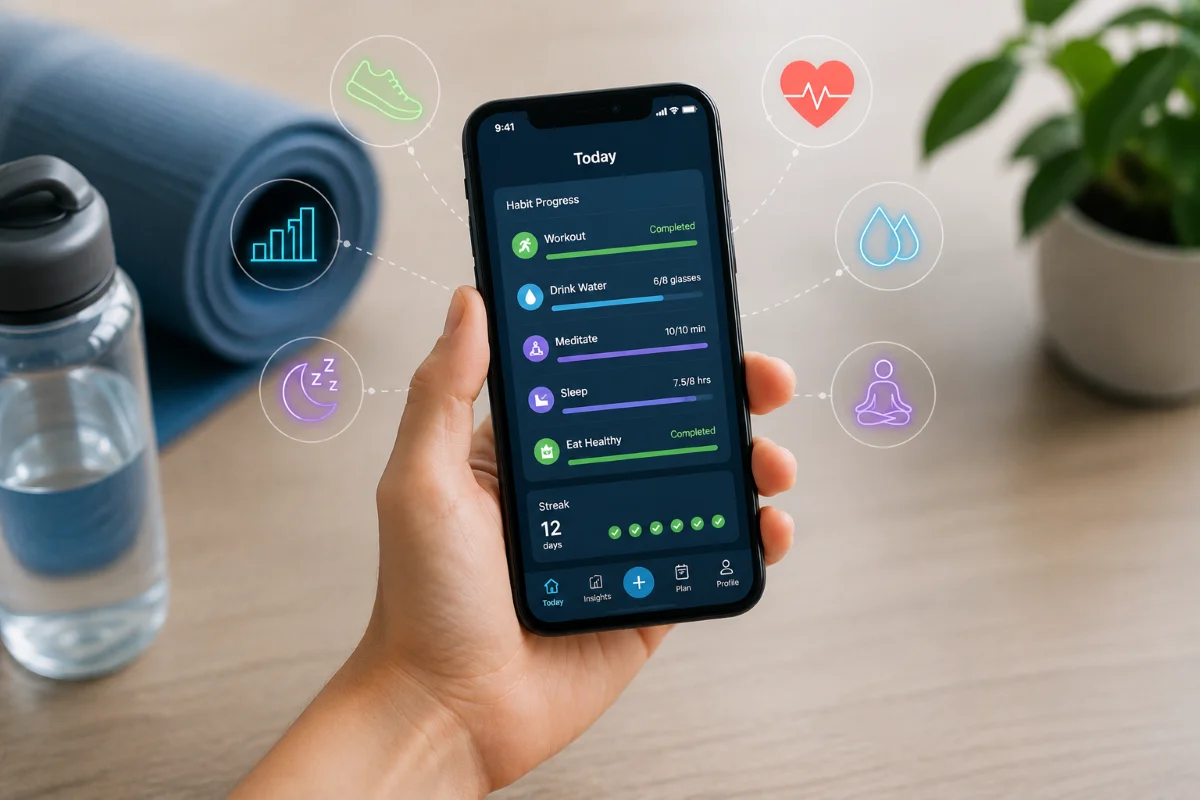
In the landscape of modern wellness, the smartphone has become the ultimate accountability partner. For years, the digital health market was dominated by rudimentary tools—simple calorie counters, step trackers, and heart rate monitors that focused primarily on static outcomes. However, a significant paradigm shift is currently underway. Health applications are evolving from passive record-keepers into active behavioral architects, moving away from weight and duration metrics toward the nuanced tracking of daily routines and long-term behavioral consistency.
This transition represents a sophisticated integration of health behavior research into the consumer tech space. Rather than obsessing over the number on a scale or the intensity of a single workout, developers are creating platforms designed to help users master the "micro-habits" that define long-term well-being: hydration, mindful eating, consistent sleep hygiene, and intentional movement breaks.
The Science of Digital Intervention: Beyond Information
The fundamental realization driving this trend is that information alone—such as "you should exercise more"—is rarely enough to trigger lasting change. Behavioral science has long suggested that for habits to stick, individuals require structural support, including prompts, cues, and immediate feedback loops.
A 2024 review published in the Journal of Medical Internet Research underscores this, identifying that the most effective digital interventions utilize a blend of self-monitoring, goal-setting, and reward systems. These techniques are not just software features; they are digitized strategies for habit formation. By prompting a user to stand up after an hour of sitting or reminding them to prepare a meal instead of ordering out, apps are effectively "nudging" users into the repetition required to turn an action into an automatic behavior.
Chronology: The Evolution of Health Tech
To understand where we are, it is necessary to look at the developmental arc of health technology:
- Phase 1 (The "Calculator" Era): Early apps focused on data entry. Users input meals, calories, and step counts. These were primarily archival tools, useful for retrospectively looking at what one had done, but lacking in predictive or behavioral guidance.
- Phase 2 (The "Wearable" Era): The rise of fitness trackers (Fitbit, Apple Watch) brought passive data collection. Technology became "set it and forget it," providing heart rate data and activity logs automatically.
- Phase 3 (The "Habit" Era): The current landscape focuses on the process rather than the outcome. Apps now prioritize streaks, behavioral cues, and habit stacking. The goal is to optimize the daily system of the user.
- Phase 4 (The "Adaptive" Era): Currently emerging, this phase utilizes artificial intelligence to create highly personalized, real-time interventions that adjust to the user’s specific context, stressors, and recovery levels.
Supporting Data: The Impact of Gamification and Tracking
The rise of gamification—the use of badges, streaks, and visual progress bars—has proven to be a double-edged sword. On one hand, data from the PLOS Digital Health research community suggests that these visual rewards can significantly increase engagement, particularly for users establishing simple, binary behaviors like drinking a glass of water.
However, the psychological impact of these systems is under intense scrutiny. Recent reports on nutrition-tracking software have highlighted a "gamification fatigue," where users feel immense pressure to maintain streaks. For vulnerable populations, these rigid feedback loops can inadvertently foster anxiety or disordered eating patterns. If a digital interface treats a missed goal as a "failure" rather than a data point, it can trigger a shame-based response that is antithetical to healthy, sustainable living.
Professional Perspectives: The Role of the Coach
For fitness professionals and health coaches, the proliferation of these apps creates both a challenge and an opportunity. Clients frequently arrive at their first coaching session armed with a dashboard of data—sleep scores, heart rate variability (HRV), and hydration streaks—often without the requisite knowledge to interpret them.
Interpreting the Data
The primary role of the modern coach is to provide context. While an app might report a "low recovery score," the coach must step in to interpret what that means in the context of the client’s life. Is the low score a sign to avoid exercise entirely, or is it a sign to pivot to a restorative, low-intensity session? Coaches are essential in teaching clients to use apps as tools rather than judges.
Shifting the Narrative
Effective coaching involves helping clients reframe their interaction with technology. Instead of asking, "What did the app say I failed to do today?" the coach encourages the client to ask, "What patterns is this data revealing about my lifestyle?" This shift moves the client away from perfectionism and toward a systemic understanding of their health. A client might realize, for instance, that their habit of evening snacking is consistently correlated with poor sleep the night prior. This is a behavioral insight that no app can provide on its own—it requires the synthesis of human experience and technological data.
Implications: The Future of Personalized Health
As we move deeper into the era of AI-driven health tech, the promise of "hyper-personalization" looms large. Future iterations of health apps will likely integrate wearable data (real-time physiological metrics) with behavioral data (what the user reports) and external variables (calendar, weather, location).
However, experts caution that this level of integration presents significant challenges regarding data privacy and the reliability of algorithms. As noted by the World Health Organization in their global strategy on digital health, the technology must remain subservient to the human element. The goal is not to outsource health to an algorithm, but to use the algorithm to surface patterns that humans are otherwise too busy to notice.
The "Simple Is Better" Philosophy
Despite the rapid advancements in AI, there is a consensus among behavioral experts that the most effective tools remain the simplest. The best applications are those that:
- Identify a single behavior: Avoid the "overwhelmed user" trap.
- Connect to a specific cue: Link the habit to an existing routine (e.g., "After I brush my teeth, I will take my vitamins").
- Track completion: Keep the feedback loop tight and positive.
- Reflect on barriers: Encourage the user to analyze why a habit was missed, rather than shaming them for the miss.
Conclusion: Bridging the Gap
The integration of habit-tracking apps into the fitness industry is not a replacement for human coaching; it is an augmentation. Digital tools provide the structure, the reminders, and the data, but the "human-in-the-loop" model remains the gold standard for long-term behavior change.
Fitness professionals should embrace these tools not as competitors, but as assistants. By helping clients navigate the potential pitfalls of gamification and teaching them how to derive actionable insights from their dashboards, coaches can foster a more sustainable, less perfectionist approach to wellness. Ultimately, the success of any digital health intervention is not measured by the length of a streak or the perfection of a graph, but by whether the habits it fosters fit seamlessly—and sustainably—into the client’s real life.
References
- Asbjørnsen, R. A., Smedsrød, M. L., Solberg Nes, L. & Wentzel, J. (2024). Mobile health applications for supporting behavior change: A systematic review of behavior change techniques and user engagement. Journal of Medical Internet Research, 26, e54375.
- Berry, S. E., Ordovas, J. M. & Livingstone, K. M. (2024). Digital health technologies and personalized behavior change: Opportunities for preventive health. Nature Medicine, 30(4), 879-887.
- Laranjo, L., Ding, D., Heleno, B., Kocaballi, A. B., Quiroz, J. C. & Tong, H. L. (2023). Conversational agents and mobile applications for health behavior change: Current evidence and future directions. npj Digital Medicine, 6(1), 173.
- McEwan, D., Rhodes, R. E., Beauchamp, M. R. & Latimer-Cheung, A. E. (2023). Behavior change techniques in digital physical activity interventions: A systematic review and meta-analysis. Health Psychology Review, 17(2), 235-260.
- World Health Organization. (2023). Global strategy on digital health 2020–2025: Progress update. World Health Organization.