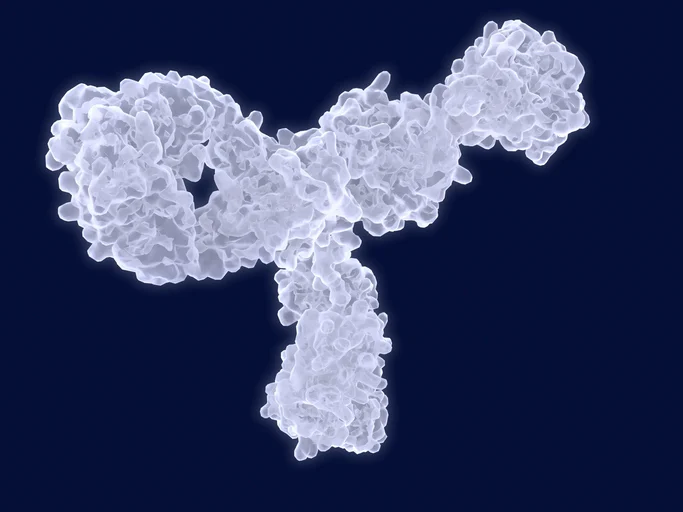
For decades, the standard path to discovering life-saving antibody drugs has relied on a biological intermediary: the transgenic mouse. By engineering rodents to possess humanized immune systems, pharmaceutical researchers have spent years—and billions of dollars—attempting to simulate human immune responses in laboratory settings.
However, Alameda-based biotechnology startup Infinimmune is challenging this paradigm. Armed with a $75 million Series A financing round, the company is betting that the most efficient way to create human medicine is to bypass the mouse entirely and go straight to the source: the human immune system itself.
The Core Philosophy: Leveraging Human Memory
The fundamental premise of Infinimmune’s “Anthrobody” platform is that the human immune system, honed by millions of years of evolutionary pressure, is the ultimate drug discovery engine. While transgenic mice are designed to mimic human biology, they remain imperfect replicas.
“What we’re trying to do is get to quality medicines faster,” says Wyatt McDonnell, co-founder and CEO of Infinimmune. “We think the best way to do that is to circumvent trying to reinvent the human immune system and instead go directly to the human immune system.”
The company’s proprietary Anthrobody platform functions by screening millions of memory B cells derived from human samples. These cells are the sentinels of the immune system; they persist for decades, maintaining a molecular "memory" of antigens encountered throughout a person’s life. By analyzing these cells, Infinimmune can identify high-quality, naturally occurring antibodies that have already proven their efficacy in the human body. This process not only accelerates discovery but, according to McDonnell, yields molecules with superior drug-like properties compared to those engineered in rodent models.
Chronology: From Stealth to Clinical Readiness
Infinimmune’s ascent from a niche research outfit to a well-capitalized clinical-stage company has been swift, characterized by strategic partnerships and a focused pipeline.
- 2022: The Foundation. The startup launched with $12 million in seed funding, led by Playground Global. The founding team, comprised of veterans from 10x Genomics, brought deep expertise in single-cell and spatial biology—technologies that would eventually underpin the Anthrobody platform.
- 2025–2026: Strategic Alliances. Recognizing the power of the platform, major industry players took notice. Infinimmune inked discovery partnerships with Immunome and Merck, signaling that their proprietary approach to human-derived antibodies could solve difficult target challenges.
- June 2026: Market Shift. The broader immunology sector saw a major consolidation when AbbVie announced its $11 billion acquisition of Apogee Therapeutics. This move underscored the massive value placed on long-acting, highly potent antibodies for atopic dermatitis.
- August 2026: Series A Milestone. The company unveiled its $75 million Series A financing, co-led by Regeneron Ventures and Playground Global. This capital infusion is earmarked to propel two internally discovered programs—IFX-201 and IFX-101—into Phase 1 clinical trials in 2027.
The Competitive Landscape: Raising the Bar in Atopic Dermatitis
Infinimmune is entering a crowded, high-stakes market. Atopic dermatitis (eczema) has seen significant advancements, dominated by blockbuster drugs like Sanofi and Regeneron’s Dupixent, which targets IL-4 and IL-13. More recently, LEO Pharma’s Adbry and Eli Lilly’s Ebglyss have entered the fray, both focusing on the IL-13 pathway.
However, McDonnell points out a critical gap in current treatments: efficacy. While the industry is currently fixated on convenience—specifically, the trend toward ultra-long-acting injections—McDonnell argues that the true "holy grail" is complete skin clearance. Referencing the recent data from Apogee Therapeutics, which showed that a significant portion of patients failed to achieve 100% clearance, McDonnell notes that the bar for next-generation therapies is higher than simply reducing dosing frequency.
Infinimmune’s pipeline is designed to address both the known pathways and the unmet needs of "non-responders":
- IFX-201: A next-generation IL-13 blocker aimed at providing superior efficacy compared to existing standards.
- IFX-101: A pioneering IL-22 blocker. While IL-13 is a primary driver of inflammation, many patients experience inflammation mediated by IL-22, which is responsible for the breakdown of the skin’s outer barrier. Currently, there are no FDA-approved therapies that specifically target this pathway, positioning IFX-101 as a potential first-in-class treatment.
Supporting Data: Why "Human-Derived" Matters
The shift toward human-derived antibodies is backed by the limitations of traditional monoclonal antibody (mAb) production. When antibodies are generated in mice, they often require extensive "humanization" processes to prevent the patient’s immune system from rejecting the drug. This process can inadvertently alter the antibody’s binding affinity or stability.
Infinimmune’s approach eliminates the need for this translational step. Because the antibodies are selected from human B cells, they are inherently human, which theoretically reduces the risk of immunogenicity—the body’s tendency to treat the drug as a foreign invader. Furthermore, by using high-throughput single-cell sequencing (a legacy of the founders’ time at 10x Genomics), the company can map the precise functional characteristics of these antibodies, ensuring they are optimized for potency and safety before they ever reach a human patient.
Official Responses and Strategic Vision
The participation of Regeneron Ventures in the Series A round is particularly telling. As the co-developer of Dupixent, Regeneron is arguably the world leader in understanding the IL-13/IL-4 landscape. Their investment in a company attempting to disrupt that very space suggests a high degree of confidence in the Anthrobody platform.
When asked about the potential for combination therapies, McDonnell remains pragmatic. "Our initial strategy is to develop IFX-101 and IFX-201 as monotherapies to independently establish safety and efficacy," he explained. However, he acknowledged the future potential of a "cocktail" approach. Given that atopic dermatitis is a heterogeneous disease, the ability to address multiple cytokine profiles—IL-13 for general inflammation and IL-22 for barrier integrity—could provide a personalized treatment regimen that is currently unavailable to patients.
Implications for the Future of Drug Discovery
Infinimmune’s trajectory highlights a broader trend in biotechnology: the transition from "model-based" discovery to "human-centric" discovery. As AI and single-cell sequencing technologies continue to mature, the reliance on animal models is likely to decline.
If Infinimmune succeeds, the implications extend far beyond atopic dermatitis. Their platform could be applied to oncology, autoimmune diseases, and infectious diseases, effectively turning the human body into a perpetual library of high-quality drug candidates.
For now, the focus is squarely on the clinic. With $75 million in the bank and a clear path toward Phase 1 trials in 2027, the company is no longer just selling a concept; it is executing on a vision that could redefine the standard of care for millions of patients. By looking at the human immune system not as a mystery to be solved, but as a map to be read, Infinimmune is positioning itself at the vanguard of a new era in immunology.