









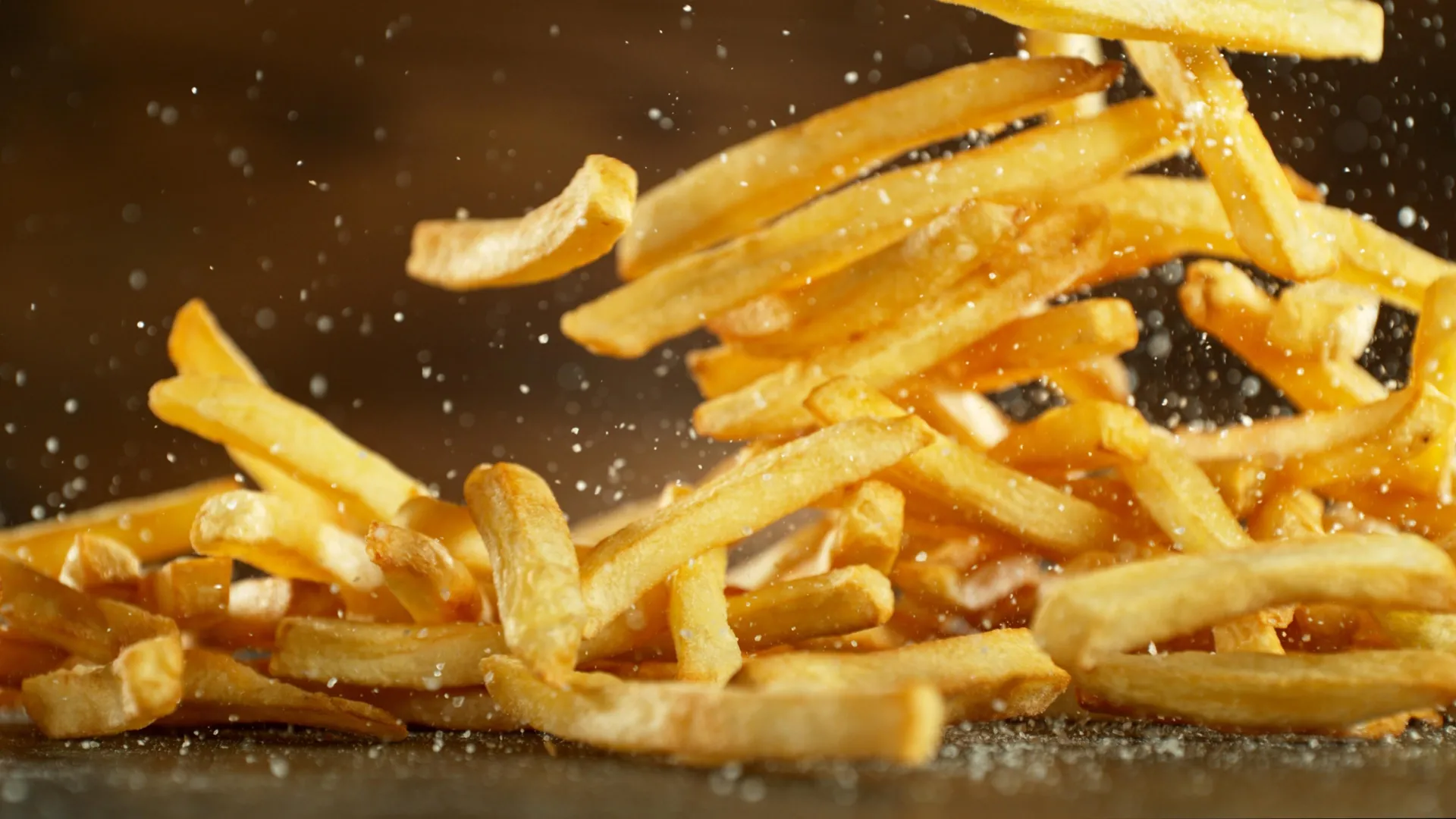
For generations, the golden, crispy French fry has stood as the gold standard of comfort food. Its universal appeal—a delicate, crunchy exterior giving way to a soft, fluffy interior—is a result of the precise physics of deep-frying. However, this culinary icon comes with a significant nutritional trade-off. Deep-frying, by its very nature, encourages the absorption of large quantities of cooking oil, significantly spiking the fat and caloric density of the final product. As global concerns regarding obesity and hypertension continue to mount, food scientists are racing to find a solution that retains the sensory pleasure of the fry while stripping away its health risks.
Researchers at the University of Illinois Urbana-Champaign (UIUC) may have found the answer. By harnessing the unique physics of microwave energy, a team led by Professor Pawan Singh Takhar is developing a hybrid frying technique that promises to minimize oil uptake without sacrificing the signature crunch that consumers demand.
Main Facts: The Science of the Perfect Fry
The challenge of the French fry lies in the transition from raw potato to golden strip. When a potato slice enters hot oil (typically around 180 degrees Celsius), the water inside the potato begins to boil off. As this moisture escapes, it leaves behind a network of empty pores.
Under conventional frying conditions, this process creates a "suction" effect. As the water vapor exits, it creates negative pressure within the potato’s cellular structure, effectively pulling the surrounding oil deep into the fry. The UIUC team’s findings suggest that by utilizing microwave energy—which heats food from the inside out—they can manipulate the internal pressure of the potato. Instead of the negative pressure that draws oil in, microwave energy promotes positive pressure, pushing vapor outward and creating a barrier that prevents significant oil absorption.
The research indicates that a hybrid approach—combining conventional frying for surface texture and microwave energy for internal moisture management—results in a fry that is structurally identical to traditional versions but significantly leaner in fat content.
Chronology of the Discovery
The path to this discovery was both rigorous and multifaceted, involving a collaboration between UIUC and Washington State University (WSU).
- Initial Conceptualization: The team began by analyzing the physical transport phenomena of frying, focusing on how heat and mass move through porous media like potatoes.
- Specialized Development: Working with colleagues at WSU, the team utilized a specialized microwave fryer capable of operating at both 2.45 gigahertz and 5.8 gigahertz. These frequencies were chosen to determine how different electromagnetic wavelengths influence water molecule movement and vapor formation.
- Experimental Trials: The researchers processed potatoes through peeling, cutting, and blanching. The strips were fried in soybean oil while the team meticulously tracked variables, including internal pressure, temperature, moisture loss, and oil absorption.
- Mathematical Modeling: To bypass the limitations of physical experimentation, the team developed complex computer models to simulate the frying process. These models allowed them to predict how oil moves through the "tiny straws" of the potato’s cellular structure under varying conditions.
- Synthesis of Results: The culmination of these studies, published in the Journal of Food Science and Current Research in Food Science, provided the empirical evidence needed to propose the hybrid frying system.
Supporting Data: Why Pressure Matters
To understand the breakthrough, one must understand the "straw" analogy provided by Professor Takhar. If you place a straw in a drink and blow air into it, the liquid is pushed away. If you create a vacuum by sucking on the straw, the liquid rushes in.
In conventional frying, approximately 90% of the cooking process occurs under negative pressure. This is the "suction" phase where the oil is pulled into the potato as steam escapes. By applying microwave energy, the researchers were able to shift the pressure profile. Microwaves oscillate water molecules throughout the entire volume of the potato, generating vapor continuously. This internal vapor creation sustains positive pressure, effectively "pushing back" against the oil.
Mathematical simulations and laboratory tests revealed that:
- Moisture Removal: Microwave frying accelerates the dehydration process, shortening the total time food needs to spend in the vat.
- Oil Uptake: The hybrid method significantly reduces the volume of oil absorbed compared to conventional immersion frying.
- Texture Limitations: While microwave-only frying produced a healthier product, it failed the sensory test; the fries remained soggy. This underscored the necessity of the "hybrid" model, where traditional frying is still used to achieve the Maillard reaction—the chemical process that creates the brown, crispy crust that defines a French fry.
Official Responses and Perspectives
"Consumers want healthy foods, but at the time of purchase, their cravings often take over," explains Pawan Singh Takhar, the principal investigator and professor of food engineering in the Department of Food Science and Human Nutrition at U of I. "High oil content adds flavor, but it also contains a lot of energy and calories. My research team studies frying with the aim of obtaining lower fat content without significant differences in taste and texture."
Takhar, alongside doctoral student Yash Shah, emphasizes that their goal is not to reinvent the fry, but to refine the engineering behind it. By modifying existing industrial fryers with microwave generators—which are relatively affordable and widely available—they believe the food industry can implement these changes without a complete overhaul of production lines.
The research team acknowledges that while the technology is ready for laboratory application, the next phase is bridging the gap between small-scale trials and large-scale industrial manufacturing. The project, funded by the USDA National Institute of Food and Agriculture, represents a major step forward in linking advanced transport phenomena to tangible consumer health benefits.
Implications for the Food Industry and Public Health
The implications of this research are twofold: industrial efficiency and public health.
Industrial Efficiency
For the food processing industry, the appeal of a hybrid fryer is twofold. First, the faster cooking time increases throughput, allowing factories to produce more units in less time. Second, as oil is one of the most expensive raw materials in the frying process, reducing the amount absorbed by the food could lead to substantial cost savings over time.
Public Health Impact
From a public health perspective, the potential is even greater. Obesity and hypertension are chronic issues heavily linked to the consumption of processed, high-fat foods. If the world’s most popular fried snack could be made with, for instance, 20-30% less fat without the consumer noticing, the aggregate impact on public health could be significant.
Furthermore, this technology is not limited to potatoes. The principles of internal pressure management can be applied to a variety of fried products, from chicken to vegetable tempura. By shifting the paradigm of how we cook, the UIUC team is offering a rare "win-win" scenario: the preservation of culinary tradition coupled with the advancement of nutritional science.
Conclusion
The hybrid fryer is currently at the stage of "proof of concept" transitioning into potential commercial application. As food manufacturers look for ways to meet the growing demand for "cleaner" labels and healthier profiles, the integration of microwave technology into the frying line seems not only feasible but inevitable.
By understanding the microscopic "straws" within our food and the invisible pressure profiles that dictate oil absorption, Professor Takhar and his team have provided a blueprint for a future where the French fry remains a delicious indulgence rather than a dietary hazard. The science is solid, the models are verified, and the next step is bringing this hybrid technology from the laboratory to the commercial kitchen. Through the quiet, invisible work of electromagnetic waves, we may soon be enjoying our favorite foods with a much lighter footprint.